
At SensationALL we frequently use vibration as a sensory regulation tool to support alert levels, self-regulation, and reconnecting with the body.
What is it?
Vibration involves using objects that produce rhythmic buzzing or shaking sensations on the body, such as vibrating cushions, handheld massagers, toothbrushes, or simple activities like humming against a surface.
Why it matters:
Vibration stimulates both the tactile and proprioceptive systems. Depending on individual needs, it can boost alertness—helping to “wake up” the body and mind—or soothe and regulate by bringing focus back into the body and releasing tension. It’s especially beneficial for children who struggle with body awareness, emotional regulation, or focus.
Vibration is strong, predictable, and easy to control. This input can calm an overwhelmed system, energise a low-energy body, or enhance awareness of limb positioning.
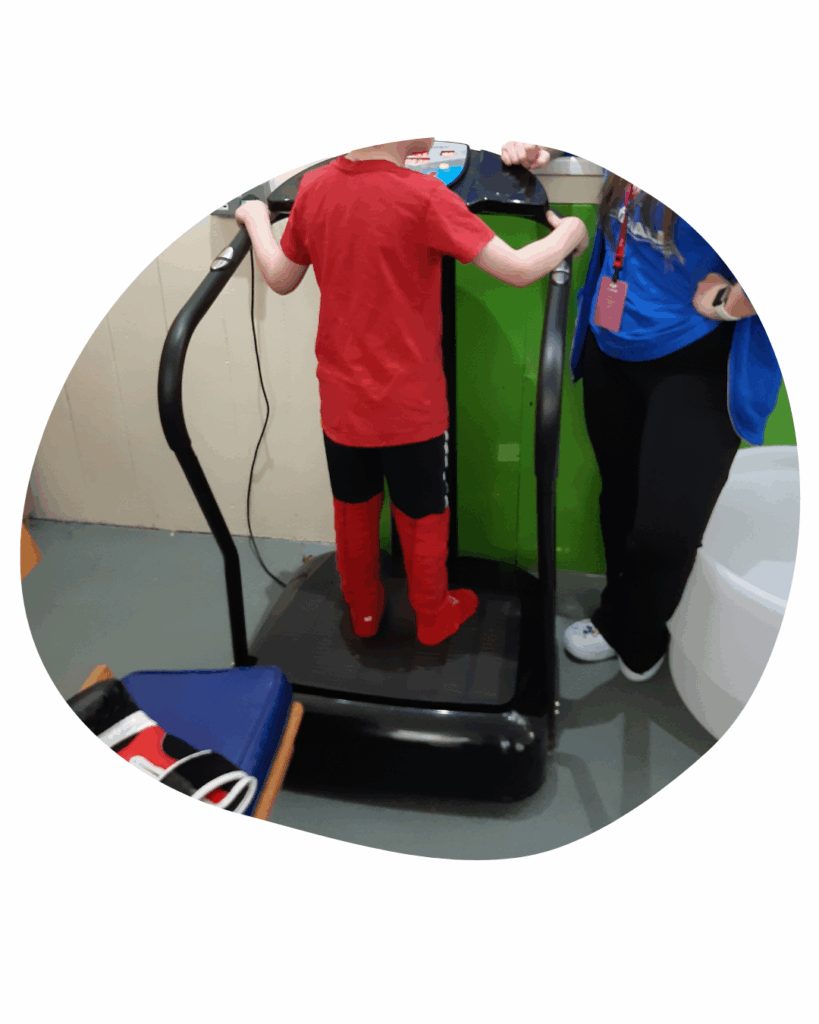
One way we incorporate vibration is through vibration plate equipment, which sends vibrations to the body, stimulating muscles and improving lymphatic flow, reducing blood pressure, and increasing circulation—factors that enhance focus, mood, and concentration.
Here are some examples of vibration tools useful in therapy and play during daily routines:
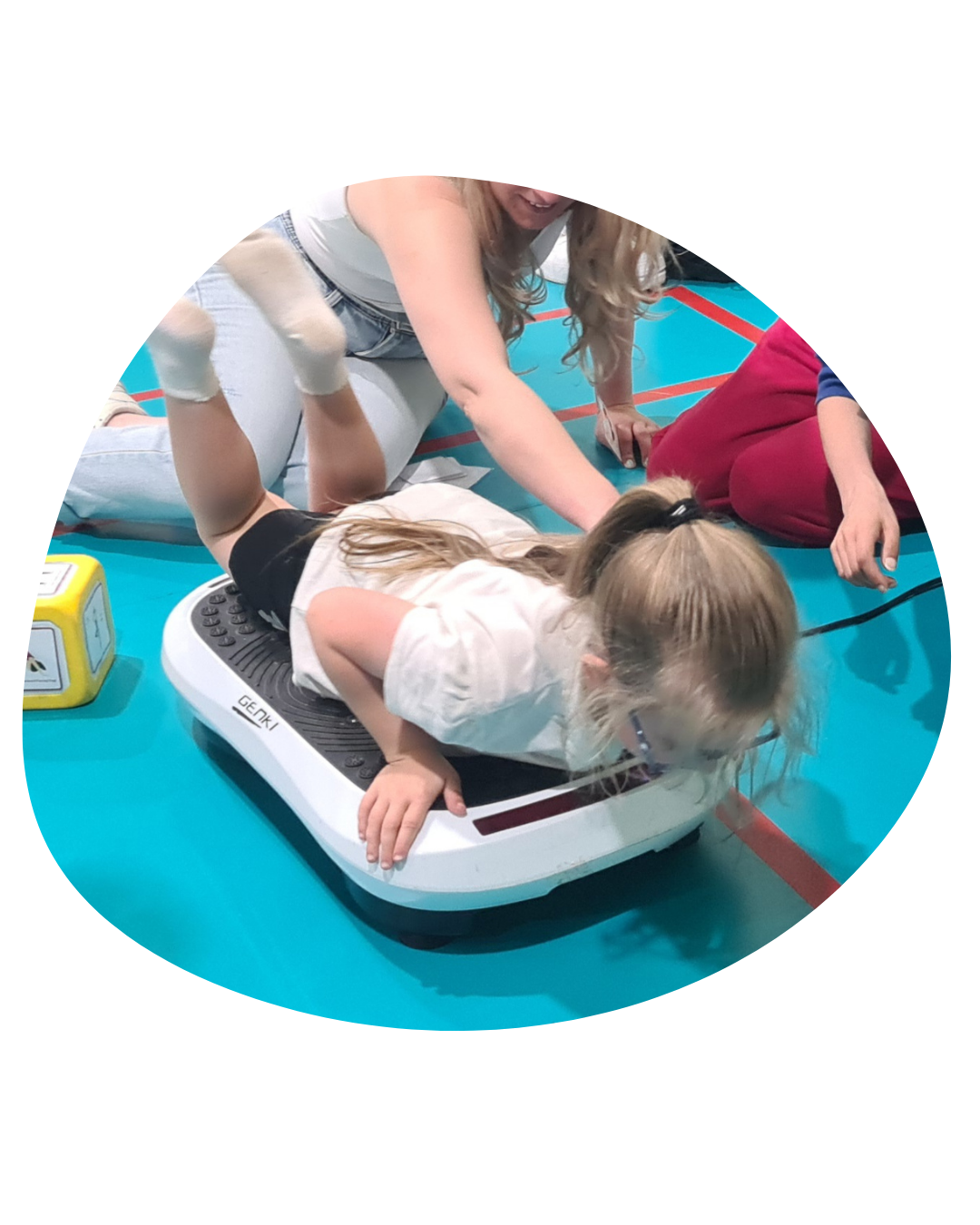
- Whole-body vibration plates: children can stand, sit with feet on, or place hands on the plate—great for grounding and regulation.
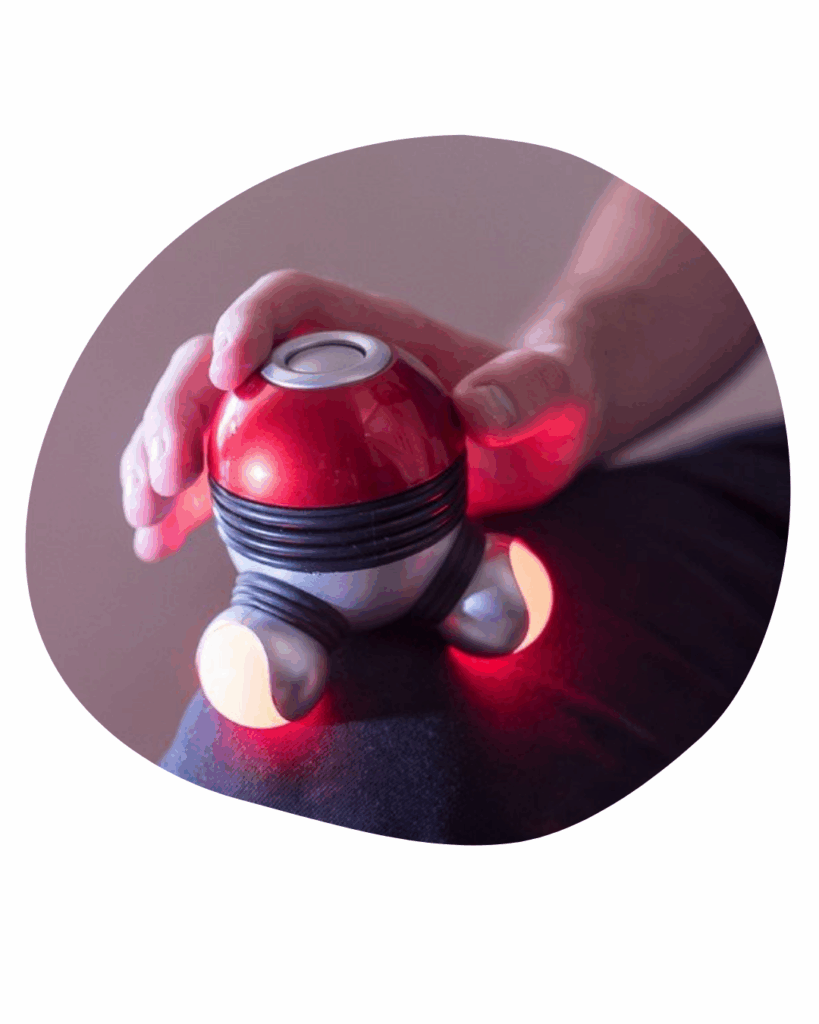
- Handheld vibration massagers: gentle, soft-head devices suitable for quick spot treatments on hands, shoulders, or calves (avoid heavy-duty “massage guns” for children).
- Vibrating cushions or pillows: children can sit or lean against them, ideal for calm-down areas or classroom seating.
- Vibrating toys: stuffed animals, Fidgets, or balls that vibrate—engaging and fun for younger children.
- Vibrating toothbrushes: useful for oral-motor stimulation, feeding prep, and desensitisation for oral sensitivities.
- Vibrating pens or writing tools: aid hand awareness before handwriting and make fine motor tasks more fun.
- DIY options include small battery-operated handheld fans (without blades) or clip-on vibrating pet brushes, which are soft and safe.
Safe use of vibration is crucial—our Golden Rules include:
- Always offer Choice and Control!
- Use short bursts (10-30 seconds), then follow with movement or play.
- Observe their response—calmer? More alert? Overstimulated? Adjust accordingly.
Understanding personal feelings about vibration helps select the most beneficial type:
Low energy
- slightly stronger vibrations in short bursts, targeting large body areas first, then hands for fine motor skills
- paired with quick heavy work and focus tasks.
Over-responsive/anxious
- very gentle, predictable vibrations, starting with hands/feet, then the torso; avoid face/abdomen until trust is established
- incorporate slow breathing, deep pressure squeezes, and quiet spaces, gradually progressing to play.
Mixed emotions
- offer a choice menu with questions like “which spot?”, “how strong?”, “how long?”
- alternate between heavy work and calming breaths.
Vibration helps the brain “notice the body” more clearly, helping to regulate the senses and bring a sense of calm, or energy, to your life!
Keep up to date with the latest SensationALL Self-Regulation Strategies on our socials!
