
Sensory lights are a gentle tool for calm, focus and self-support. Although they are often thought of as “nice extras” or pretty decorations, in reality they are excellent nervous-system tools. When we use them with intention, they can help both children and adults become more calm, focused, and feel emotionally safe.
Whether you are supporting a child at home or learning to regulate your own nervous system, light can become a great resource in your toolkit, rather than a ‘nice-to-have’.
Why does light matter to the nervous system?
Light doesn’t just help us see. It talks directly to the brain.
The brain uses light information to decide:
- Am I safe or on alert?
- Can I rest or do I need to act?
- Is this environment predictable or overwhelming?
For sensitive or neurodivergent nervous systems, lighting can either soothe the body or quietly push it toward overload. The key is how the light is used.
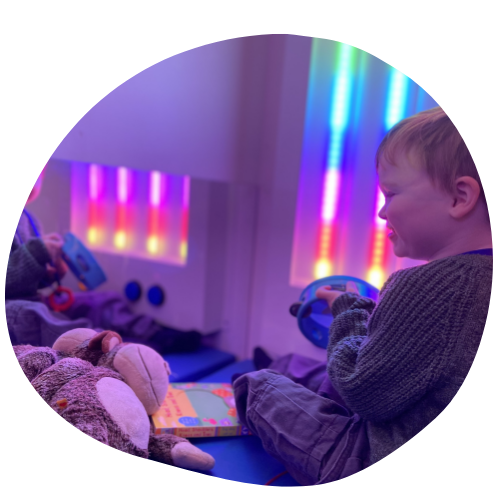
Using sensory lights in different ways
When emotions are big, bodies are tense, or the day has been long:
Sensory lights for calming
What does calming light do to the brain?
- Reduces sensory input
- Supports the “rest and regulate” system
- Lowers emotional reactivity
- Encourages slower breathing and softer attention
What does calming light look like?
- Soft blues, greens, or purples
- Low brightness
- Gentle glow or slow, predictable movement
- No flashing or sudden colour changes
How to use it at home?
- Turn lights on before a meltdown or shutdown if you notice early signs.
- Use during quiet play, reading, or winding down.
- Let the light sit in the background. It doesn’t need to be the focus
- Pair with comforting input like a blanket, cuddles, or stillness.
- Regulation often happens when nothing is demanded.
When energy is low, attention drifts, or transition feels hard:
Sensory lights for alerting and focus
What does alerting light does in the brain?
- Gently increases arousal
- Helps the brain orient and engage
- Supports readiness for action or learning
What does alerting light looks like?
- Warmer tones like yellow or soft white
- Slightly brighter light
- Gentle movement or visual interest
- Used for short periods
How to use it at home?
- As a transition cue: “When the light comes on, we’re getting ready.”
- Before homework, movement breaks, or getting out the door.
- Pair with active input like stretching or walking.
- Turn it off once focus is achieved.
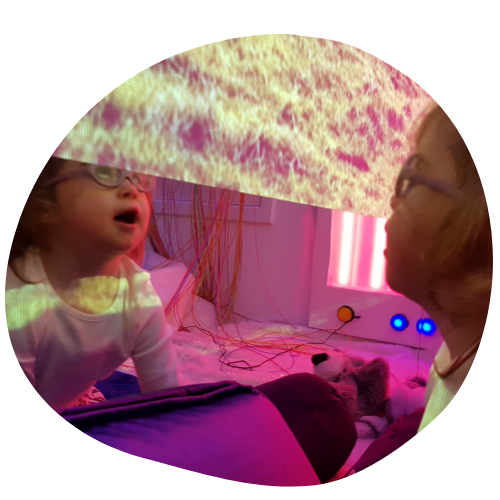
Every nervous system is different
Some children (and adults) are very sensitive to light. Watch for:
- Covering eyes
- Turning away
- Increased agitation or withdrawal
If you see these signs, the light may be too bright, too fast, or the wrong colour. Choice matters. When possible, let your child decide:
- Which colour feels best
- When to turn it on or off
- Where it sits in the room
Sensory lights as self support for adults
Sensory lights can support adults who:
- Feel overstimulated or anxious
- Struggle to wind down at night
- Experience sensory overload
- Need help transitioning between work and rest
Try:
- Soft lighting in the evening instead of overhead lights
- A consistent “calm light” after stressful moments
- Using light intentionally during breathwork or rest
Keep up to date with the latest SensationALL Self-Regulation Strategies on our socials!
