Regulate with movement

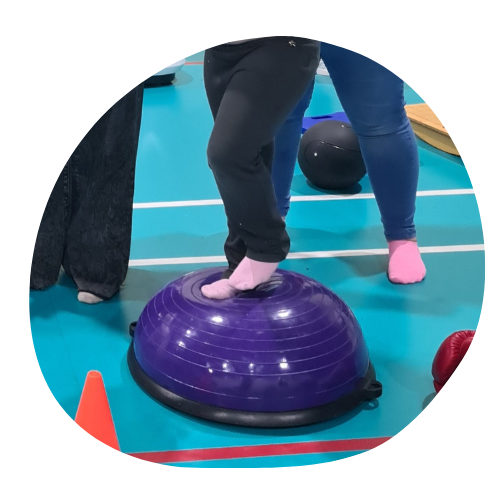
a child's feet balancing on a dome shaped BOSU ball

Does your child frequently bounce, wobble, climb, or constantly move? Or maybe you feel the need to keep moving, fidgeting or rocking. This is often the nervous system’s way of asking for organisation, grounding, or regulation.

One tool that beautifully meets this need is the BOSU ball.

This post explores how a BOSU ball supports regulation, focus, and sensory processing and offers gentle, affordable alternatives if buying one isn’t possible. Though – keep an eye out on second hand ones (Facebook marketplace are often where we find ours!).

A BOSU ball is a simple but powerful tool that we use all the time at SensationALL.

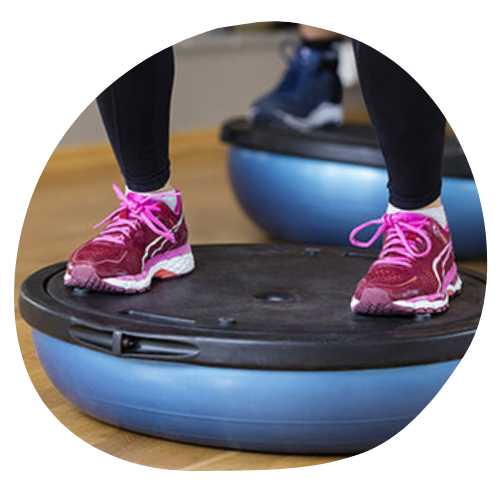
Originally designed as fitness device for balance training, they have two sides – a soft dome shape and a flat, hard base (sometimes with ridges for grip). When the dome side faces up, the BOSU ball provides an bouncy surface and when you flip it over, you can stand on the flat side which is a little wobbly.

The gentle bouncing or wobbling from using either side gives the body important feedback through muscles, balance, and posture. This kind of movement helps the nervous system settle and organise itself, helping you to feel calmer, more grounded, and ready to focus.

You don’t need specialist equipment to support regulation at home. The body responds to input, not brand names!

You can get the same movement and sensation from:

  • A stack of cushions or pillows – stand, kneel or sit on them to activate your core and improve body awareness
  • Yoga mat & towel – roll the towel and place it underneath the mat to create that wobble effect. Great if you want barefoot balance work.
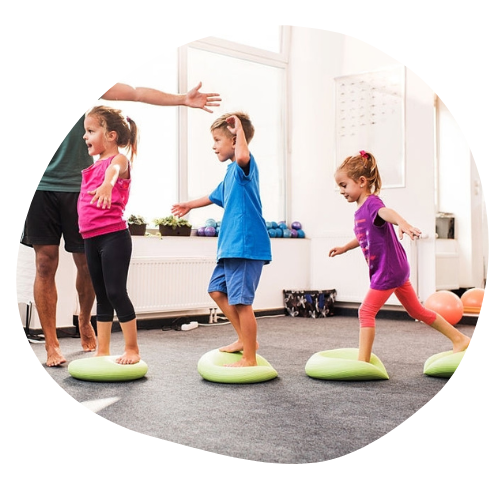
  • Inflatable cushion or wobble disc – much cheaper than a BOSU but provides similar postural and balance input.
  • Space hopper or gym ball – again these are easier to buy for home and will be great for bouncing – use slow for calming regulation or fast to stimulate (but avoid chaotic rhythms if calming is the goal!).
  • Stepping stones – Either bought or make your own with cushions, blankets or paper taped to the floor. They will encourage controlled movement and focus.

Movement strategies are not rewards or distractions – they are much-needed support. When someone is seeking motion it is often because they are trying to feel:

  • Safe in their body
  • Organised inside
  • Able to engage with the world

Whether you are using a BOSU ball, a cushion or something else, the magic effect will be the same:

Keep up to date with the latest SensationALL Self-Regulation Strategies on our socials!

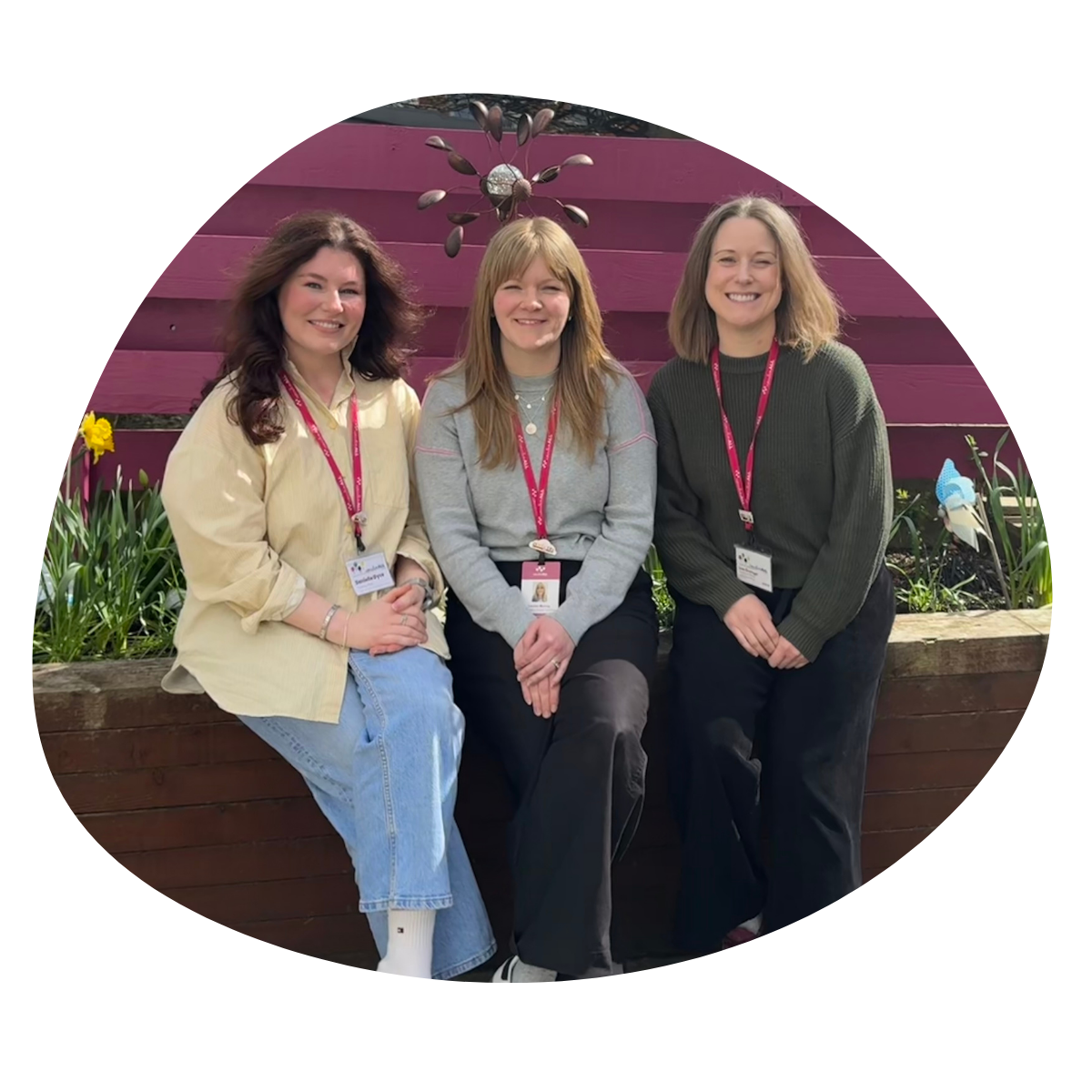
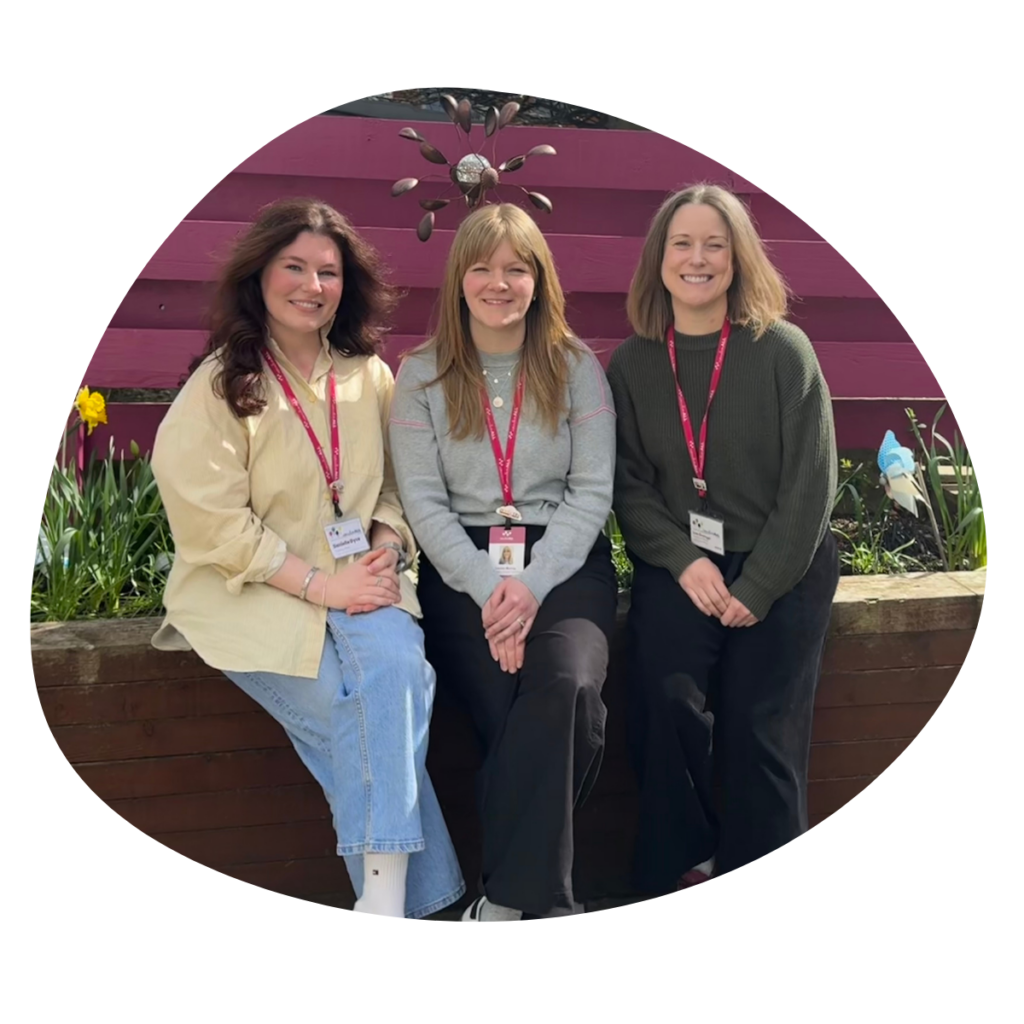
Meet our fundraising team!

Behind every fundraising event, appeal and social post at SensationALL is a passionate team working hard to ensure our services can continue to make a real difference.

As a registered charity, we are wholly reliant on donations and grants to cover the cost of running our activities and support groups.

Read more about the trio responsible for fundraising, volunteering and marketing – they are a busy bunch!


What does your role at SensationALL involve?
I lead our fundraising team and work closely with Louise and Danielle to generate much‑needed funds from grant giving organisations, individual and corporate donors and through our own events. As well as this, I oversee all our marketing activity, including branding, our website and social media platforms.

What do you like most about SensationALL?
I love how adaptive SensationALL is to the needs of the people who use our services. The team are always reviewing whether services are right for each individual and ensuring everyone has a positive experience. The support offered to each person truly is personalised which I think is incredible.

How long have you been at SensationALL?
8 years this June (not sure where the time has gone!!) and during that time my role has grown alongside the charity.

Favourite fundraising event?
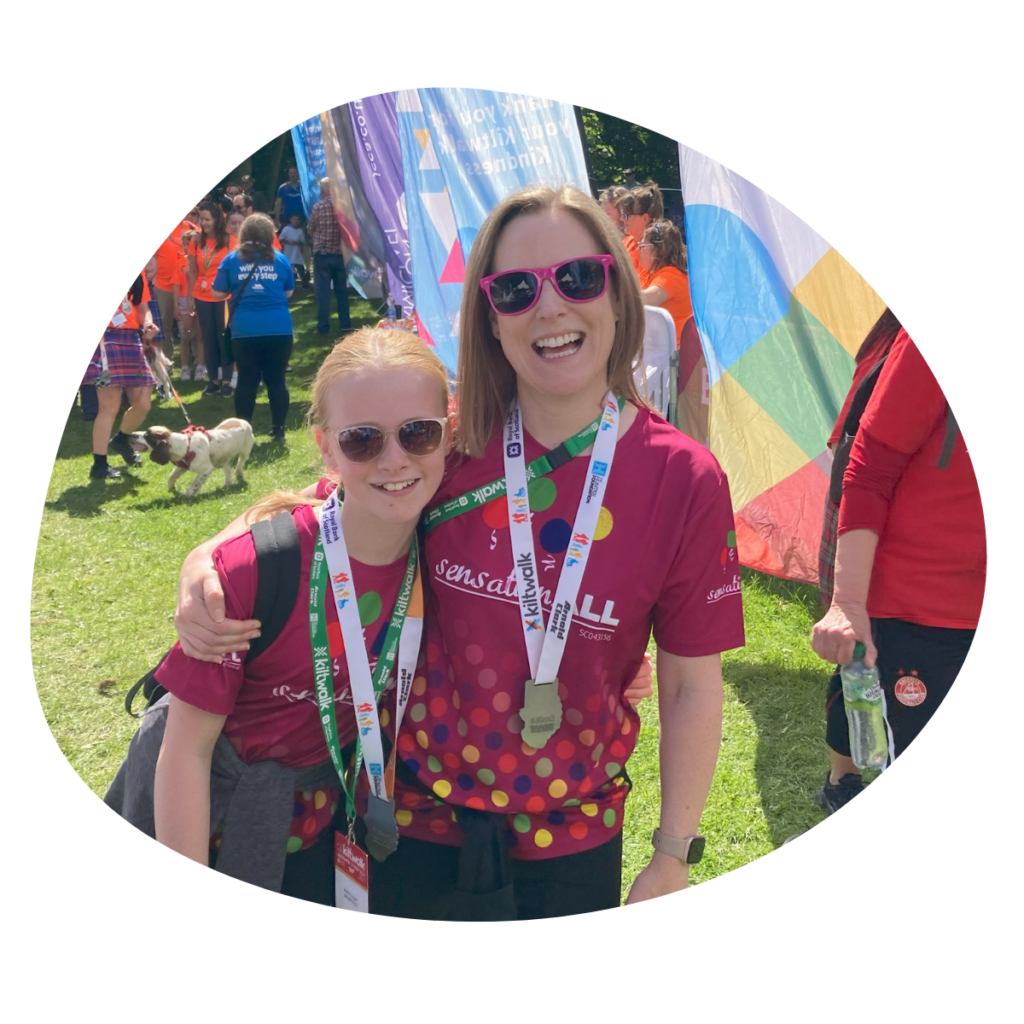
I really enjoy the Kiltwalk. I’ve done both the Wee Wander and the Mighty Stride with my family over the years, and it’s always such a fantastic day. The route is beautiful and the whole event has a real party atmosphere.

A fun fact about you!
I’ve become a bit obsessed with gardening (although I don’t really know what I’m doing!) and even went to the Chelsea Flower Show a couple of years ago. I love being in the garden, even if things don’t always grow as I planned!


What does your role at SensationALL involve?
In my role no two days are ever the same! It includes organising fundraising events and supporting people with their own fundraising, as well as looking after our amazing volunteers who support us across a wide range of roles.

What do you like most about SensationALL?
I love that SensationALL prides itself on creating opportunities for everyone. Hearing about the difference we make to so many families reminds me daily that I’m part of something really special.

How long have you been at SensationALL?
I’ve been with SensationALL for 3 years.

Favourite fundraising event?
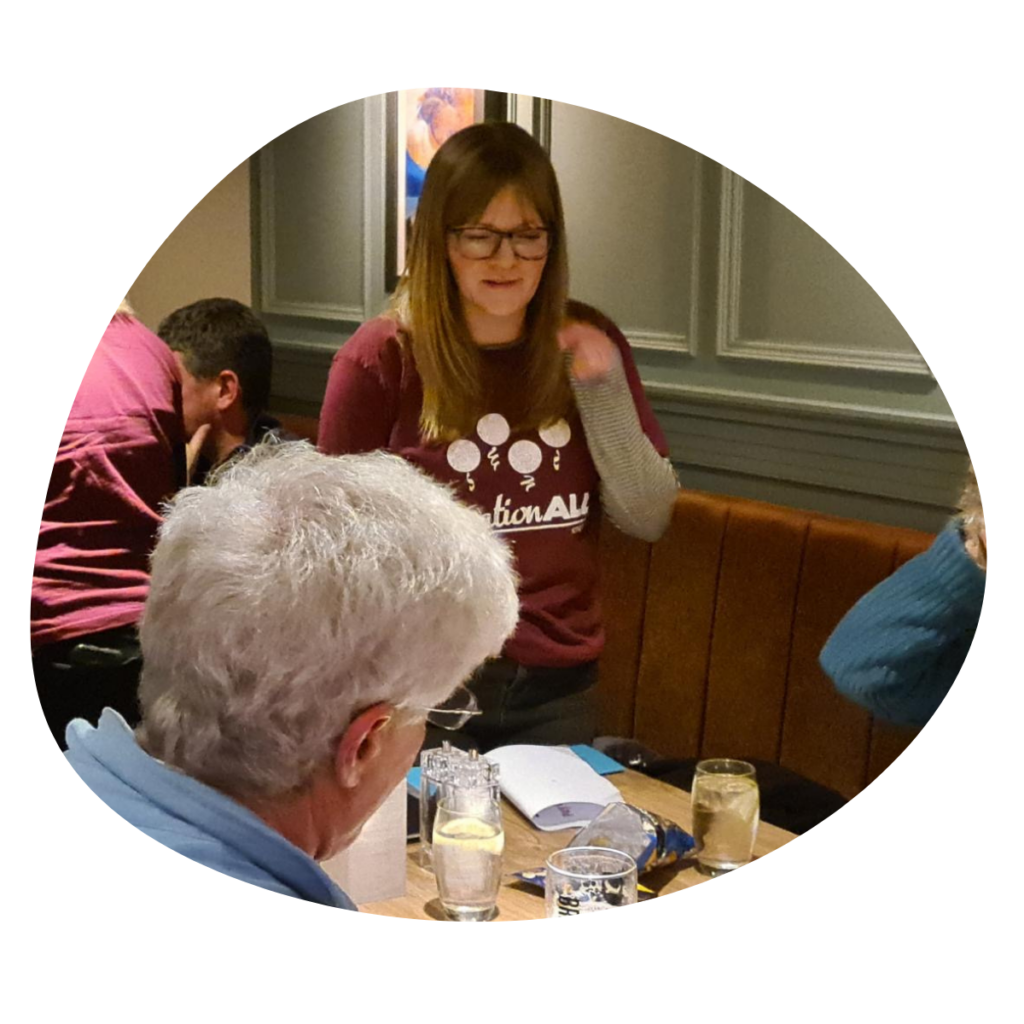
I love our quiz nights. It’s always great seeing familiar faces from our regular teams, and I really enjoy the friendly competition between rounds. Our quizmaster is an incredible volunteer who puts so much effort into making the evenings special for everyone.

A fun fact about you!
I spent a year teaching English in primary schools in central France before moving into marketing roles. My French is definitely a bit rusty now, though! 


If you want to help the team raise money for SensationALL they’d love to hear from you – events@sensationall.org.uk

Meet the admin team

Elaine and Ellie are our fabulous Service Coordinators who keep all the administrative functions of the charity running smoothly! They are the people who answer your email enquiries, book you onto sessions and take care of lots of other things including IT, health & safety and everything else to keep our buildings running smoothly!

What’s your role at SensationALL and what does it involve?
I am one of the Service Coordinators, concentrating on training (parents/professionals/employers), Learning Pathways Plus (LPP) sessions for individual neurodivergent schoolchildren, and organising the ‘Tea & Tips’ sessions (1-2-1 chats with a practitioner for parents). I also carry out some of the H&S tasks such as weekly fire alarm testing, fire extinguisher checks, the stocking of First Aid kits, plus building, garden, car park and play park inspections.

What do you like most about SensationALL / what does SensationALL mean to you?
I am in awe of our Service Team – their knowledge and compassion is amazing and when you see them working with our attendees, I just think they are awesome. I work in the Administration office and everyone in there is so kind and helpful, with a great sense of humour.  It’s a pleasure to go into work each day and I am immensely proud of the work that we all do.

How long have you been at SensationALL?
I’ve been here for just over 3 years now.

What’s your favourite sensory activity?
I love the vibration plate!  If I have a couple of minutes whilst boiling the kettle, you’ll probably find me on the machine getting a good shake down!  I also love standing on a Bosu balance ball – it feels like I’m doing some exercise.

A fun fact about yourself!
I am also a Wedding Ceremony Officer, as well as a Match Day First Aider at Pittodrie.  In my spare time, I volunteer with the Scottish Charity Air Ambulance and as a Community Cardiac Responder in Westhill.

What’s your role at SensationALL and what does it involve?
My role consists of being the primary point of contact for our families and finding support and sessions that are beneficial for them. (and a whole bunch of background IT stuff!)

What do you like most about SensationALL / what does SensationALL mean to you?
My favourite thing about SensationALL is seeing how much it helps our service users and their families. It’s the only place I’ve ever worked where it feels like I really make a difference.

How long have you been at SensationALL?
Almost three years! I started back in May 2023 with way less grey hair!

What’s your favourite sensory activity?
Baking! Especially anything involving chocolate but it has to be vegan.

A fun fact about yourself
I recently got into running and my first ever competitive race was Edinburgh marathon last year! I then did Tough Mudder two weeks after and 4 other races before the end of 2025. 

Regulate with sensory lights

Whether you are supporting a child at home or learning to regulate your own nervous system, light can become a great resource in your toolkit, rather than a ‘nice-to-have’.

Light doesn’t just help us see. It talks directly to the brain.

The brain uses light information to decide:

  • Am I safe or on alert?
  • Can I rest or do I need to act?
  • Is this environment predictable or overwhelming?

For sensitive or neurodivergent nervous systems, lighting can either soothe the body or quietly push it toward overload. The key is how the light is used.

When emotions are big, bodies are tense, or the day has been long:

When energy is low, attention drifts, or transition feels hard:

Some children (and adults) are very sensitive to light. Watch for:

  • Covering eyes
  • Turning away
  • Increased agitation or withdrawal

If you see these signs, the light may be too bright, too fast, or the wrong colour. Choice matters. When possible, let your child decide:

  • Which colour feels best
  • When to turn it on or off
  • Where it sits in the room

Sensory lights can support adults who:

  • Feel overstimulated or anxious
  • Struggle to wind down at night
  • Experience sensory overload
  • Need help transitioning between work and rest
  • Soft lighting in the evening instead of overhead lights
  • A consistent “calm light” after stressful moments
  • Using light intentionally during breathwork or rest

Keep up to date with the latest SensationALL Self-Regulation Strategies on our socials!

Celebrating Neurodiversity: How SensationALL supports our community 

At SensationALL, we provide support for people of ALL ages and conditions and their family members removing the barriers of a formal diagnosis. Currently, we interact directly with over 480 individuals each year across 800+ sessions, but the demand we face is much greater. With over 1,900 registered service users and close to 200 named on our waiting lists actively seeking a space in one or more of our services, it’s clear that we need to do more. 

As a charity who receive no statutory funding, we rely entirely on grants, donations, corporate partnerships, and fundraising efforts to keep our services running. Like many charities, we are navigating an increasingly competitive funding landscape, with reduced funding available and rising demand leading to higher rejection rates. 

Our groups are different to mainstream or public recreational activities because we create a safe, welcoming environment where our specially trained staff support attendees so they can: 

  • Recharge and express themselves freely 
  • Build genuine friendships 
  • Reduce loneliness and isolation, reducing mental health risks 
  • Connect with a community of people who accept them as they are 

We carefully match each person to a group that suits their needs. Sessions are designed to help people with sensory processing or emotional issues to build skills that will improve confidence, social interaction and resilience. 

To ensure everyone can thrive we: 

  • Keep group sizes small (an average of 6-8 per session) 
  • Considers the person needs of attendees not just age so we can meet their behavioural and sensory needs  
  • Operate waiting lists to accurately gauge demand for each service and support level 

Sadly, despite our best efforts to grow services, waiting lists are increasing faster than ever before and many are left waiting for support they can’t access anywhere else. 

At SensationALL, we believe everyone deserves equal access to meaningful social opportunities. For many, our groups are their only opportunity to make friends and feel a sense of belonging. 

We also support parents and carers, helping them feel informed, confident, and connected. Our families report: 

  • Improved mental health and wellbeing 
  • Stronger family dynamics 
  • Loved ones developing better self-regulation and social skills 

Our approach creates a supportive environment for the whole family, enabling individuals to thrive at every stage of life. 

We are working hard to expand our timetable and create more spaces, but we need your help. The funding climate is tough for all charities, so donations, corporate partnerships, and fundraising support means more than ever!  

Every pound you contribute will enable us to reach more people and provide the vital services our community relies on. 

You can make a difference: 

  • Fundraise for SensationALL – there are so many opportunities coming up, why not do the Kiltwalk for us in 2026?! 
  • Dontate to SensationALL or support our fundraising campaigns 

Together, we can ensure that every neurodivergent individual and their family in the north east has the support they deserve to thrive. 

Meet the service team!

Collectively our team of practitioners and support workers have decades of experience working with people with complex needs and a wealth of knowledge and expertise.

about Chloe

What’s your role at SensationALL and what does it involve?
My role as Service Team Lead bridges service demand, design, and delivery with operations and HR. I collaborate with the operations team, session coordinators, and Clinical Team Lead to schedule and deliver services, recruit and allocate staff, lead our team of practitioners and youth workers, manage appraisals and training needs, as well as have fun in some sessions too!

What do you like most about SensationALL?
The shared passion within the team for supporting neurodivergent individuals, their families, carers, and the wider community. The genuine, authentic care shown by the team drives our work and ensures that a needs-led, person-centred approach remains at the heart of everything we do. I feel proud to work for a charity that retains such a strong sense of purpose and fosters an environment built on inclusion, understanding, and lived experience.

How long have you been at SensationALL?
I have been at SensationALL for over 3 years now, starting in a Youth Worker position in 2022, and becoming Service Team Lead in 2023. 

What’s your favourite sensory activity?
My favourite sensory activities are movement-based. I especially enjoy using the balance boards and vibration plates, as well as active games in the soft play room, particularly hide and seek or grounders. I also love making slime!

about Rebekah

What do you like most about SensationALL / what does SensationALL mean to you?
What I love most about SensationALL is the deep respect for every child and adult as an individual. SensationALL means safety, understanding, and possibility to me. It’s a place where differences are welcomed, nervous systems are honoured, and children are supported to thrive in ways that feel right for them.

How long have you been at SensationALL?
I’ve been part of SensationALL for 8 years.

What’s your favourite sensory activity?
My favourite sensory activity is anything involving deep pressure or heavy work. It’s grounding, regulating, and such a powerful way to help children feel safe and settled in their bodies.

about Fran

about Marie

about Caitlin

about Jo

In addition to these wonderful people we have an enthusiastic team of support & youth workers who assist the practitioners during sessions.

Understanding your senses – hearing

For some people, sound feels calming and grounding. For others, it can feel confusing, distracting, or overwhelming. This guide gives you an easy way to understand what you, or your child, might be experiencing, and how to find calm, connection, and comfort at home.

Auditory processing is the brain’s ability to:

  • notice sound
  • filter out background noise
  • understand speech
  • tell where sound is coming from
  • use rhythm and tone
  • stay regulated in noisy spaces

When this system works smoothly, people feel settled, focused, and ready to learn or play. When it struggles, their behaviours will often show this.

When we hear sound, it goes straight to the part of the brain that decides “I’m safe” or “I’m not safe.”

For sensitive nervous systems, this can mean:

  • small sounds can feel huge
  • sudden noise can trigger fear
  • silence feels calming
  • loud, rhythmic sound can feel grounding
  • music helps regulate emotion
  • predictable sound feels safe

There are two common ways in which people can respond to sound: over-responsive and under-responsive. They can be seen in children, teens and adults.

Over-responsive is when sound can feel too much. This happens in children, teens and adults. You might notice:

  • Hands over ears
  • Avoids noisy places
  • Gets upset with sudden sounds
  • Startles easily
  • Prefers quiet and calm
  • Meltdowns or anxiety which is triggered by noise
  • Noise-reducing headphones
  • Reduce background noise
  • Warn them before any loud sounds
  • Speak slowly with fewer words
  • Create a quiet corner at home
  • Use soft rhythmic music

Under-responsive is when sound does not register strongly enough.

  • Doesn’t respond to their name right away
  • Needs instructions to be repeated
  • Turns music up loud
  • Seeks noise (hums, taps, bangs)
  • Enjoys busy, loud environments
  • Struggles to focus without sound
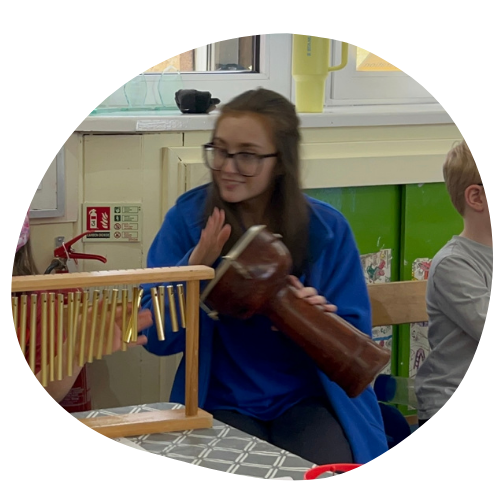
  • Use songs and rhythms for routines
  • Add movement and sound together (clap, drum, stomp)
  • Clear, short instructions
  • Listening games
  • Musical toys or instruments
  • Use a sound to cue to get attention

Supporting the auditory system isn’t about forcing tolerance. It’s about helping the nervous system feel safe, steady, and understood!

Keep up to date with the latest SensationALL Self-Regulation Strategies on our socials!

Regulate with floor time

For many neurodivergent people, the floor is a powerful regulation tool. Floor time isn’t about getting in the way, making a mess or being lazy… it is about the nervous system feeling safe, grounded and supported.

Before you can focus, listen, learn, or communicate your nervous system needs to feel settled.

Neurodivergent nervous systems often process sensory information differently.

Sitting upright on a chair, staying still, or holding a particular posture can take a huge amount of effort, leaving less energy for learning or emotional regulation.

There is a scientific basis to support the use of floor time:

1. Proprioception: Feeling grounded and secure

Proprioception is the sense that tells us where our body is in space. When you sit or lie on the floor, you receive:

  • Firm contact through the legs, hips, and spine
  • Gentle pressure through muscles and joints
  • Clear feedback about where your body is
  • Input that helps the brain feel safe and organised.

The floor gives the body more information, more sensory feedback, and more support, which helps the brain relax.

So ultimately, being on the floor can reduce anxiety, support emotional regulation, and make it easier to concentrate.

2. Vestibular input: Balance without overwhelm

The vestibular system helps with balance, movement, and alertness. Floor positions naturally allow:

  • Shifting weight
  • Rocking gently
  • Changing positions easily
  • Crossing the midline

The movement helps you stay regulated without becoming over-stimulated, supporting focus without tipping into restlessness.

3. Tactile input: Predictable, calming touch

Putting it simply, the floor is solid. It provides steady and predicable touch.

So unlike light or unexpected touch, which can feel overwhelming for some people, contact with the floor is consistently reliable which can be calming.

You can change your body position to respond to the needs of your nervous system by alternating between the floor and seats in line with your mood.

For many, the floor acts like an anchor, helping you stay connected to your body and the moment.

Being close to the ground can:

  • Slow down breathing
  • Reduce emotional overwhelm
  • Improve body awareness
  • Support people who dissociate or shut down
  • Help people feel present and calm

Plus, anything can be done on the floor! For both adults and children the floor can be multi-functional – learning doesn’t have to stop because you are on the floor.

  • Read or write lying on your tummy
  • Build, sort, and play sitting on a rug
  • Talk through feelings leaning on cushions
  • Do homework while sprawled out comfortably
  • Do some stretches or yoga on a mat

Avoid using negative language when someone is using the floor. Comments like “Sit properly” or “Get up off the floor” can be upsetting and lead to increased dysregulation.

Instead try supportive phrases like:

  • “Would the floor feel better?”
  • “Let’s take this down to the ground.”
  • “What does your body need right now?”

Keep up to date with the latest SensationALL Self-Regulation Strategies on our socials!

Breathing Games

Deep, slow breathing stimulates the vagus nerve, one of the main connections between brain and body, which helps to shift the body from “fight/flight” into a calmer “rest/digest” state. It doesn’t matter what the breath is – it’s about breathing with purpose!

Breathing Games use imagination, movement, and fun to make breathing accessible and enjoyable. Instead of asking a child to “take a deep breath” (which can feel a bit abstract or pressured), we bring it into play to encourage curiosity and connection.

Breathing games are a great way of supporting emotional regulation, especially among children. They:

  • help to regulate the nervous system
  • encourage self-awareness
  • help to develop self-regulating skills
  • support emotional safety, by removing pressure and finding fun
  • encourage co-regulation where adults can model calm and connection
  • Creates a feeling of calm, moving the body out of “flight or flight” mode.
  • Accessible anywhere – we can use these games in almost any environment and they require no equipment.
  • Builds self-esteem and control by giving children a concrete tool to manage big feelings.
  • Encourages conscious reflection of body signals like heart rate and muscle tension.
  • Keep the instructions obvious and clear – “breath deeply” doesn’t work for many children!
  • Keep it short and playful – 30 seconds to two minutes for younger children
  • Use all the senses – this might mean using pictures, objects, music, story-telling or movement
  • Make it a routine – breathing can become a familiar tool, not just an emergency skill

Why not try some of our games at home or when you are out and about! We have different games for different ages – check them out here:

Keep up to date with the latest SensationALL Self-Regulation Strategies on our socials!

Self-regulation spotlight – Deep Pressure!

At SensationALL, we use a wide variety of sensory-informed strategies during our sessions and interactions with people with neurodivergent conditions and additional support needs.

In this article, Clinical Lead, Rebekah, explains why these approached are important, and how they can benefit you or your loved one.

What is it?

Deep pressure stimulation (DPS) means applying consistent, gentle weight or compression to the body.

This can be through weighted blankets, firm hugs (with consent), compression garments, or activities like pushing/pulling heavy objects.

How does it work?

Deep pressure activates the body’s proprioceptive system and sends signals to the brain that help reduce anxiety, increase focus, and create a feeling of safety. This can be particularly beneficial for individuals who may experience sensory overload or dysregulation!

Here are a few suggestions for activities based on age groups that incorporate deep pressure!

Young children (ages 2-6)

  • Compression hugs or “body sandwich” with cushions
  • “Steamroller” game (child lies under a blanket/mat or cushion and is gently rolled
  • over with pressure)
  • Rolling in a blanket (like a burrito)
  • Animal walks: bear crawl, crab walk — heavy work through limbs
  • Tug-of-war or pulling toys

Children (ages 7-12)

  • Weighted lap pads during seated tasks (school, homework)
  • Heavy work jobs: pushing laundry baskets, carrying books, stacking chairs
  • Deep pressure massage or brushing protocol (e.g., Wilbarger)
  • Yoga poses with joint compression (downward dog, child’s pose with hands
  • pressing into floor)
  • “Pillow pile crash”: jumping into a beanbag or soft pile
  • Fidget tools that provide resistive feedback (therapy putty, stress balls)
  • Introduce self-advocacy: “When I feel jittery, I can do __ to feel better.”

Teens (ages 13+)

  • Compression vests or snug athletic clothing
  • Weighted blankets or wraps during relaxation, sleep, or transitions
  • Wall push-ups, planks, or resistance band exercises
  • Therapeutic massage or self-massage tools (foam rollers, vibrating pads)
  • Carrying a loaded backpack briefly (not for long periods)
  • Using gym equipment for proprioceptive input: rowing machines, resistance training

If you find that deep pressure works for you, it might be worth considering how this can be part of your everyday routine. Here’s a few examples of how deep pressure can be applied to your daily routine:

  • Morning: Wall pushes, body squeezes, weighted breakfast chair pad
  • School: Lap pad, heavy backpack (briefly), resistance putty during listening
  • Afternoon: “Heavy work” chores or play, trampoline or crash pad time
  • Transitions: Compression vest, bear hug, or pillow sandwich before car rides or errands
  • Bedtime: Massage, weighted blanket, yoga or child’s pose

When using these strategies, it is important to follow a number of safety tips!

  • Always person-led: Deep pressure should never be forced; it must feel safe and comforting!
  • Time-limited: Weighted blankets or vests should be used for 20 minutes at a time.
  • Observe response: Signs of dysregulation (sweating, agitation, zoning out) means it’s too much input.
  • Use appropriate weight: Weighted items should be around -10% of the child’s body weight, or minus 1-2lbs, depending on modality. Always ensure you are adjusting the weight and communicating with the person – deep pressure can vary for everyone!
  • Pair with co-regulation: Use deep pressure WITH verbal reassurance and a soothing tone.

Deep pressure is a powerful, non-verbal language of safety. It tells the body: you are grounded, you are held, you are safe. When used respectfully, it becomes a ritual of care, a bridge between nervous system healing and daily life.

Follow us on socials for more useful self-regulation tools and strategies!