
Touch (the tactile sense) is all around us — from the clothes we wear, to the handshakes we give, to the textures of food or toys. But not everyone experiences touch in the same way.
Some people love certain types of touch, while others find it overwhelming or uncomfortable. Understanding how touch works in the brain can help us support regulation, comfort, and confidence for children and adults alike.

What is the Tactile sense?
The tactile system is our sense of touch. It tells us:
- What things feel like (rough, smooth, soft, sticky)
- Whether something is hot or cold
- How much pressure or force we’re feeling
Touch helps us feel safe, aware, and connected, to our bodies, to objects, and to other people. It also affects our emotions, focus, and energy levels.
When touch feels too strong, too light, or unpredictable, we might see behaviours like avoiding hugs, seeking extra pressure, or fidgeting constantly.
Understanding Touch differences and needs . . .
Touch can be a very personal sense and, like many of our other senses, people’s responses to varying types of touch can be very different.
So it is good to be able to identify different responses and have some strategies on how to support them.

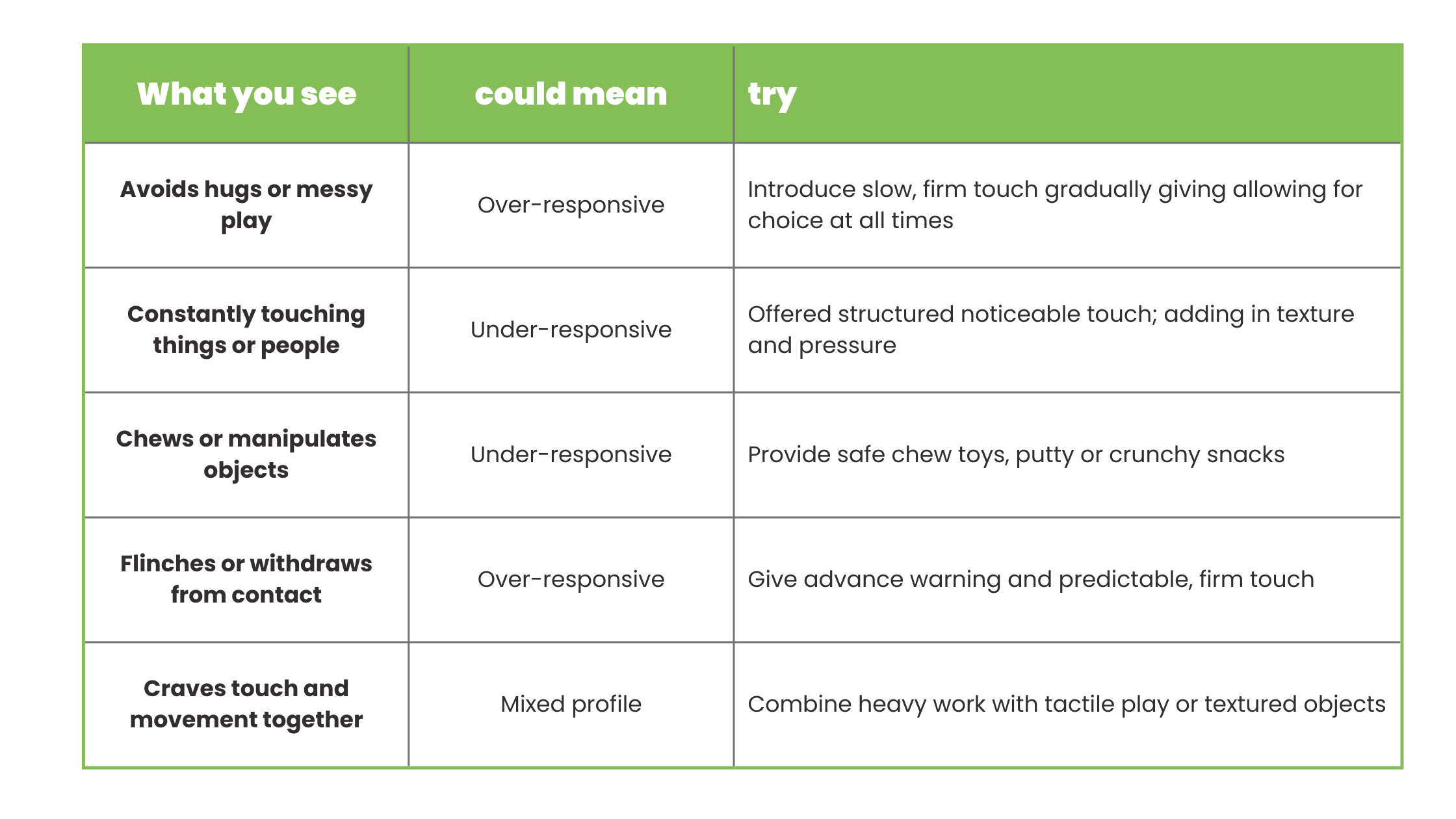
Feeling Under-responsive (hyposenstive)
These people may not notice touch, or may need a stronger input to feel it. You might notice:
- Constantly touching objects, surfaces, or people
- Not noticing pain, temperature or light touch
- Chewing on clothing, toys or pencils
- Enjoying textures or movement combined with touch
How to balance this:
- Offer strong, structured touch: pushing, pulling, carrying or squeezing objects
- Include different textures in play or daily routines
- Pair touch with movement; crawling, climbing or rolling
- Try fidget tools, textured toys or crunchy snacks
Feeling Over-responsive (hypersensitive)
These people feel touch too strongly. Even normal touch can feel uncomfortable or alarming. You might notice:
- Avoiding hugs, handshakes or party games
- Disliking certain fabrics, tags or tight clothing
- Flinching, withdrawing or becoming upset with unexpected touch
How to balance this:
- Offer slow, firm, predictable touch rather than light or tickly contact
- Give choice and control: “Do you want me to help or do it yourself?”
- Introduce messy play and new textures gradually
- Try weighted blankets, firm hugs or deep pressure if welcomed
How does touch help us regulate?
The right kind of touch helps the nervous system feel safe and balanced.
- It calms anxiety and supports emotion regulation
- It increases attention and focus
- It helps build confidence and comfort in social situations
It’s a good idea to incorporate strategies and methods into your daily routine to proactively regulate your body which will make you feel secure and in control. Plus, it will massively improve mood and happiness!
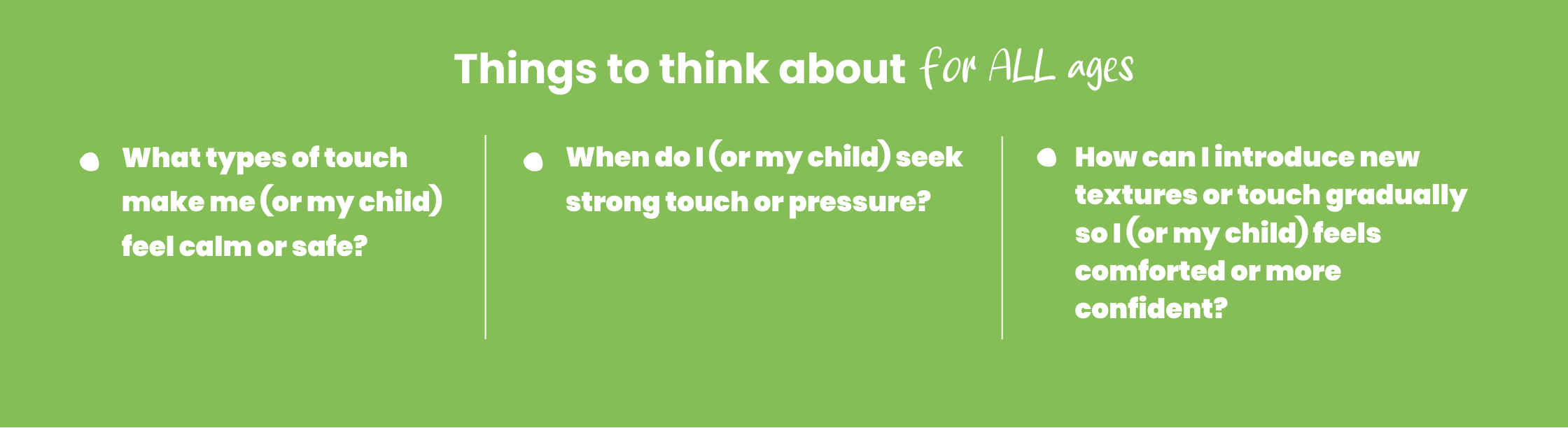
Here are some of our suggestions but remember… everyone is unique:
Keep up to date with the latest SensationALL Self-Regulation Strategies on our socials!
