
Visual aids and timetables are a simple yet transformative tool to support regulation, communication, and independence in sessions.
Many neurodivergent people need structure and routine to feel calm and comfortable. In our sessions, we use visual timetables and ‘now, next’ boards to help our attendees understand the plan for the day. This can also help prepare for transitions and changes in activities or tasks.
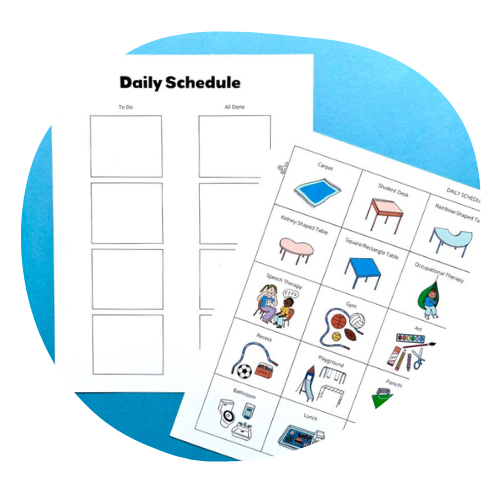
What are visual timetables?
A visual timetable can be in various different formats but it is always a clear, visual sequence using pictures, symbols, words, or even objects to show what is happening and in what order.
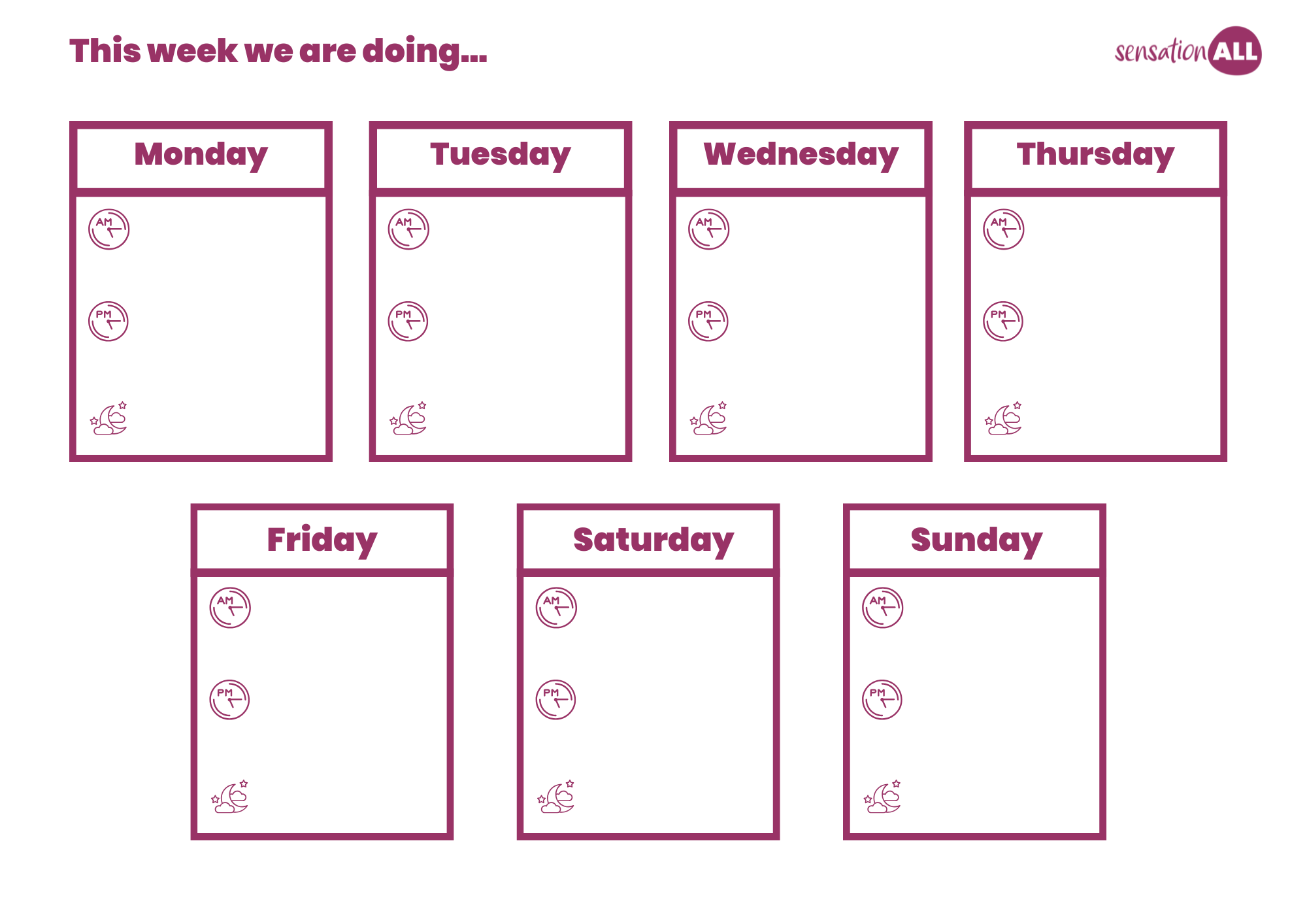
At home you can use a visual timetable for a daily plan, an activity schedule, or even a whole week. This is particularly useful at times when routine changes like during holidays or special events.
Why are timetables important?
Transitions and unpredictability can feel overwhelming, especially for neurodivergent people. A visual timetable will:
- reduce anxiety
- increase predictability
- aids communication
- encourages independence
- creates consistency
By making time visible, we help people feel safer, more in control, and better able to participate in meaningful activities.
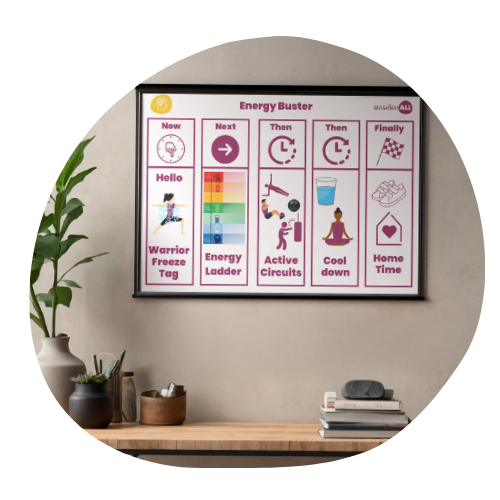
What are the benefits:
- Helps executive function by reducing cognitive load. By presenting clear sequencing you can improve focus.
- Supports attention & memory because visual cues free-up brain space.
- Helps people feel in control – as you can check what’s happening next instead of relying on other people to tell you.
- Improves family communications – everyone can see what’s on the schedule if it is on display.
- Eases transitions – fewer meltdowns and quicker adjustments between tasks.
How to use visual timetables…
You can incorporate visual timetables into every day life or just for specific situations like holidays and events.
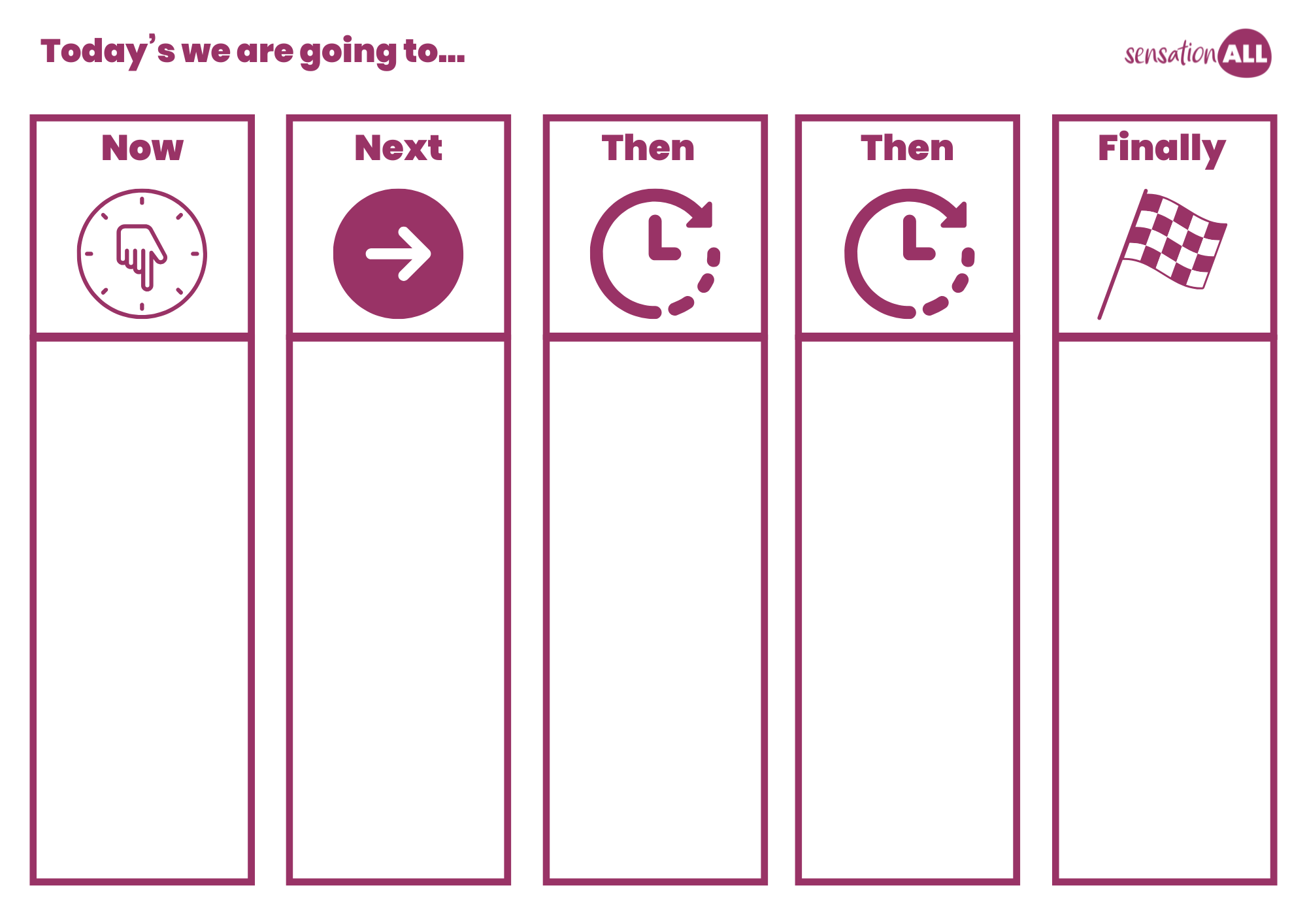
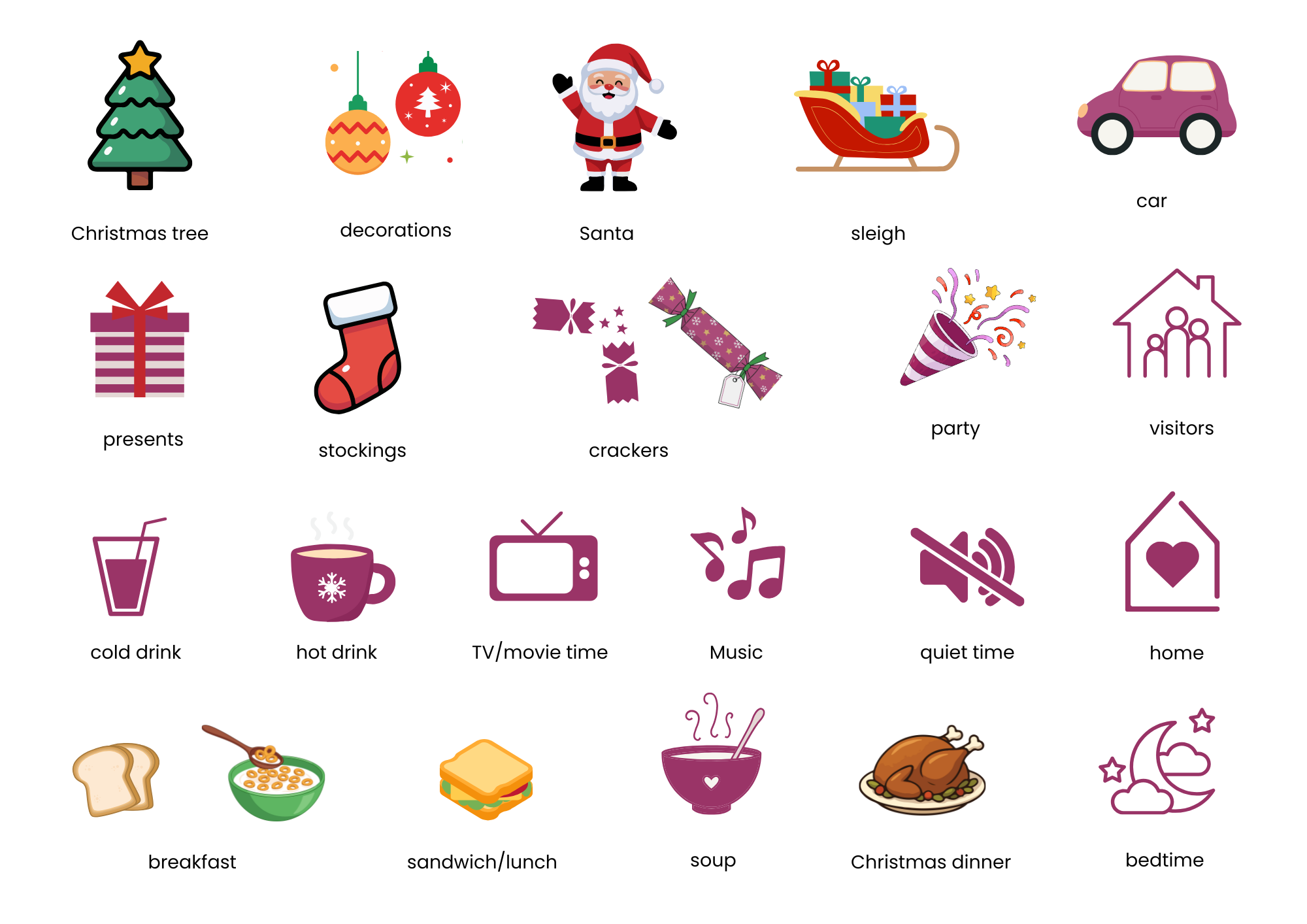
Here are some downloadable visuals you can use to create your own timetables:
Keep up to date with the latest SensationALL Self-Regulation Strategies on our socials!
