
Have you ever noticed that you (or your child) move constantly, crash into furniture, push too hard in play, or struggle to sit still? Or maybe the opposite is true… actively avoiding movement, inexplicably fearful of climbing, jumping etc.
These are often signs that the body’s awareness system, is craving input or trying to find balance.
The body’s internal Vestibular system (located in the inner ear) can cause trouble when it is out of balance as you will experience changes in behaviour, mood and energy. But, when it is working well you feel safe, strong, and organised from the inside out. In this blog, we give you an insight into why you like certain types of movement and how to counteract behaviour with physical strategies.

What is the Proprioceptive system?
Proprioception is the automatic sense that tells us where our body is in space and how to move freely without conscious thought. It’s what enables us close our eyes and still touch our nose, grip items with the right amount of pressure, or control the strength of a hug.
We have proprioceptive receptors in our muscles, joints, and tendons which send messages to the brain every time we push, pull, squeeze, stretch, or move our body.
These signals help the nervous system:
- Know where the body is in relation to space and things around us
- Control our movement and posture
- Feel calm, grounded, and secure
- Regulate our energy levels and emotions
Why is it important?
When this system is working well, you will feel grounded, stable, and ready to learn. You’ll be able to move confidently, judge force accurately, and stay more regulated during challenges.
BUT… when it’s not fully balanced, (so is under or over-responsive) you might feel the need for constant movement, often bump into things, or experience clumsiness. In children, you might witness boisterous behaviour or they might completely avoid touch and physical play altogether.
How to spot your Proprioceptive needs…
The way you move and interact with others will change depending on lots of different factors, your environment, stress levels, emotions, the people you are with etc.
So it is good to understand the different behaviours and how to counteract them to stay balanced.
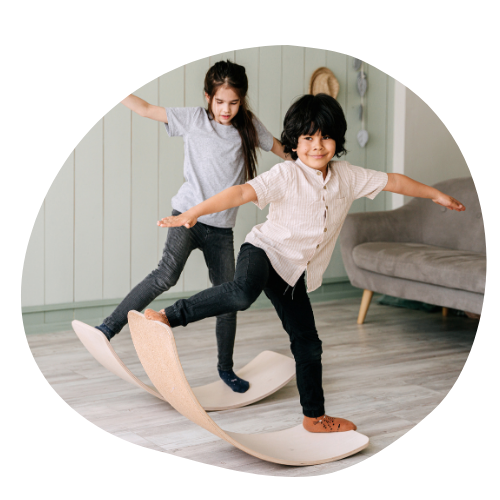
Feeling Under-responsive
You are craving more input to “wake up” the body and you might:
- Constantly be on the go! Jumping, spinning, running etc.
- Often bump or crash into people and objects
- Struggle to sit still or concentrate
- Use too much force in play, writing or grip
- Enjoy tight hugs, wrapping up in blankets, or carrying heavy things
- Seek rough or high energy activities.
How to balance this
Movement helps you wake up and feel alive but it needs to be structured to be controlled and healthy:
- Schedule ‘movement breaks’ in the day
- Push/pull or lift/carry heavy items/toys
- Build dens, move furniture, or dig in the garden
- Do exercise to activate big muscles (for children that could be a game of moving like animals, bear crawls, frog jumps etc.)
- Include rhythm by dancing, skipping or marching to satisfy your need for high tempo movement
Feeling Over-responsive
You are oversensitive to input and easily overwhelmed by sensations or touch. For example:
- Movement feels too much, or unsafe
- Feel dizzy or unsettled by sudden movements.
- Prefer light movement and controlled activities
- Being hyper aware of tags, seams or zippers on clothes. Tight or ill-fitting clothes can be stressful.
- Children actively avoid messy play and rough-and-tumble games.
How to balance this
Keep physical movement slow and at the level you are comfortable with so it isn’t overwhelming. You/they must feel in control:
- Deep pressure – weighted blankets, firm hugs (if welcomed), or rolling a ball over the body
- Rocking, swaying or gentle walking.
- Try yoga or relaxation exercises
- Develop calming routines that include safe, consistent physical touch (maybe bedtime massage or cuddles).
The goal isn’t to stop the movement seeking/avoiding behaviours but to find balance and feel safe in your body.
Take some time for reflection on what movement does to you and how you feel with different types of motions. What kind of movement makes you feel calm, happy or safe? Are there any things you like to do when you feel restless or anxious or tired?
Here are some signs and behaviours to look out for:
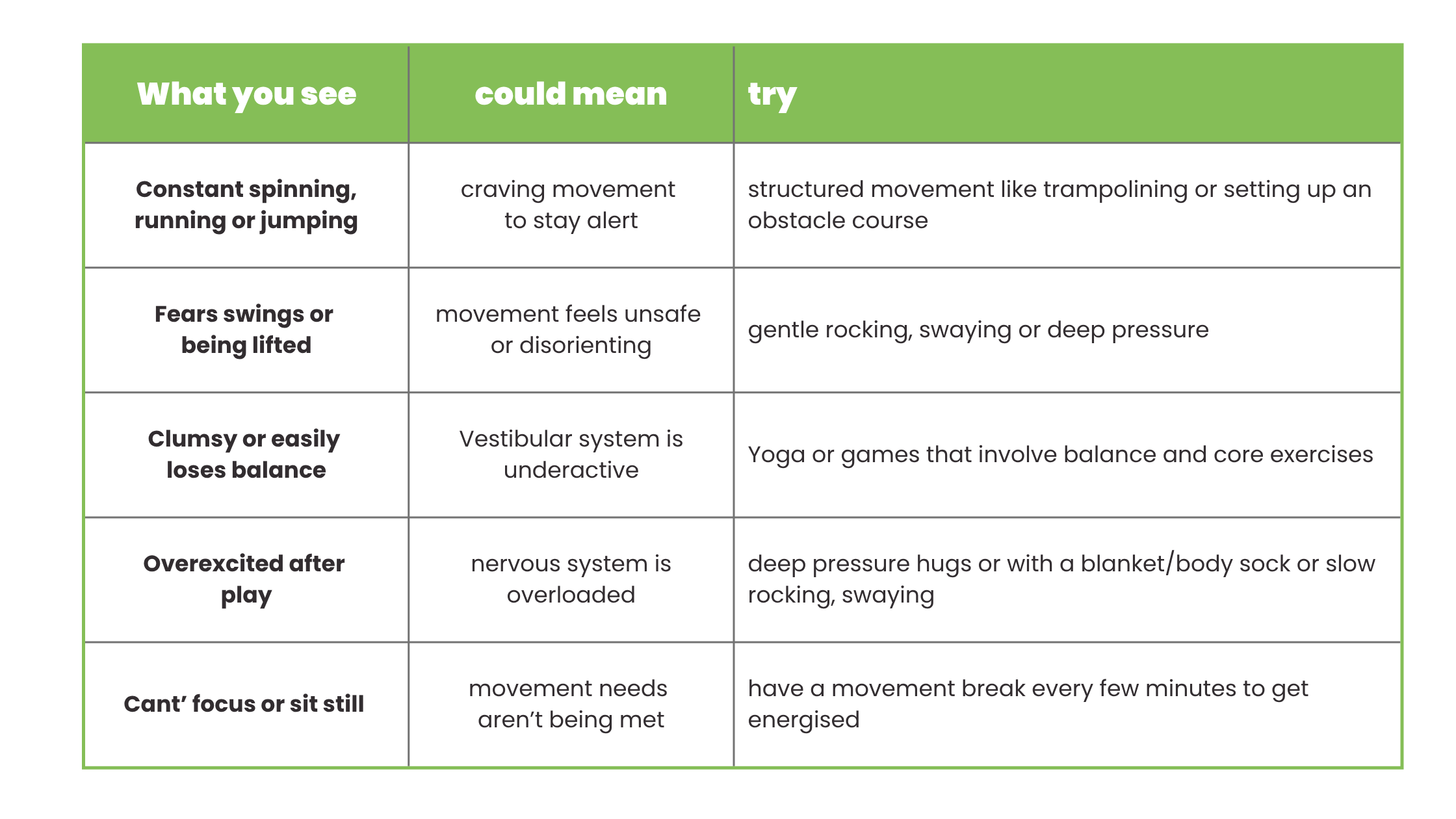
It’s a good idea to incorporate strategies and methods into your daily routine to proactively regulate your body which will make you feel secure and in control. Plus, it will massively improve mood and happiness!
Here are some of our suggestions but remember… everyone is unique:
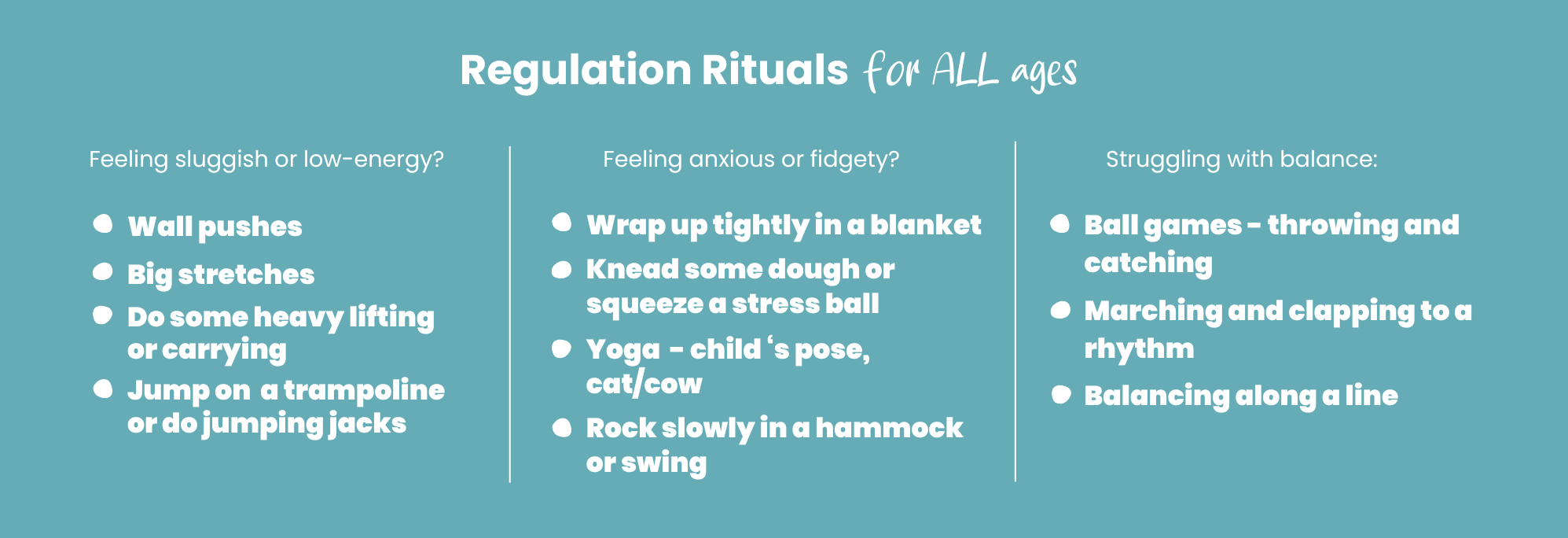
Keep up to date with the latest SensationALL Self-Regulation Strategies on our socials!
