
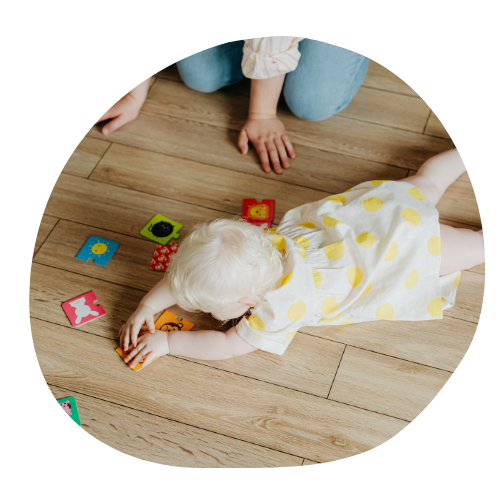
Do you ever feel that you do your best thinking or relaxing while sitting on the floor? Maybe your child plays best when they are lying on the floor. Well there’s a good reason for it and we explore using the floor as a regulation tool in this blog.
For many neurodivergent people, the floor is a powerful regulation tool. Floor time isn’t about getting in the way, making a mess or being lazy… it is about the nervous system feeling safe, grounded and supported.
Why regulation starts in the body
Before you can focus, listen, learn, or communicate your nervous system needs to feel settled.
Neurodivergent nervous systems often process sensory information differently.
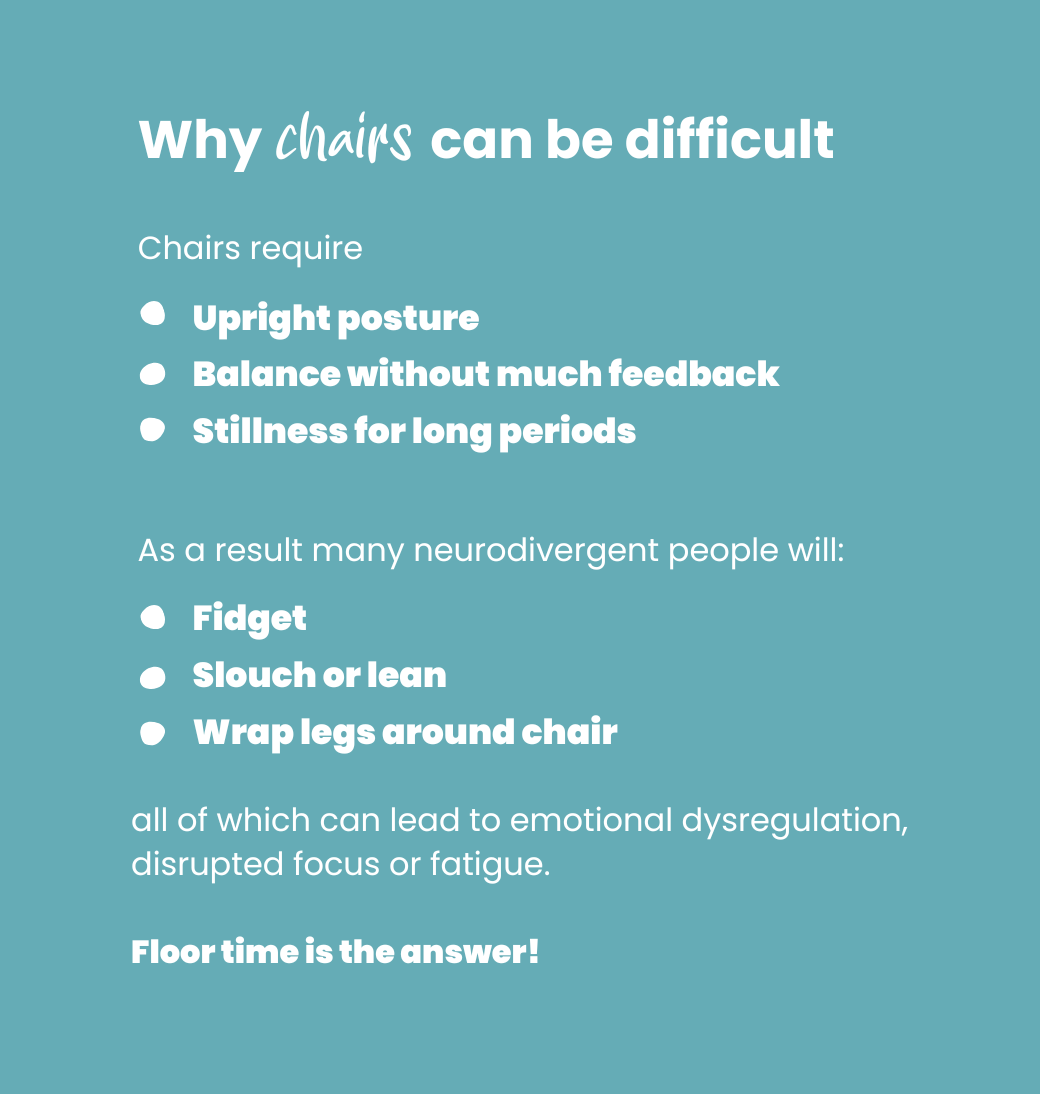
Sitting upright on a chair, staying still, or holding a particular posture can take a huge amount of effort, leaving less energy for learning or emotional regulation.
The science behind floor time
There is a scientific basis to support the use of floor time:
1. Proprioception: Feeling grounded and secure
Proprioception is the sense that tells us where our body is in space. When you sit or lie on the floor, you receive:
- Firm contact through the legs, hips, and spine
- Gentle pressure through muscles and joints
- Clear feedback about where your body is
- Input that helps the brain feel safe and organised.
The floor gives the body more information, more sensory feedback, and more support, which helps the brain relax.
So ultimately, being on the floor can reduce anxiety, support emotional regulation, and make it easier to concentrate.
2. Vestibular input: Balance without overwhelm
The vestibular system helps with balance, movement, and alertness. Floor positions naturally allow:
- Shifting weight
- Rocking gently
- Changing positions easily
- Crossing the midline
The movement helps you stay regulated without becoming over-stimulated, supporting focus without tipping into restlessness.
3. Tactile input: Predictable, calming touch
Putting it simply, the floor is solid. It provides steady and predicable touch.
So unlike light or unexpected touch, which can feel overwhelming for some people, contact with the floor is consistently reliable which can be calming.
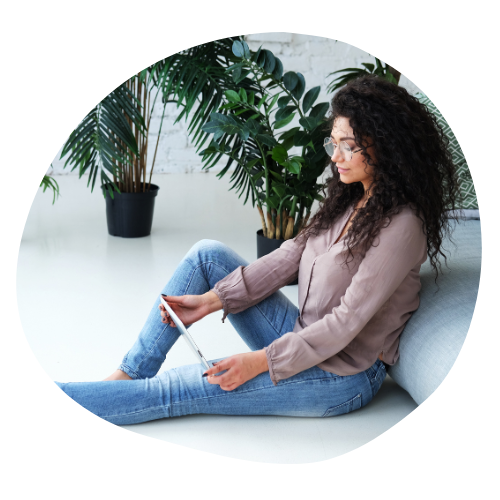
You can change your body position to respond to the needs of your nervous system by alternating between the floor and seats in line with your mood.
Using the floor as a grounding tool
For many, the floor acts like an anchor, helping you stay connected to your body and the moment.
Being close to the ground can:
- Slow down breathing
- Reduce emotional overwhelm
- Improve body awareness
- Support people who dissociate or shut down
- Help people feel present and calm
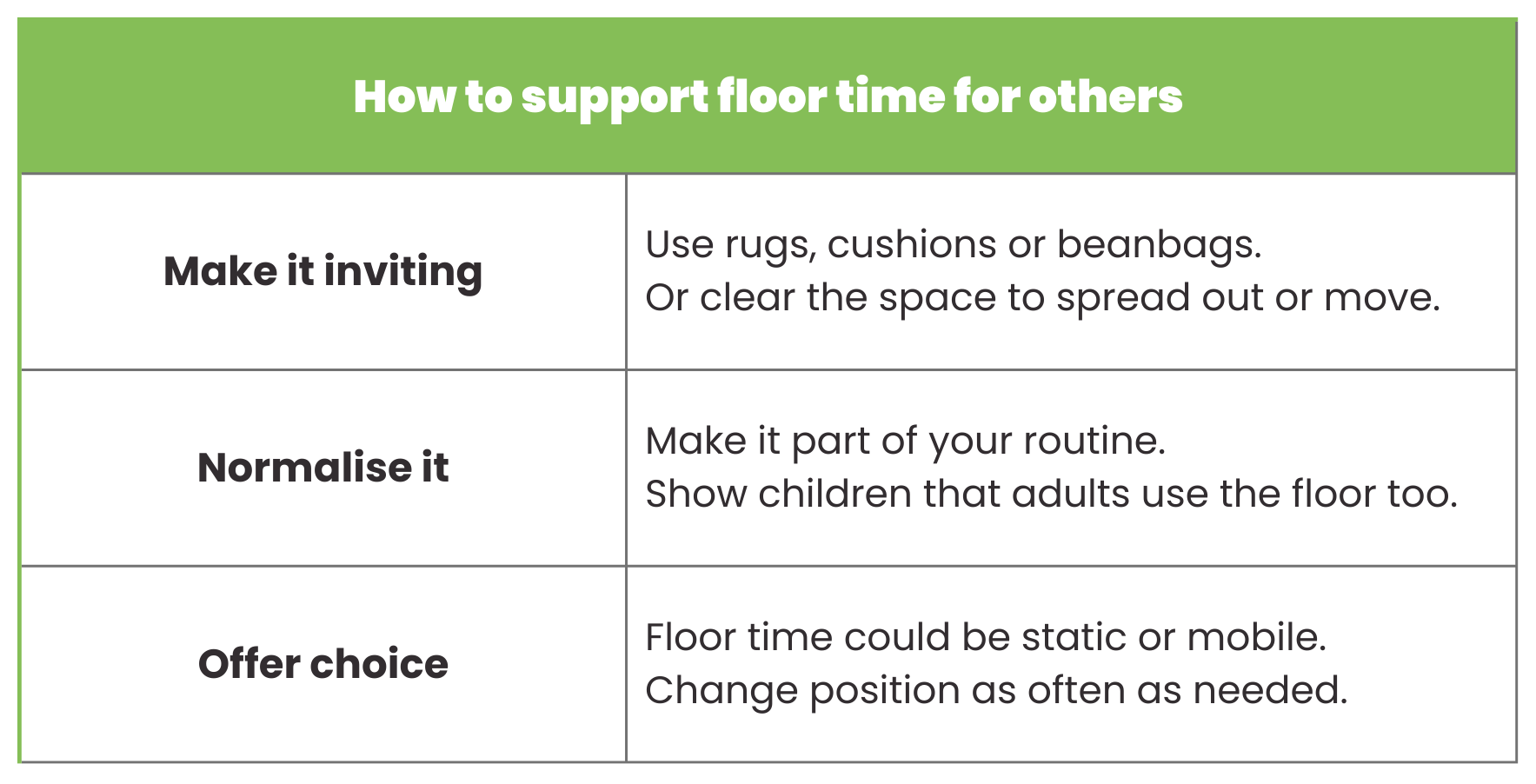
Plus, anything can be done on the floor! For both adults and children the floor can be multi-functional – learning doesn’t have to stop because you are on the floor.
- Read or write lying on your tummy
- Build, sort, and play sitting on a rug
- Talk through feelings leaning on cushions
- Do homework while sprawled out comfortably
- Do some stretches or yoga on a mat
The power of language
Avoid using negative language when someone is using the floor. Comments like “Sit properly” or “Get up off the floor” can be upsetting and lead to increased dysregulation.
Instead try supportive phrases like:
- “Would the floor feel better?”
- “Let’s take this down to the ground.”
- “What does your body need right now?”
Keep up to date with the latest SensationALL Self-Regulation Strategies on our socials!
