
Very often, issues with food and eating are misunderstood as behavioural problems. But your child is not being defiant, lazy, or stubborn… it usually due to sensory processing issues. Eating is an enormous sensory activity and neurodivergent brains experience it very differently to neurotypical people so it can lead to heightened anxiety, and apprehension.
Read on to explore what’s going on with your nervous system regarding eating. Plus get some ideas and tips of how to tackle hurdles you experience. It’s important to remember we shouldn’t force anyone towards eating foods they are not ready for. We recommend supporting them gently, compassionately, and safely to avoid stress, shame, pressure, or even trauma.

Food
Neurodivergent people are more likely to experience food sensitivities with:
- Texture
- Smell
- Mixing different foods
- Strong temperature preferences
- Struggling to sit at a table for mealtimes
- Feeling of food in their mouth
This isn’t because they are being picky or stubborn but often because their nervous system is identifying the food as unsafe. For some people, certain foods can genuinely feel unbearable… e.g. a yoghurt is slimey and disgusting. Mixed food on a plate is uncontrollable. A smell could be overpowering. Crunching noises may feel painful.
Plus, the environment before and during mealtimes can also be overwhelming – the cooking noises, the smells and the sensory disruption can trigger dysregulation before food is even presented.
Why are ‘beige’ foods so appealing?
The majority of neurodivergent people will have a restricted diet of a few ‘safe’ foods and often they are processed foods rather than fresh fruit or vegetables – have you ever wondered why?
Simply because those foods are more predictable! Crisps, chips, chicken nuggets etc. are fairly consistent in their texture, appearance and flavour. Compare that to a bowl of strawberries – some are firm, some are soft, some are sweet, some a little sour – that uncertainty can be upsetting for people with sensory issues so they stick to the foods they are comfortable with.

Language matters
Many neurodivergent adults will tell you they spent years hearing things like: “Stop being picky.” “Just eat it.” “You’re fine.” “Don’t be fussy.” And unfortunately those comments can make the person feel shame which has a negative effect on them and is likely to increase their resistance.
When supporting someone with sensory sensitivities remember… they aren’t being dramatic or spoiled when they refuse food – it is their body telling them the food or eating experience is unsafe. If we can understand that, we can avoid accidentally making them feel ashamed about their responses to food.
Top tips for mealtimes
Before:
- Prepare with some regulation work before meals – active movement, heavy work, deep pressure, breathing exercises etc.
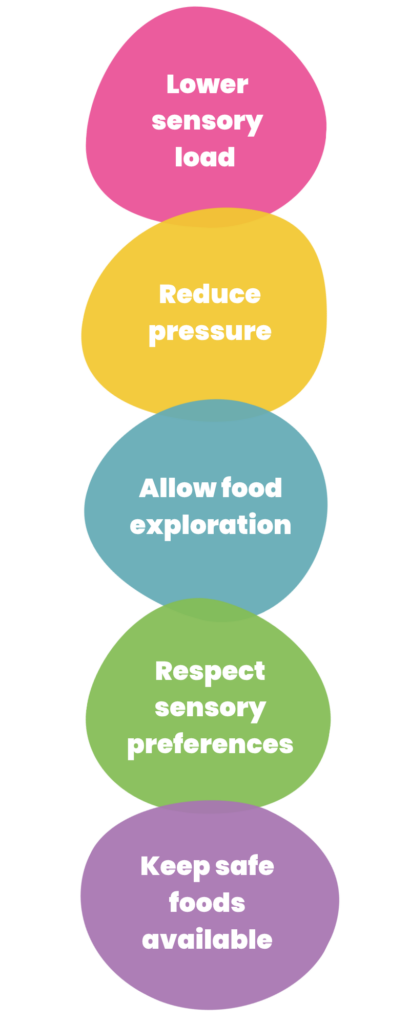
- Minimise sensory load – reduce noise, clutter, or pressure.
- Get them involved in the food preparation – chopping, stirring or plating up the food.
- Give them choices of plate/bowl/cutlery. Using divided plates can reduce sensory overwhelm of different foods.
- Keep things relaxed – don’t insist on formal eating – eat where they are comfortable sitting (it doesn’t have to be at a table) to reduce pressure.
During:
- Eat together so you can model eating the same food as them.
- Try food exploration – let them smell, touch and play with the food. Don’t force them to take bites/spoonfuls to avoid distress. Allow them go at their own pace with trying new foods. Celebrate the small wins – success could be tolerating, exploring or staying calm during the meal even if they don’t eat the food.
- Respect their sensory preferences: minimise what they don’t like e.g. crunchy, smooth, bland, warm/cold etc.
- Food chaining can be really helpful to gradually link new foods to foods they already feel safe with.
- Having safe foods available alongside new food helps them feel secure.
Throughout:
- Choose language carefully – supportive comments and lots of praise.
- Take breaks if needed – there is no rush, let them take a break to move or regulate.
- Keep it fun – make it a social experience with family and friends or play a game, listen to music while eating – whatever suits them best.
But most importantly, remember progress does not need to be huge to be meaningful. Small, consistent, compassionate changes will create the biggest shifts over time.
Check out more top tips on a variety of topics here.
