
Summer can feel like freedom for some children, but complete chaos for others. And this goes for parents and carers too!
We know that for many neurodivergent children and young people or those with additional support needs, the lack of a predictable routine during the summer holidays can create challenges with regulation, emotional wellbeing, sleep, and relationships, making things tricky for the whole family.
At SensationALL, we encourage our families not to plan a perfectly structured summer, but to create just enough predictability, connection, movement, and sensory support so that everyone can thrive and get the most out of the holidays.
Routine is grounding
The school term offers:
- Predictable routines
- Clear expectations
- Familiar environments
- Regular movement opportunities
- Social structures
- External time anchors
During the holidays, many of the routines, structures, and supports that children rely on disappear. For many children, this can lead to increased dysregulation, difficulties with planning and managing their time, and heightened sensory challenges due to crowded places, hot weather, or changes in clothing. For parents and carers, this can often mean an increase in meltdowns, shutdowns, anxiety, and emotional sensitivity during these periods.

Building your family’s rhythm
We suggest families look to set a rhythm for their days rather that a strict schedule. This helps children and young people have predictable elements throughout their day, while still allowing for the flexibility that is often needed in the holidays. Maintaining routines around mealtimes and bedtimes is a simple way of keeping consistency in your day.
An example of setting a rhythm might look like this:

While filling your days may be tempting to keep the weeks flowing, this can end up being exhausting and overwhelming for everyone. Our top tip would be to make sure you build in some rest/down time in between activities or days.
It can also be really helpful to use timers to set expectations for how long elements of your day will last.
Managing holidays and day trips
Holidays and days away from home are fun and exciting, but they also bring new challenges. When everyone is away from the familiar environment of home, we lose some of the control and predictable elements of our day.
To manage some of these challenges you can:
- Show photos or videos of the desination/journey process
- Use role play in advance to act out certain elements like going through airport security
- Ask for support from airlines, train companies, activity providers
- Predict where you might have waiting times or long journies and have a way to keep children entertained


Protecting sleep
Sleep can be another challenging element of the holidays due to changes in routines meaning later nights, not to mention lighter nights and mornings. If possible, think about:
- Consistent wake up times
- Reduced evening stimulation
- Blackout curtains to block out the evening and early morning sunlight
- Calming sensory input
- Setting a predicable bedtime routine
Making a Summer Holiday Toolkit
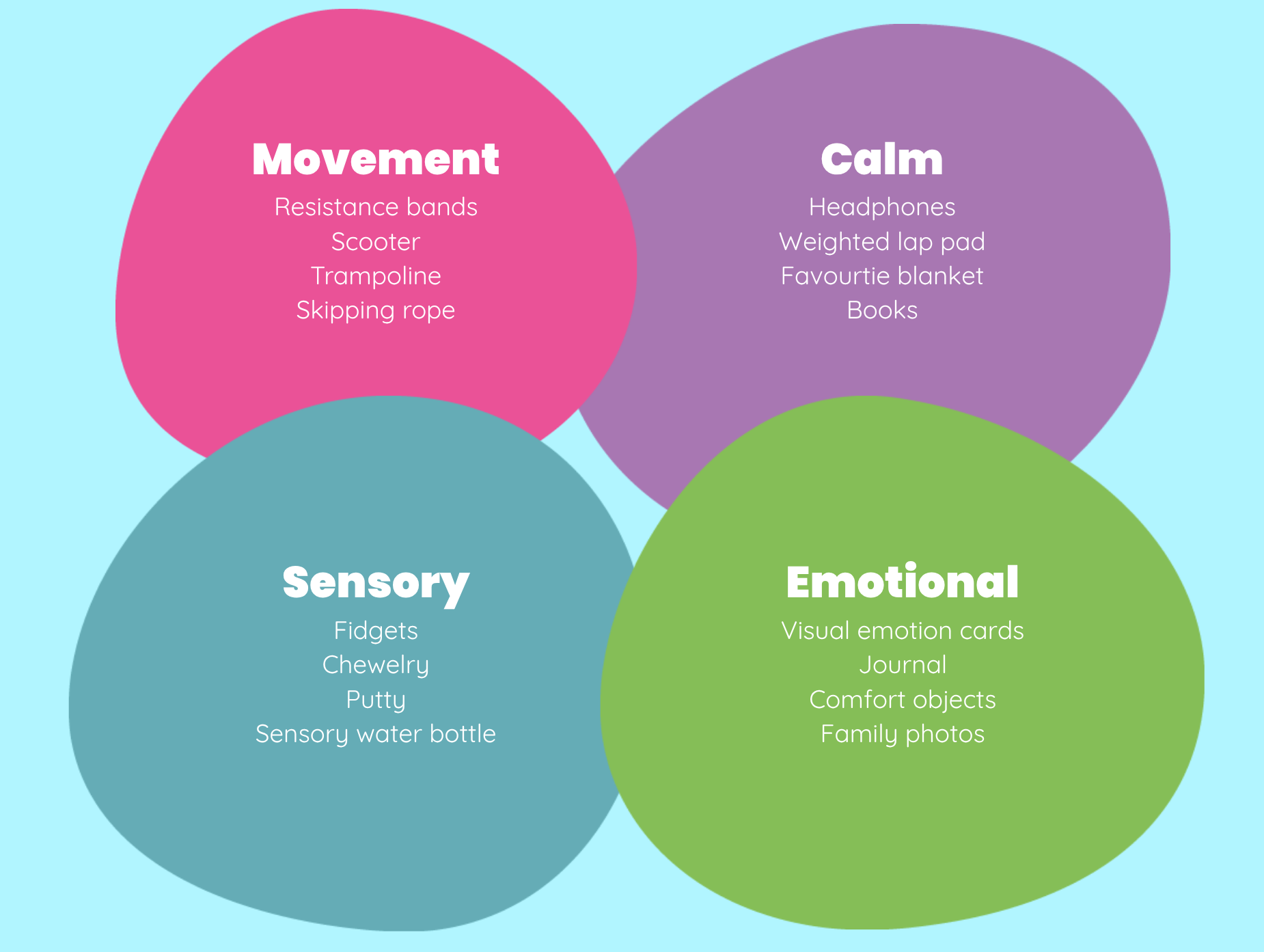
Having a regulation toolkit for your child means that you have quick resources on hand when both you or your youngsters are finding things tricky. Each toolkit will look different depending on what works for your family. You can switch out elements of your toolkit so it can be portable and flexible!
Check out how to build your toolkit below:
Final thoughts
The summer holidays are long and present lots of new challenges, but by using some of our tips you can reduce some of the stress and build predictability and regulation into your child’s days.
It’s equally important, however, that as parent and carers you take time to look after yourself . This might look like accepting your limits, taking 10 minutes with a cup of tea or connecting with another parent who “gets it”.
Remember, children are most likely to remember the simple things: water fights, building a den or calm moments on the sofa where they feel safe and connected to you. So don’t aim for a perfect summer, just find a rhythm that works for you and your family.
Check out more top tips on a variety of topics here.
