A Summer Holiday Toolkit

We know that for many neurodivergent children and young people or those with additional support needs, the lack of a predictable routine during the summer holidays can create challenges with regulation, emotional wellbeing, sleep, and relationships, making things tricky for the whole family.

At SensationALL, we encourage our families not to plan a perfectly structured summer, but to create just enough predictability, connection, movement, and sensory support so that everyone can thrive and get the most out of the holidays.

The school term offers:

  • Predictable routines
  • Clear expectations
  • Familiar environments
  • Regular movement opportunities
  • Social structures
  • External time anchors

During the holidays, many of the routines, structures, and supports that children rely on disappear. For many children, this can lead to increased dysregulation, difficulties with planning and managing their time, and heightened sensory challenges due to crowded places, hot weather, or changes in clothing. For parents and carers, this can often mean an increase in meltdowns, shutdowns, anxiety, and emotional sensitivity during these periods.

We suggest families look to set a rhythm for their days rather that a strict schedule. This helps children and young people have predictable elements throughout their day, while still allowing for the flexibility that is often needed in the holidays. Maintaining routines around mealtimes and bedtimes is a simple way of keeping consistency in your day.

An example of setting a rhythm might look like this:

While filling your days may be tempting to keep the weeks flowing, this can end up being exhausting and overwhelming for everyone. Our top tip would be to make sure you build in some rest/down time in between activities or days.

It can also be really helpful to use timers to set expectations for how long elements of your day will last.

Holidays and days away from home are fun and exciting, but they also bring new challenges. When everyone is away from the familiar environment of home, we lose some of the control and predictable elements of our day.

To manage some of these challenges you can:

  • Show photos or videos of the desination/journey process
  • Use role play in advance to act out certain elements like going through airport security
  • Ask for support from airlines, train companies, activity providers
  • Predict where you might have waiting times or long journies and have a way to keep children entertained

Sleep can be another challenging element of the holidays due to changes in routines meaning later nights, not to mention lighter nights and mornings. If possible, think about:

  • Consistent wake up times
  • Reduced evening stimulation
  • Blackout curtains to block out the evening and early morning sunlight
  • Calming sensory input
  • Setting a predicable bedtime routine

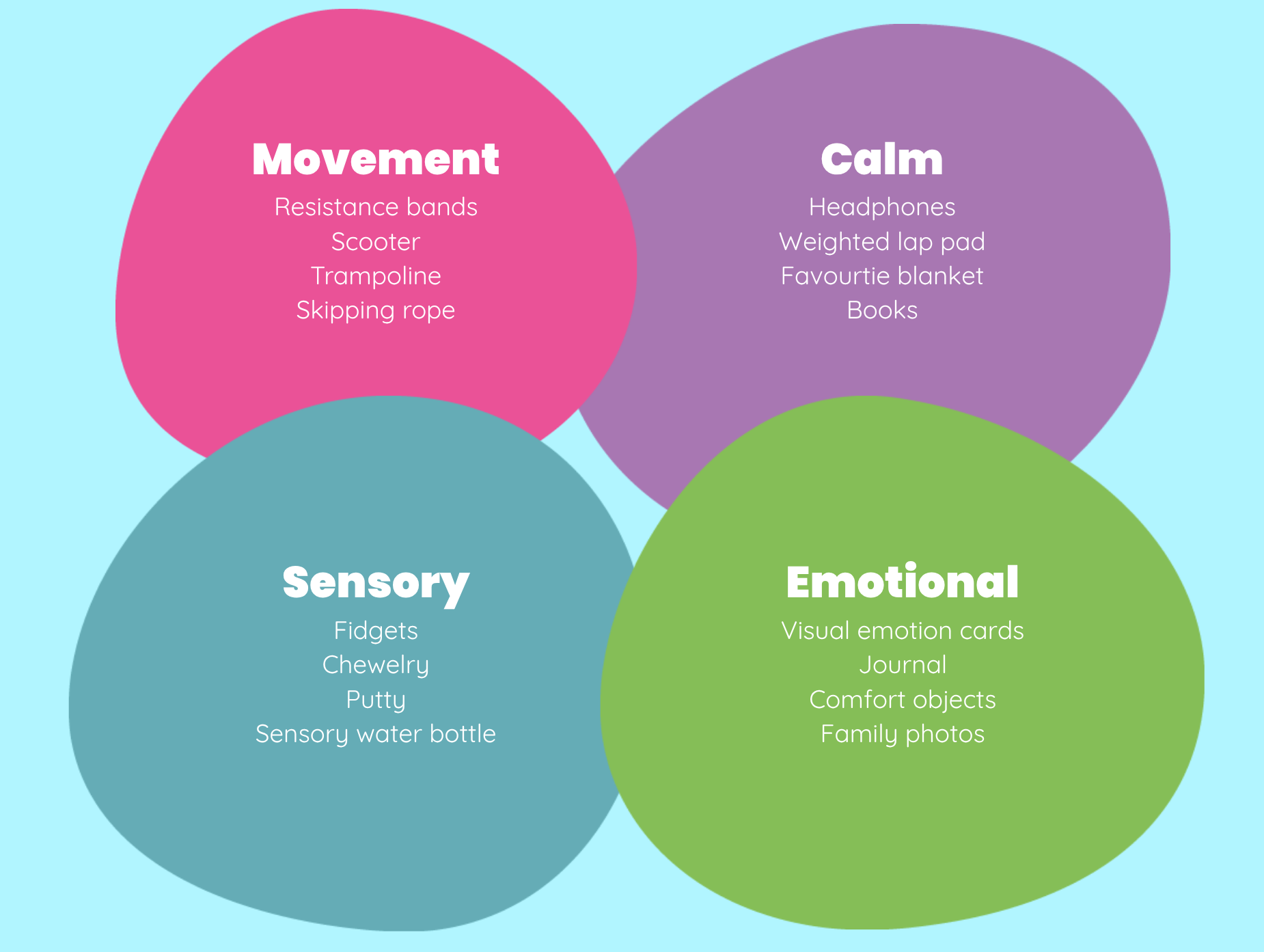
Having a regulation toolkit for your child means that you have quick resources on hand when both you or your youngsters are finding things tricky. Each toolkit will look different depending on what works for your family. You can switch out elements of your toolkit so it can be portable and flexible!

Check out how to build your toolkit below:

The summer holidays are long and present lots of new challenges, but by using some of our tips you can reduce some of the stress and build predictability and regulation into your child’s days.

It’s equally important, however, that as parent and carers you take time to look after yourself . This might look like accepting your limits, taking 10 minutes with a cup of tea or connecting with another parent who “gets it”.

Remember, children are most likely to remember the simple things: water fights, building a den or calm moments on the sofa where they feel safe and connected to you. So don’t aim for a perfect summer, just find a rhythm that works for you and your family.

Check out more top tips on a variety of topics here.

The value of volunteering

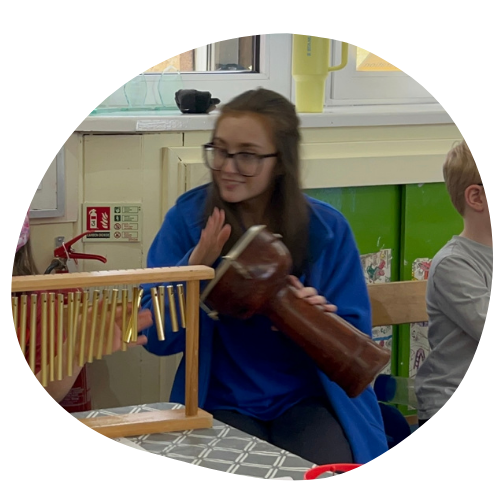
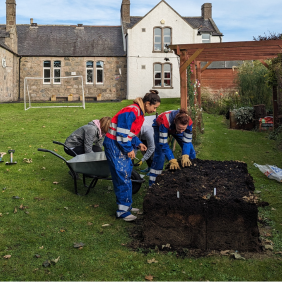
“I was first introduced to SensationALL through my university when I was assigned a placement within the Pre-school group. Before this, I had very little experience working with neurodivergent individuals, but after more than a year and a half of volunteering, I am incredibly grateful to have been introduced to such a wonderful charity.

“Following my first Pre-school session, I spoke with the volunteering team to find out how I could become more involved. I was placed within the Girls Group, a social group for teenage girls, where my volunteering journey truly began. With each session, I became more familiar with the service users, building trusting relationships and helping to create a safe and supportive environment. Watching the girls grow in confidence and become comfortable sharing their experiences each week was immensely fulfilling.

“Not only did I witness the positive impact SensationALL and volunteering had on the service users, but I also benefited enormously myself. Volunteering with the charity while navigating my own neurodivergent journey was invaluable and made my own experiences much easier to understand. Alongside this, I developed a wide range of skills that will continue to benefit me in the future.”

“Seeing the positive impact volunteering had on both the service users and myself only strengthened my desire to continue supporting the charity. After around a year of volunteering, an opportunity arose to work for SensationALL as a Youth Worker, and I was delighted to accept. Being able to progress within the charity while contributing to such an important cause is something that still makes me excited to go to work every day.”

“Volunteering has had a profound impact on my life, both professionally and personally. Watching individuals find a place where they feel safe, welcomed, and understood and seeing their confidence and self-assurance grow, is something incredibly special. I believe that to truly understand how service users think, feel, and experience the world, it is vital to hear directly from them and witness those experiences first-hand. Doing so has been deeply eye-opening and has given me a far greater appreciation not only of neurodiversity, but also of the importance of creating a more inclusive and understanding society.

“I would encourage anyone considering volunteering or anyone searching for a sense of purpose to get involved with SensationALL. Seeing the positive impact the charity has not only on service users, but also on its staff and volunteers, is truly rewarding.”

SensationALL creates volunteering opportunities that allow you to grow and progress. We want you to get the best out of your experience while providing us with much needed support. If volunteering sounds like something you would like to be involved with, get in touch at volunteering@sensationall.org.uk

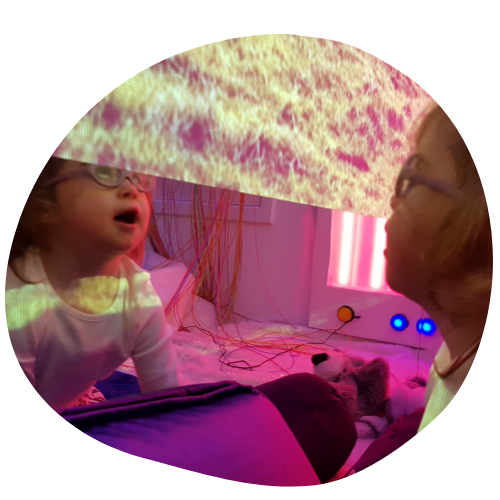
Regulate with sensory lights

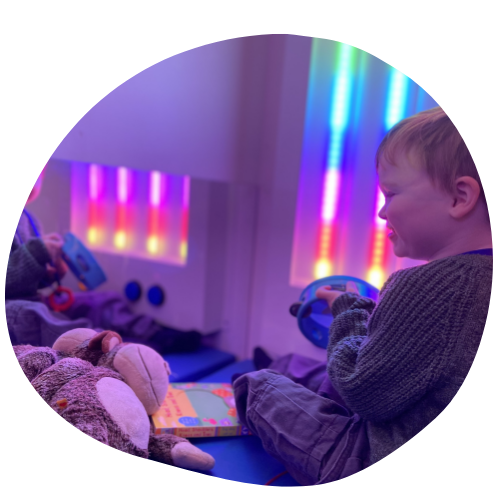
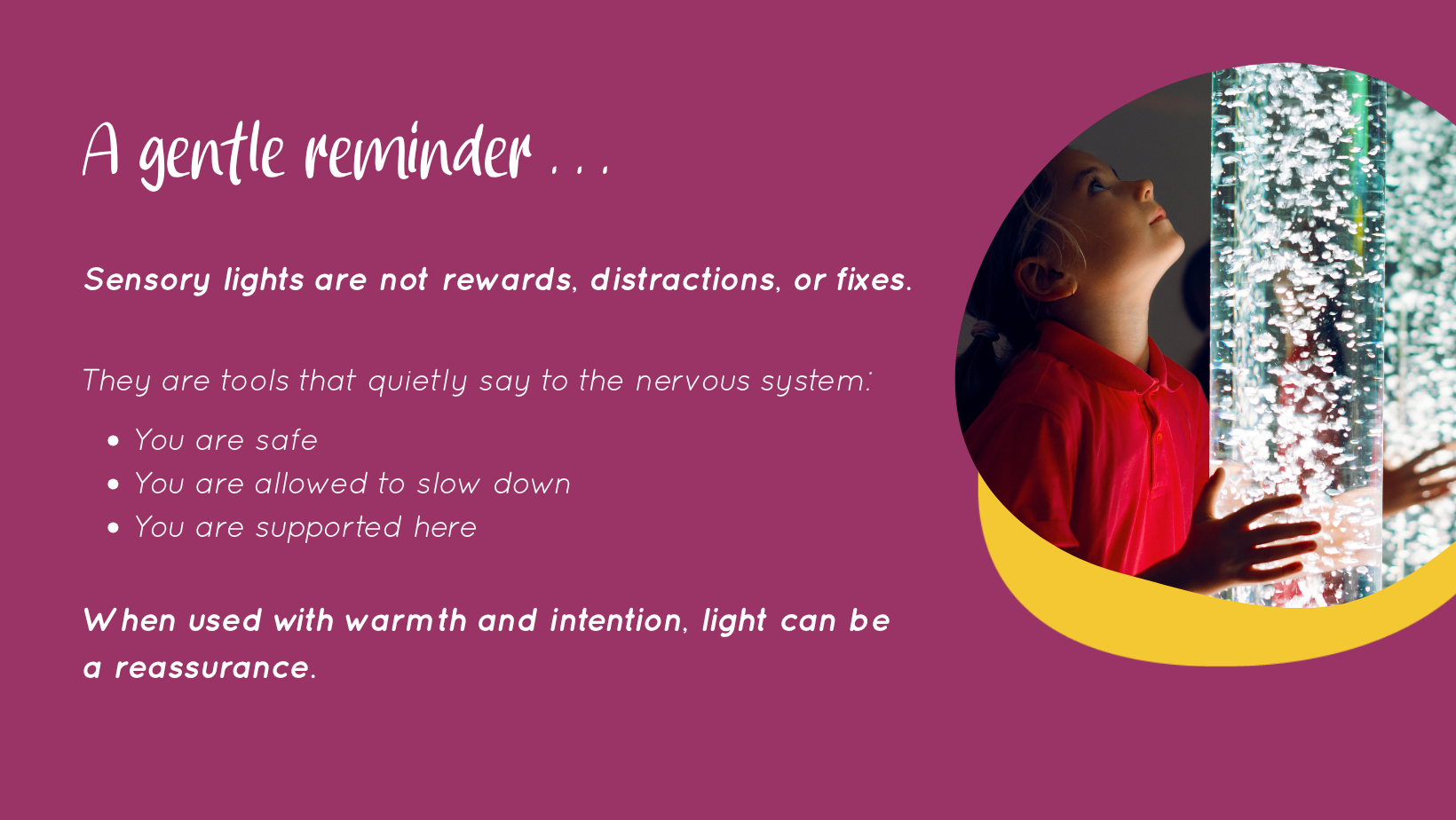
Whether you are supporting a child at home or learning to regulate your own nervous system, light can become a great resource in your toolkit, rather than a ‘nice-to-have’.

Light doesn’t just help us see. It talks directly to the brain.

The brain uses light information to decide:

  • Am I safe or on alert?
  • Can I rest or do I need to act?
  • Is this environment predictable or overwhelming?

For sensitive or neurodivergent nervous systems, lighting can either soothe the body or quietly push it toward overload. The key is how the light is used.

When emotions are big, bodies are tense, or the day has been long:

When energy is low, attention drifts, or transition feels hard:

Some children (and adults) are very sensitive to light. Watch for:

  • Covering eyes
  • Turning away
  • Increased agitation or withdrawal

If you see these signs, the light may be too bright, too fast, or the wrong colour. Choice matters. When possible, let your child decide:

  • Which colour feels best
  • When to turn it on or off
  • Where it sits in the room

Sensory lights can support adults who:

  • Feel overstimulated or anxious
  • Struggle to wind down at night
  • Experience sensory overload
  • Need help transitioning between work and rest
  • Soft lighting in the evening instead of overhead lights
  • A consistent “calm light” after stressful moments
  • Using light intentionally during breathwork or rest

Keep up to date with the latest SensationALL Self-Regulation Strategies on our socials!

Understanding your senses – hearing

For some people, sound feels calming and grounding. For others, it can feel confusing, distracting, or overwhelming. This guide gives you an easy way to understand what you, or your child, might be experiencing, and how to find calm, connection, and comfort at home.

Auditory processing is the brain’s ability to:

  • notice sound
  • filter out background noise
  • understand speech
  • tell where sound is coming from
  • use rhythm and tone
  • stay regulated in noisy spaces

When this system works smoothly, people feel settled, focused, and ready to learn or play. When it struggles, their behaviours will often show this.

When we hear sound, it goes straight to the part of the brain that decides “I’m safe” or “I’m not safe.”

For sensitive nervous systems, this can mean:

  • small sounds can feel huge
  • sudden noise can trigger fear
  • silence feels calming
  • loud, rhythmic sound can feel grounding
  • music helps regulate emotion
  • predictable sound feels safe

There are two common ways in which people can respond to sound: over-responsive and under-responsive. They can be seen in children, teens and adults.

Over-responsive is when sound can feel too much. This happens in children, teens and adults. You might notice:

  • Hands over ears
  • Avoids noisy places
  • Gets upset with sudden sounds
  • Startles easily
  • Prefers quiet and calm
  • Meltdowns or anxiety which is triggered by noise
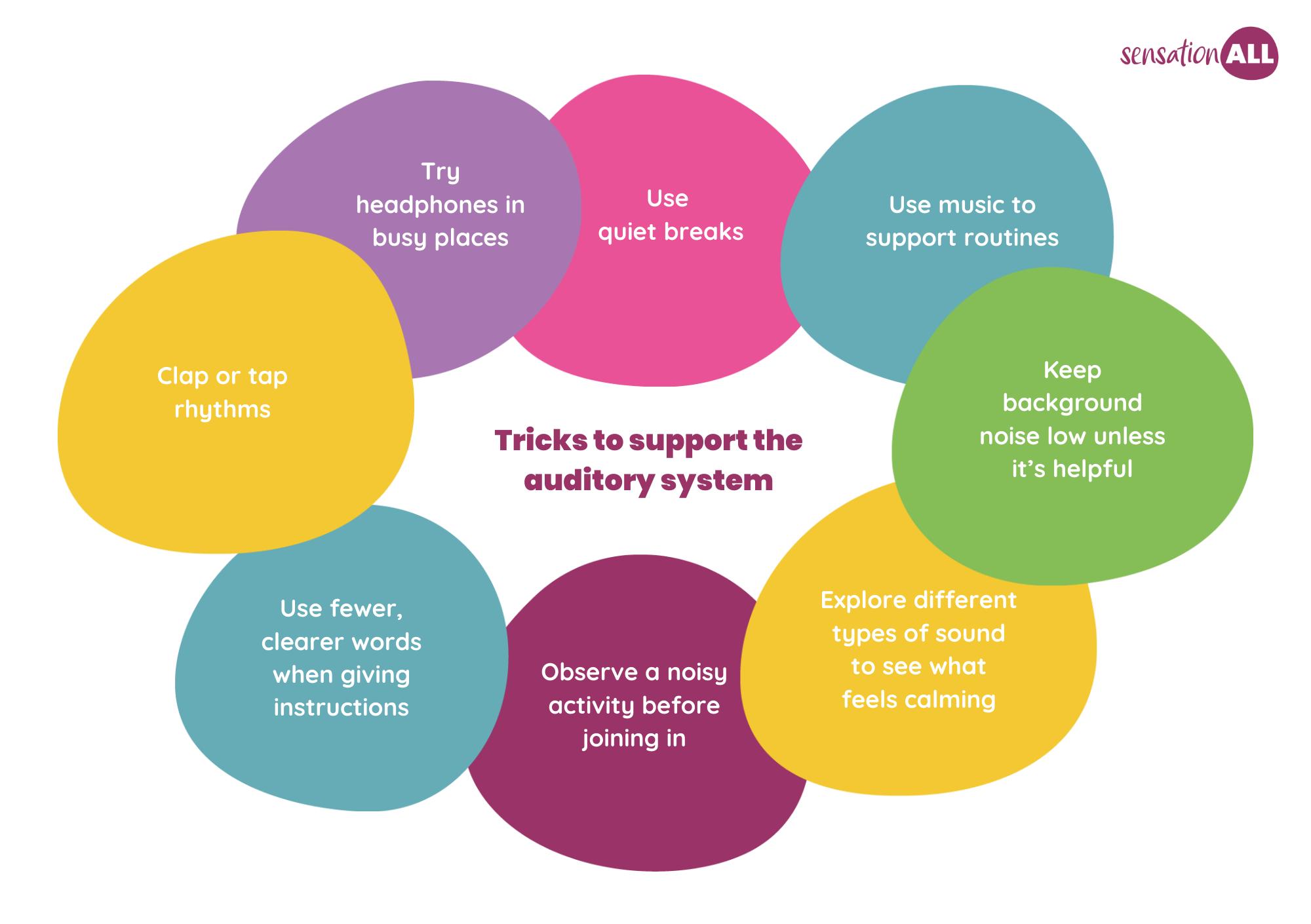
  • Noise-reducing headphones
  • Reduce background noise
  • Warn them before any loud sounds
  • Speak slowly with fewer words
  • Create a quiet corner at home
  • Use soft rhythmic music

Under-responsive is when sound does not register strongly enough.

  • Doesn’t respond to their name right away
  • Needs instructions to be repeated
  • Turns music up loud
  • Seeks noise (hums, taps, bangs)
  • Enjoys busy, loud environments
  • Struggles to focus without sound
  • Use songs and rhythms for routines
  • Add movement and sound together (clap, drum, stomp)
  • Clear, short instructions
  • Listening games
  • Musical toys or instruments
  • Use a sound to cue to get attention

Supporting the auditory system isn’t about forcing tolerance. It’s about helping the nervous system feel safe, steady, and understood!

Keep up to date with the latest SensationALL Self-Regulation Strategies on our socials!

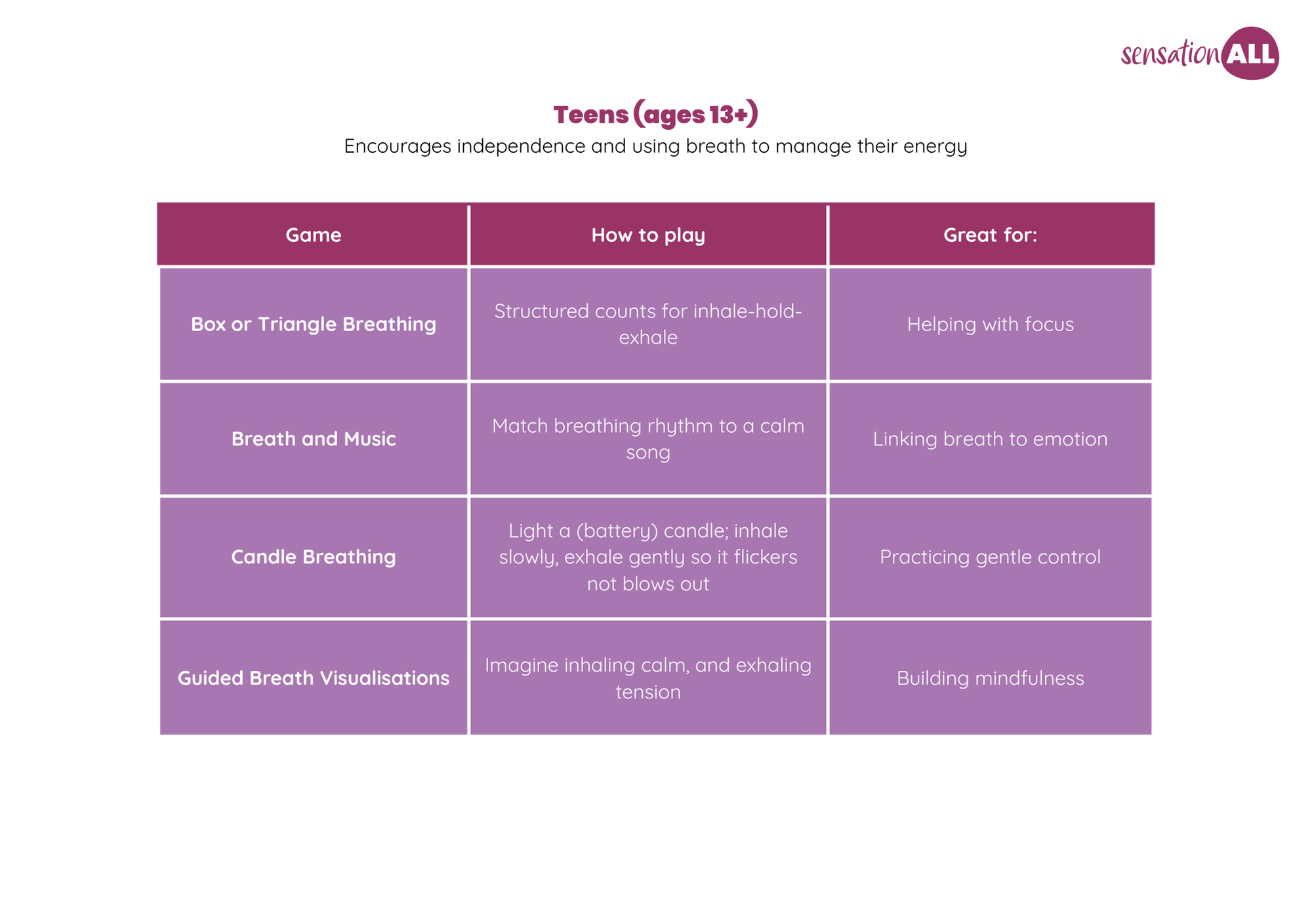
Breathing Games

Deep, slow breathing stimulates the vagus nerve, one of the main connections between brain and body, which helps to shift the body from “fight/flight” into a calmer “rest/digest” state. It doesn’t matter what the breath is – it’s about breathing with purpose!

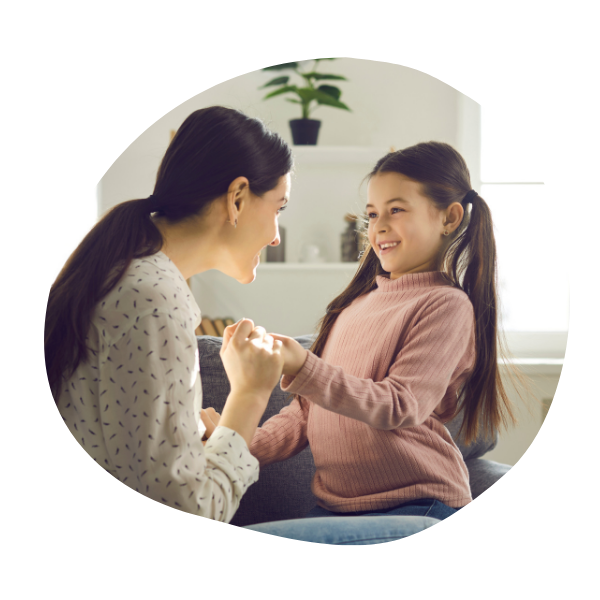
Breathing Games use imagination, movement, and fun to make breathing accessible and enjoyable. Instead of asking a child to “take a deep breath” (which can feel a bit abstract or pressured), we bring it into play to encourage curiosity and connection.

Breathing games are a great way of supporting emotional regulation, especially among children. They:

  • help to regulate the nervous system
  • encourage self-awareness
  • help to develop self-regulating skills
  • support emotional safety, by removing pressure and finding fun
  • encourage co-regulation where adults can model calm and connection
  • Creates a feeling of calm, moving the body out of “flight or flight” mode.
  • Accessible anywhere – we can use these games in almost any environment and they require no equipment.
  • Builds self-esteem and control by giving children a concrete tool to manage big feelings.
  • Encourages conscious reflection of body signals like heart rate and muscle tension.
  • Keep the instructions obvious and clear – “breath deeply” doesn’t work for many children!
  • Keep it short and playful – 30 seconds to two minutes for younger children
  • Use all the senses – this might mean using pictures, objects, music, story-telling or movement
  • Make it a routine – breathing can become a familiar tool, not just an emergency skill

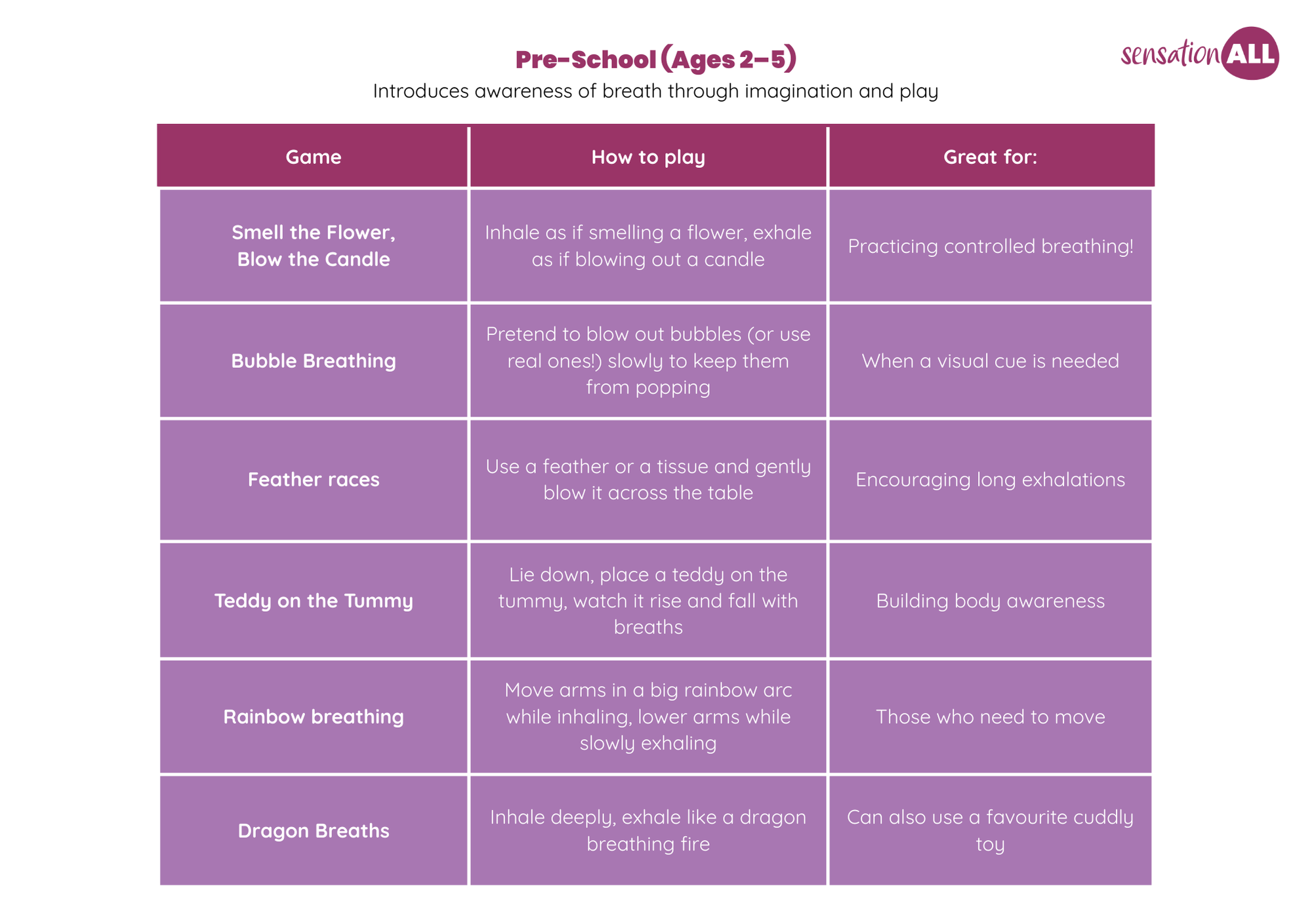
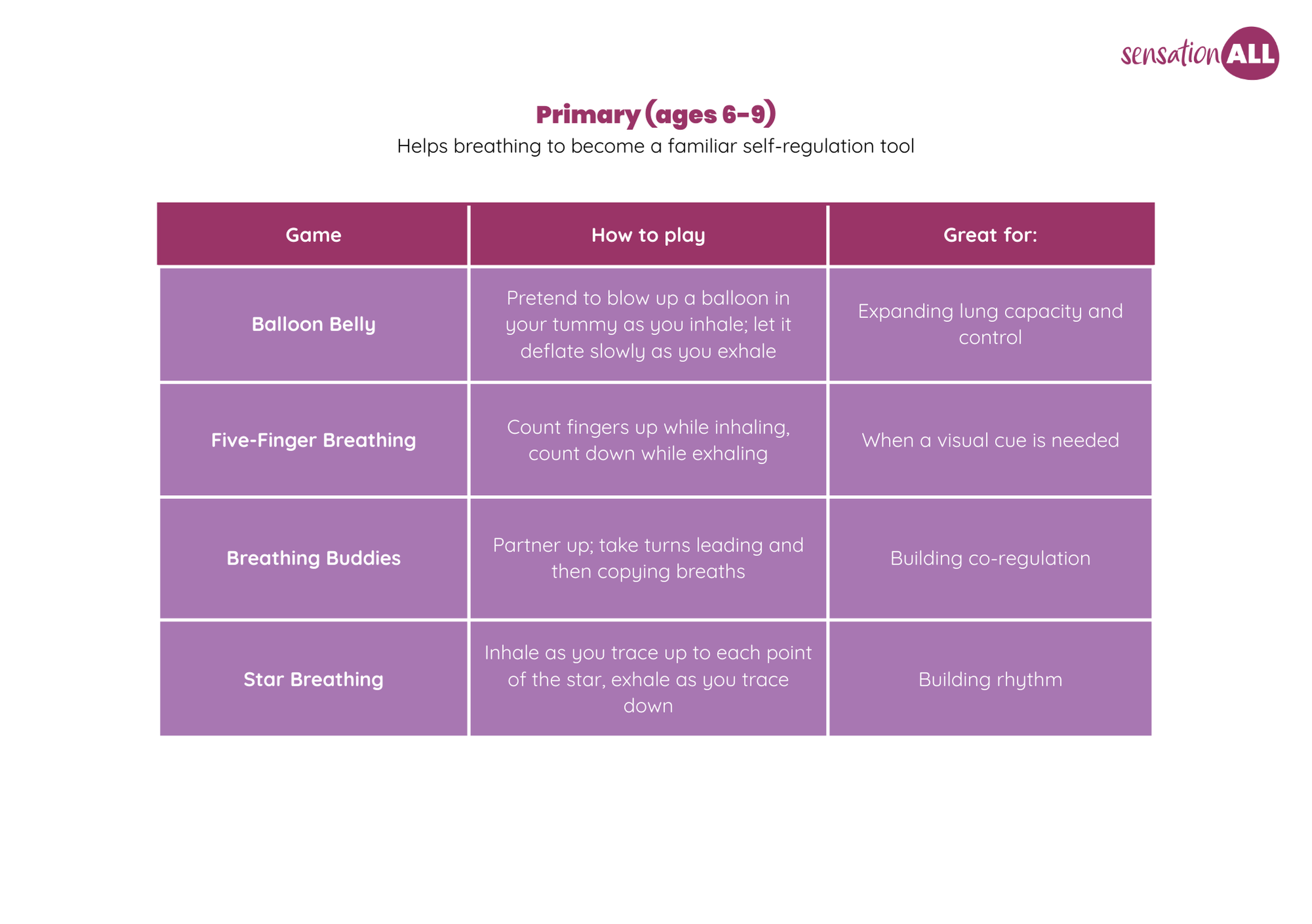
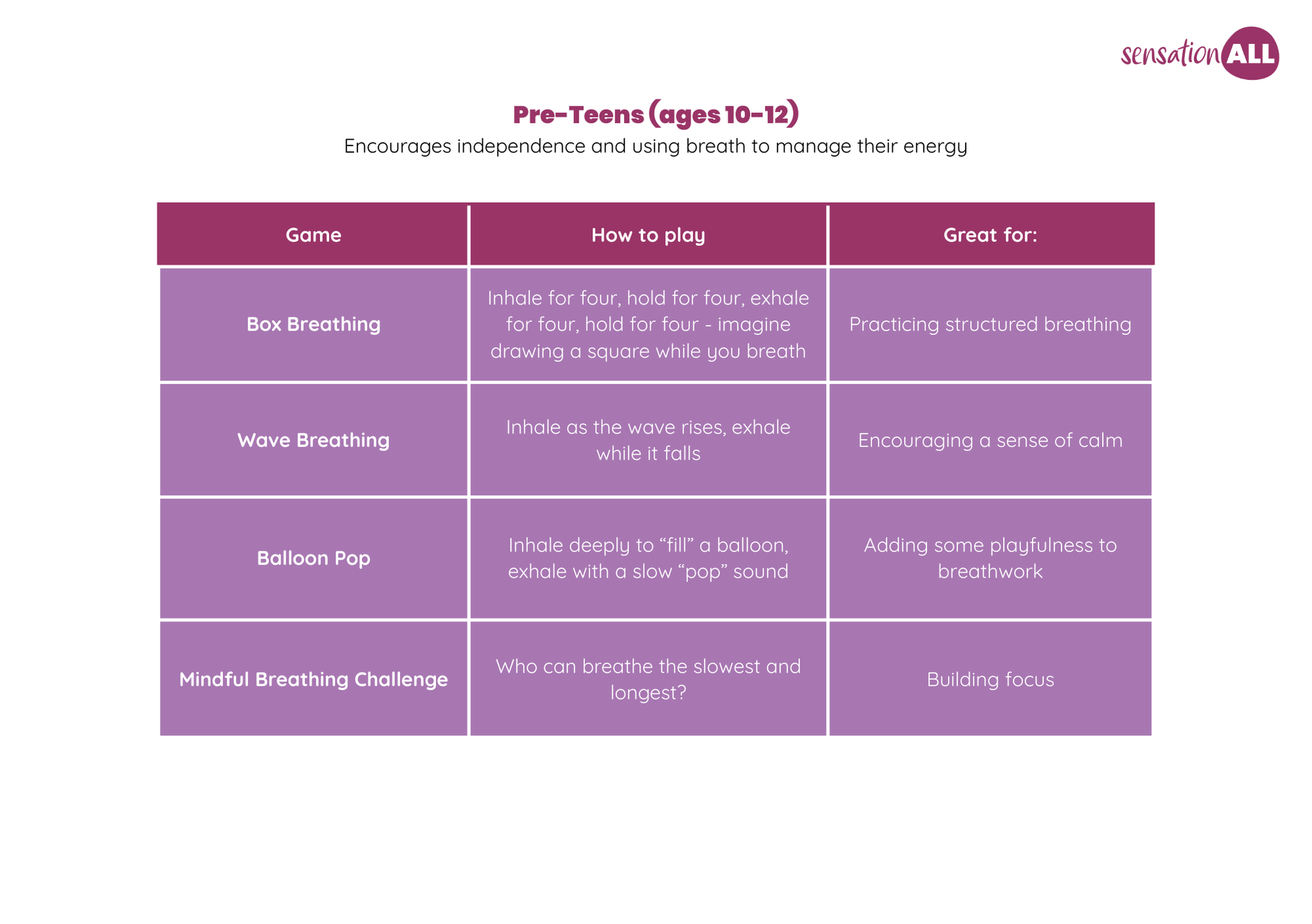
Why not try some of our games at home or when you are out and about! We have different games for different ages – check them out here:

Keep up to date with the latest SensationALL Self-Regulation Strategies on our socials!

We are a Volunteer Charter Champion!

SensationALL has signed up as a Charter Champion with Volunteer Scotland! When the charity began in 2011, we were initially a wholly volunteer run organisation but, even after staff were employed, the contribution of volunteers remained integral to our service delivery. Over the years, thousands of hours have been donated to us and we consider each volunteer to be an asset who’s contribution cannot be undervalued!

As a result, we are proud to follow the 10 principles set out by the Volunteer Charter and strive for best practice across all areas of volunteering.

>>> Take a look at the 10 Volunteer Charter principles here.

>>>

How does this shape volunteering at SensationALL?

Volunteers can choose their roles

SensationALL wants to ensure that volunteers know they have free choice over the type of role they wish to take on. We have a wide variety of roles which we publicise but we are also open to hearing from volunteers with specific skills and interests which may be beneficial to the charity’s operations.

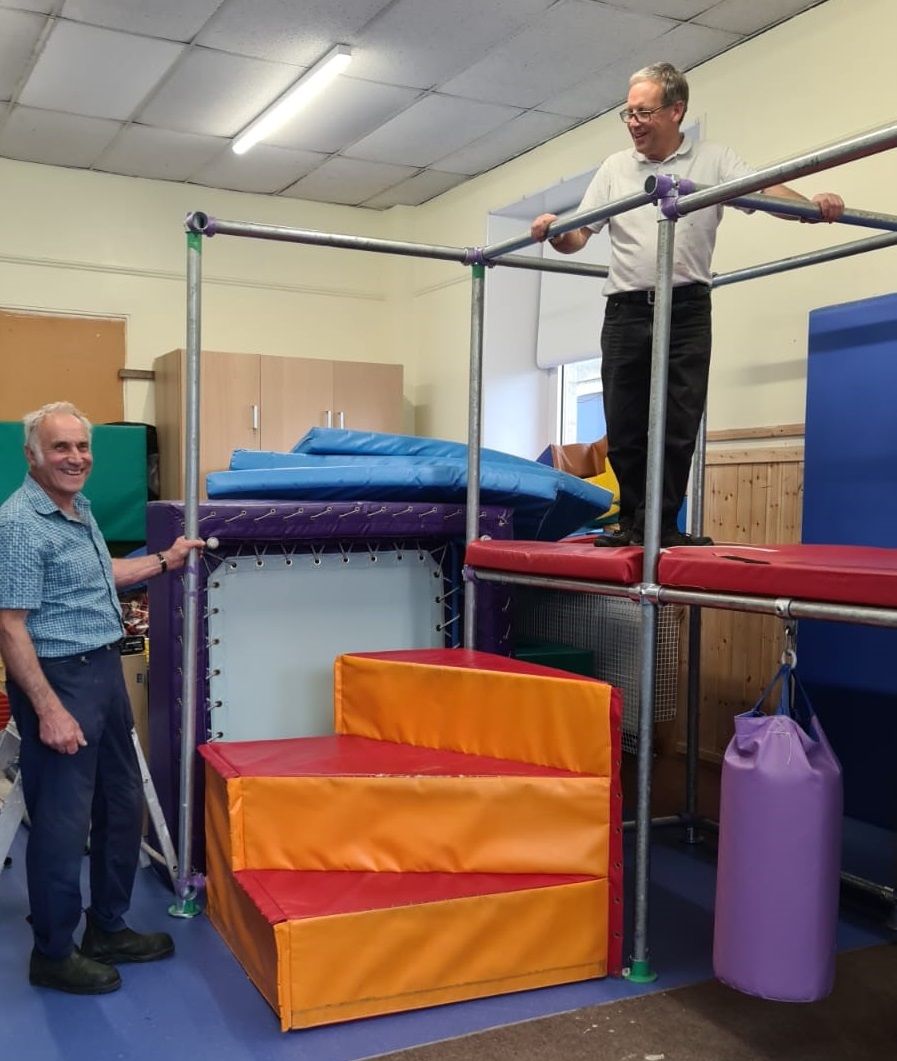
Our volunteer handyman, Donald, is a great example of this! Donald brings a range of skills and knowledge that help us complete small projects that we otherwise would struggle with. His skills are helping transform the charity for the better.

Furthermore, as a small organisation with restricted budgets, it simply isn’t possible for us to employ staff to fulfil every necessary business role so we rely upon the expertise, knowledge and skills of many professionals who are willing to support our administrative and management processes. Our board of trustees are all volunteers with a wide set of skills and backgrounds so they can oversee our governance and strategically guide us.

Volunteers feel safe, supported and included

Regardless of role, The Charter helps us create an environment where every volunteer is welcomed with open arms and enjoy their experience so they will want to come back time after time.

We take care to make sure all our volunteers feel a part of the SensationALL family and we strive to make all of our opportunities inclusive. The charter reminds us to ensure volunteers feel capable of carrying out their roles and are given opportunities to develop skills through training and mentoring. Using the charter principles also means that we focus on taking on board volunteer views and options and use these to shape the direction of the charity.

We are delighted to be a Charter Champion and excited about how the 10 principles will help us to create an environment where we feel supported by excellent volunteers and our volunteers feel supported by an organisation that truly values them.

If you are interested in volunteering with SensationALL please get in touch – volunteering@sensationall.org.uk