Regulate with movement

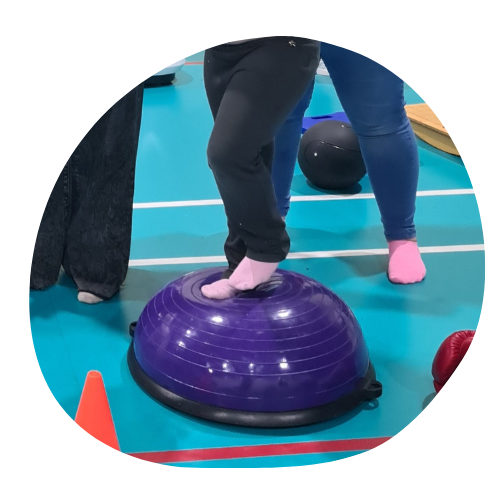
a child's feet balancing on a dome shaped BOSU ball

Does your child frequently bounce, wobble, climb, or constantly move? Or maybe you feel the need to keep moving, fidgeting or rocking. This is often the nervous system’s way of asking for organisation, grounding, or regulation.

One tool that beautifully meets this need is the BOSU ball.

This post explores how a BOSU ball supports regulation, focus, and sensory processing and offers gentle, affordable alternatives if buying one isn’t possible. Though – keep an eye out on second hand ones (Facebook marketplace are often where we find ours!).

A BOSU ball is a simple but powerful tool that we use all the time at SensationALL.

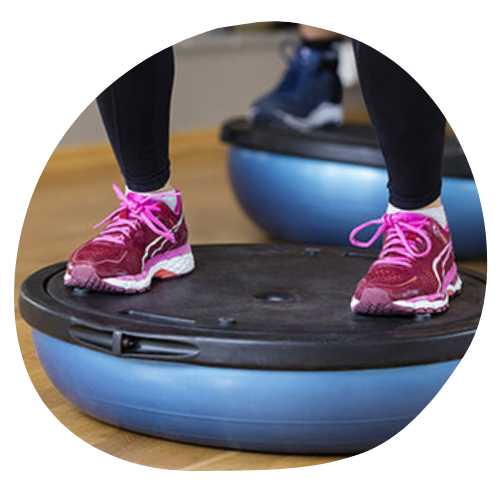
Originally designed as fitness device for balance training, they have two sides – a soft dome shape and a flat, hard base (sometimes with ridges for grip). When the dome side faces up, the BOSU ball provides an bouncy surface and when you flip it over, you can stand on the flat side which is a little wobbly.

The gentle bouncing or wobbling from using either side gives the body important feedback through muscles, balance, and posture. This kind of movement helps the nervous system settle and organise itself, helping you to feel calmer, more grounded, and ready to focus.

You don’t need specialist equipment to support regulation at home. The body responds to input, not brand names!

You can get the same movement and sensation from:

  • A stack of cushions or pillows – stand, kneel or sit on them to activate your core and improve body awareness
  • Yoga mat & towel – roll the towel and place it underneath the mat to create that wobble effect. Great if you want barefoot balance work.
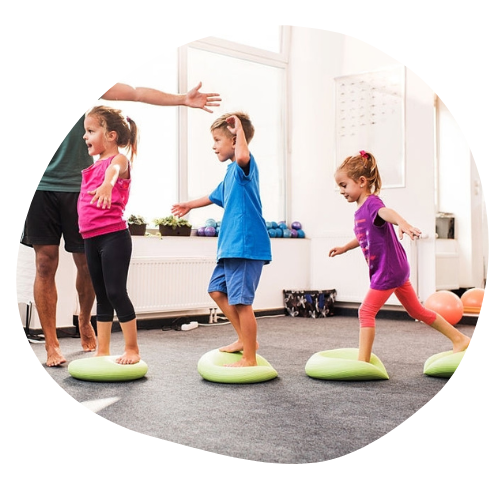
  • Inflatable cushion or wobble disc – much cheaper than a BOSU but provides similar postural and balance input.
  • Space hopper or gym ball – again these are easier to buy for home and will be great for bouncing – use slow for calming regulation or fast to stimulate (but avoid chaotic rhythms if calming is the goal!).
  • Stepping stones – Either bought or make your own with cushions, blankets or paper taped to the floor. They will encourage controlled movement and focus.

Movement strategies are not rewards or distractions – they are much-needed support. When someone is seeking motion it is often because they are trying to feel:

  • Safe in their body
  • Organised inside
  • Able to engage with the world

Whether you are using a BOSU ball, a cushion or something else, the magic effect will be the same:

Keep up to date with the latest SensationALL Self-Regulation Strategies on our socials!

How The Traitors Helped Raise £13,000 for us

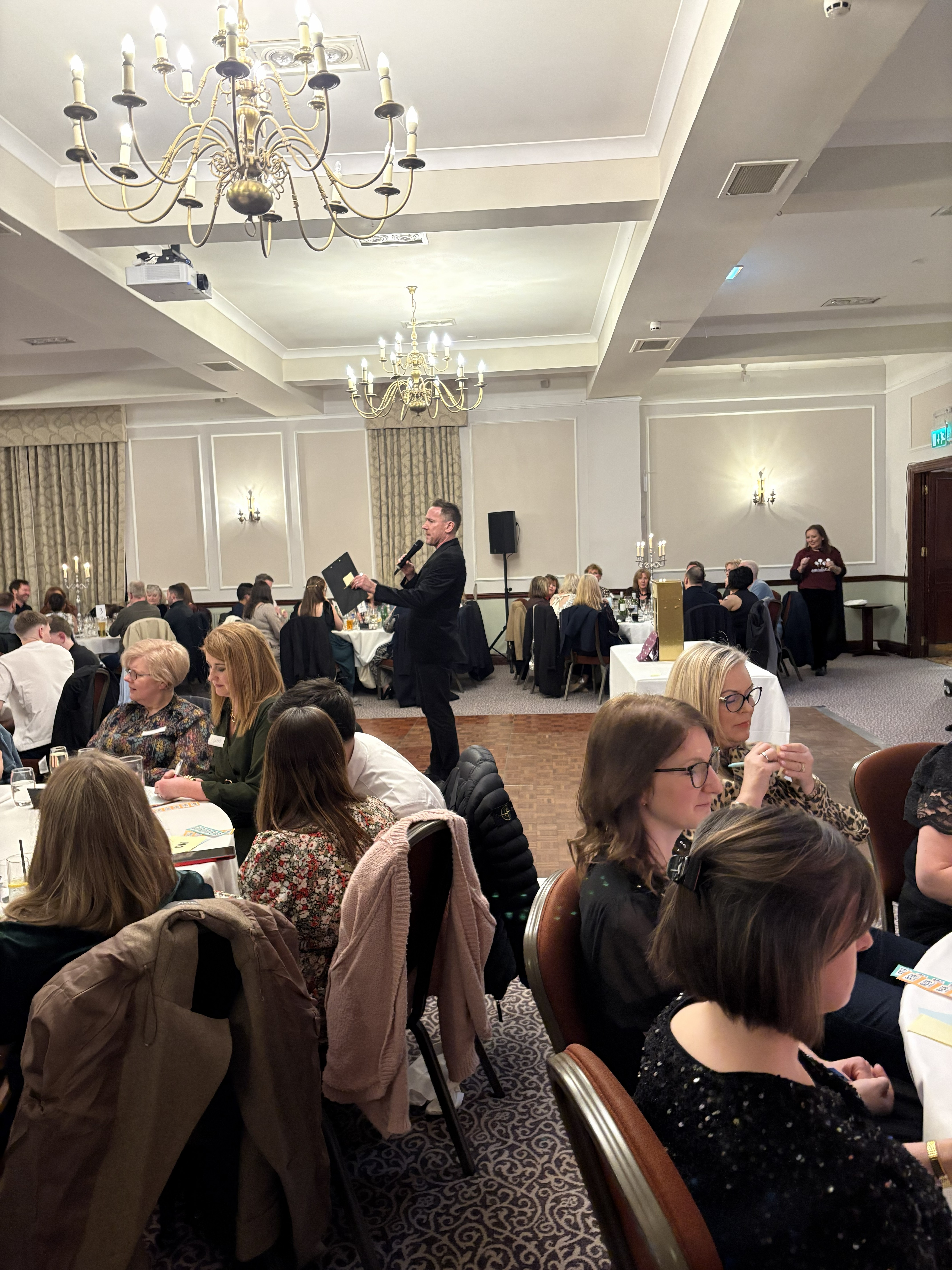
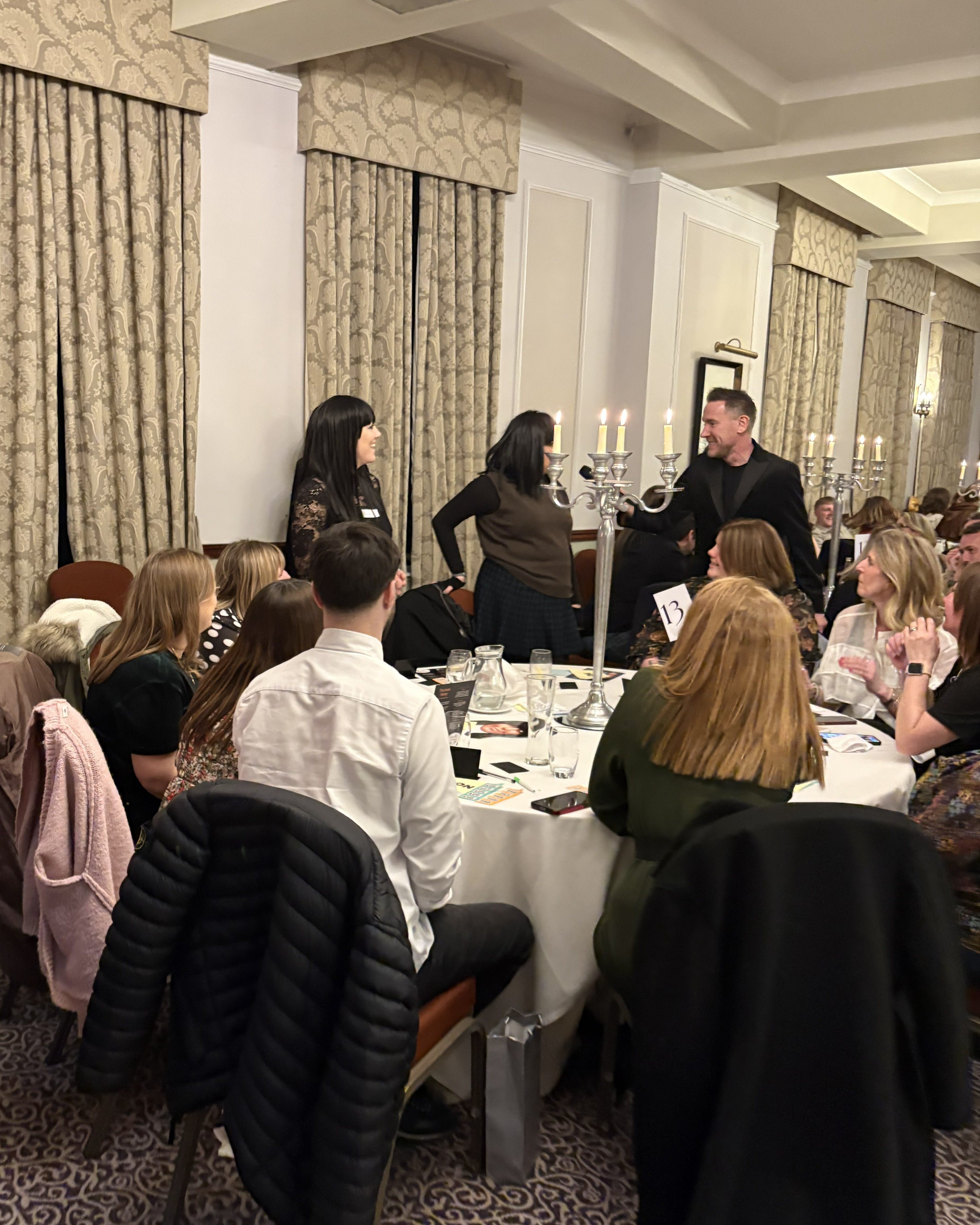
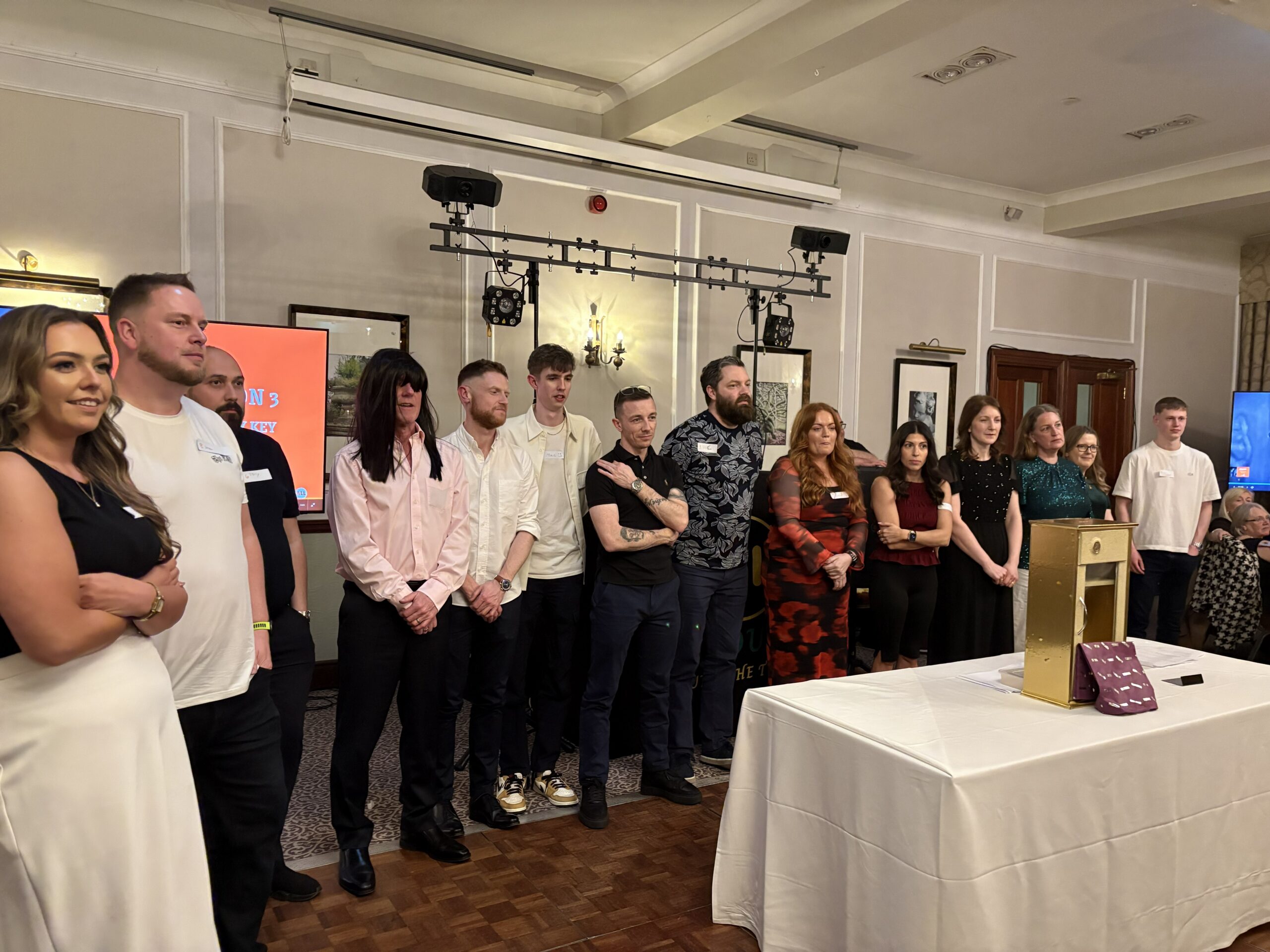
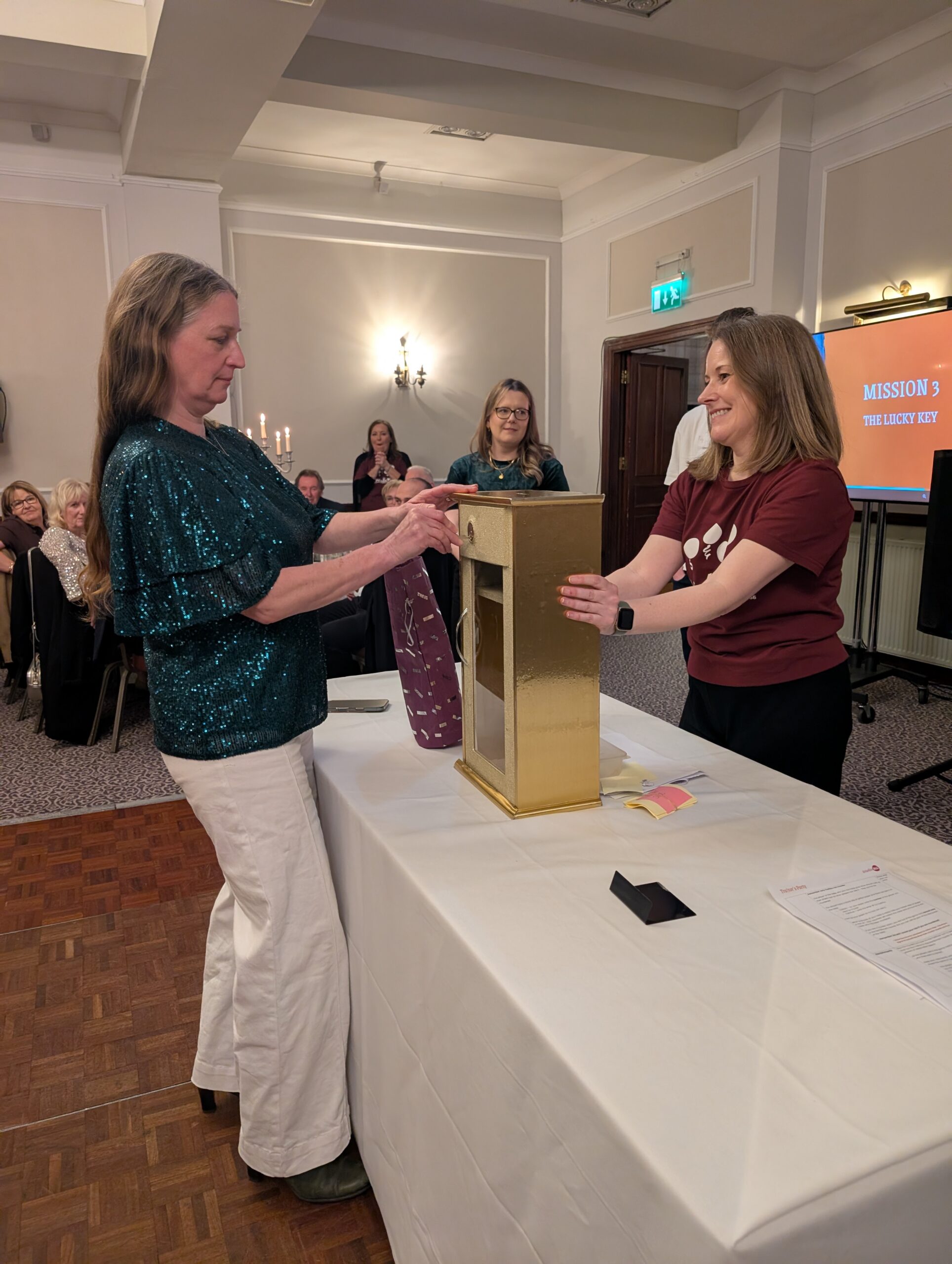
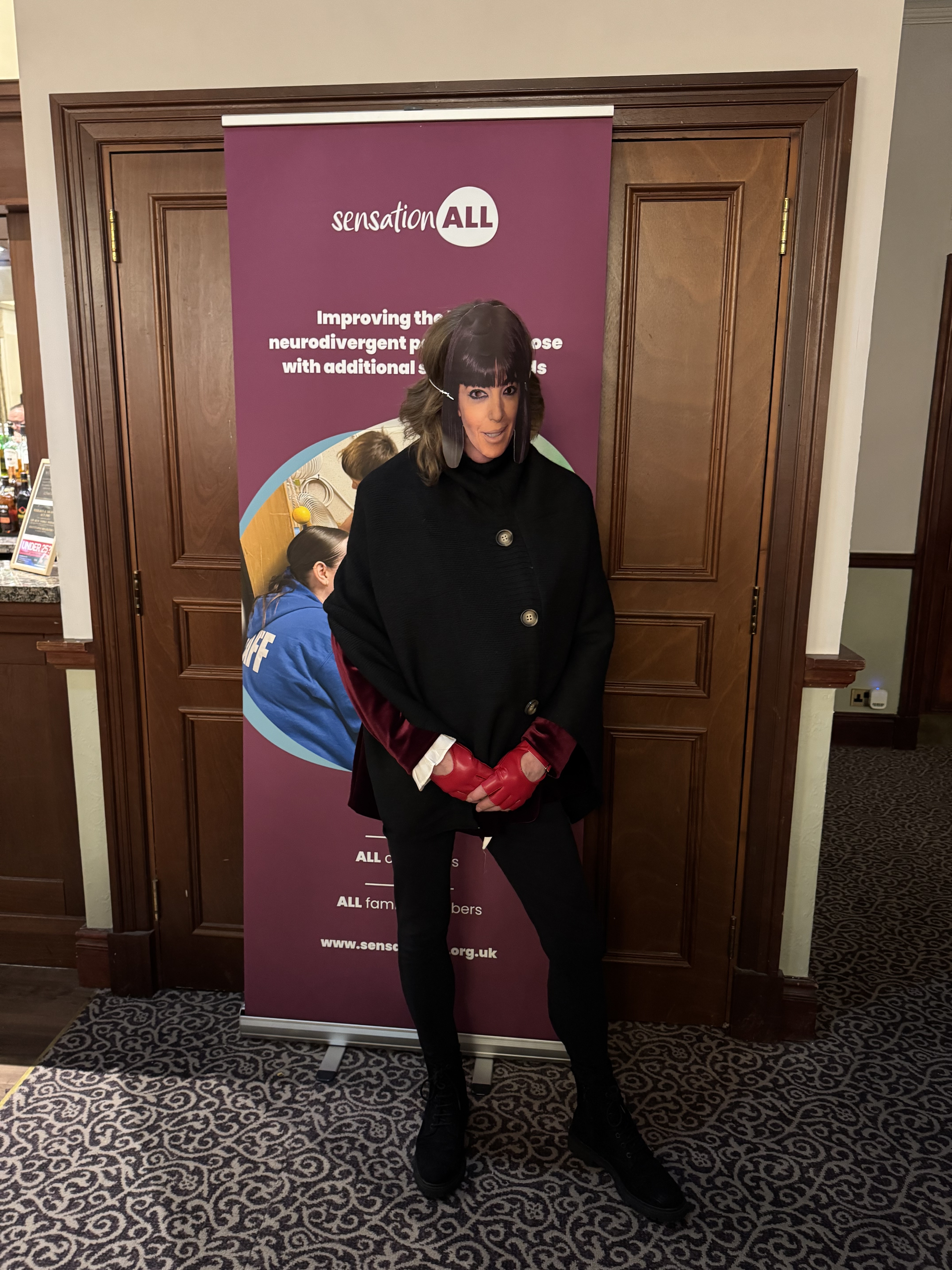
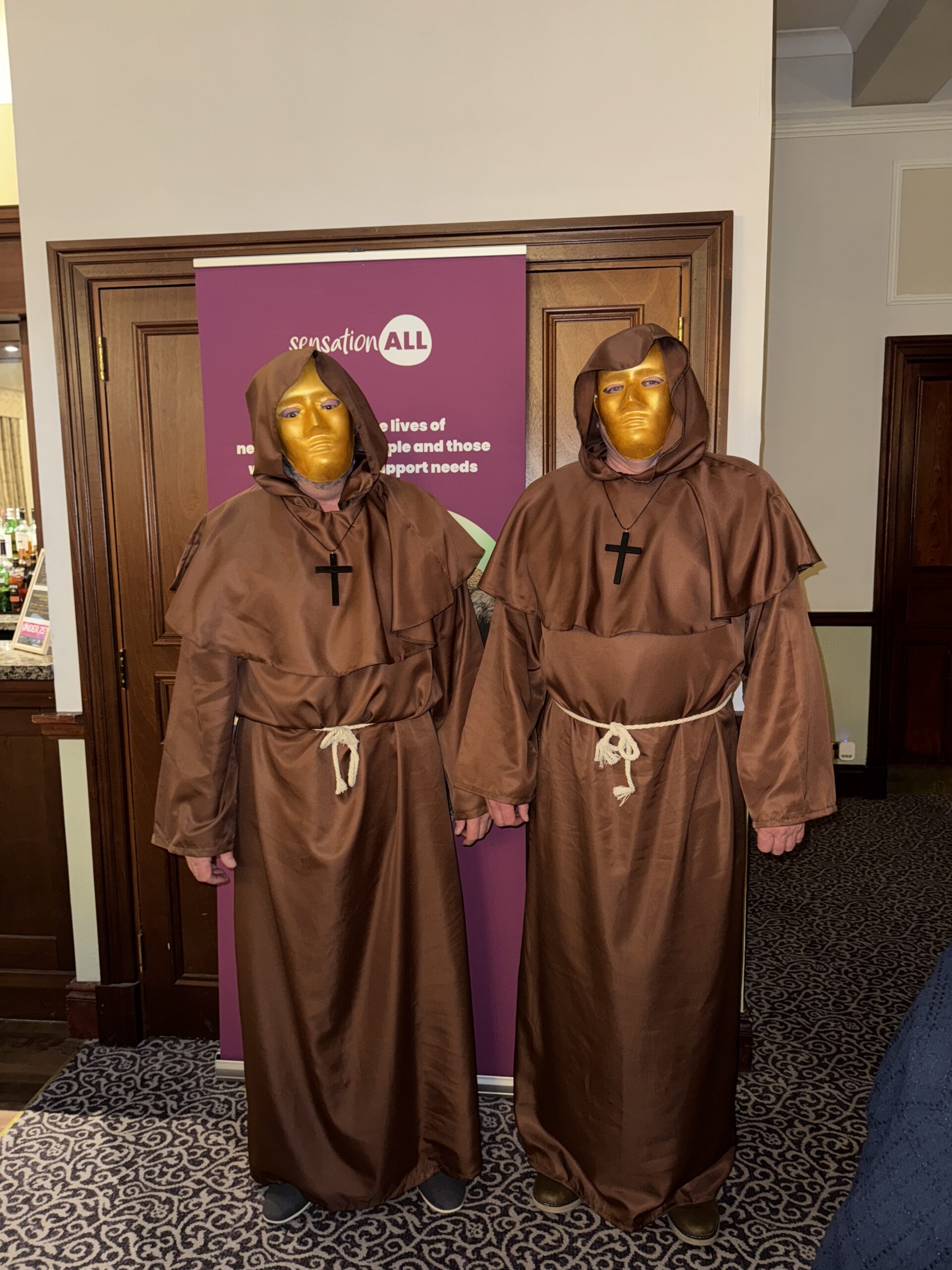
One month on and we are taking a moment to celebrate the success that was our Traitors Party – the first of its kind in Aberdeen!

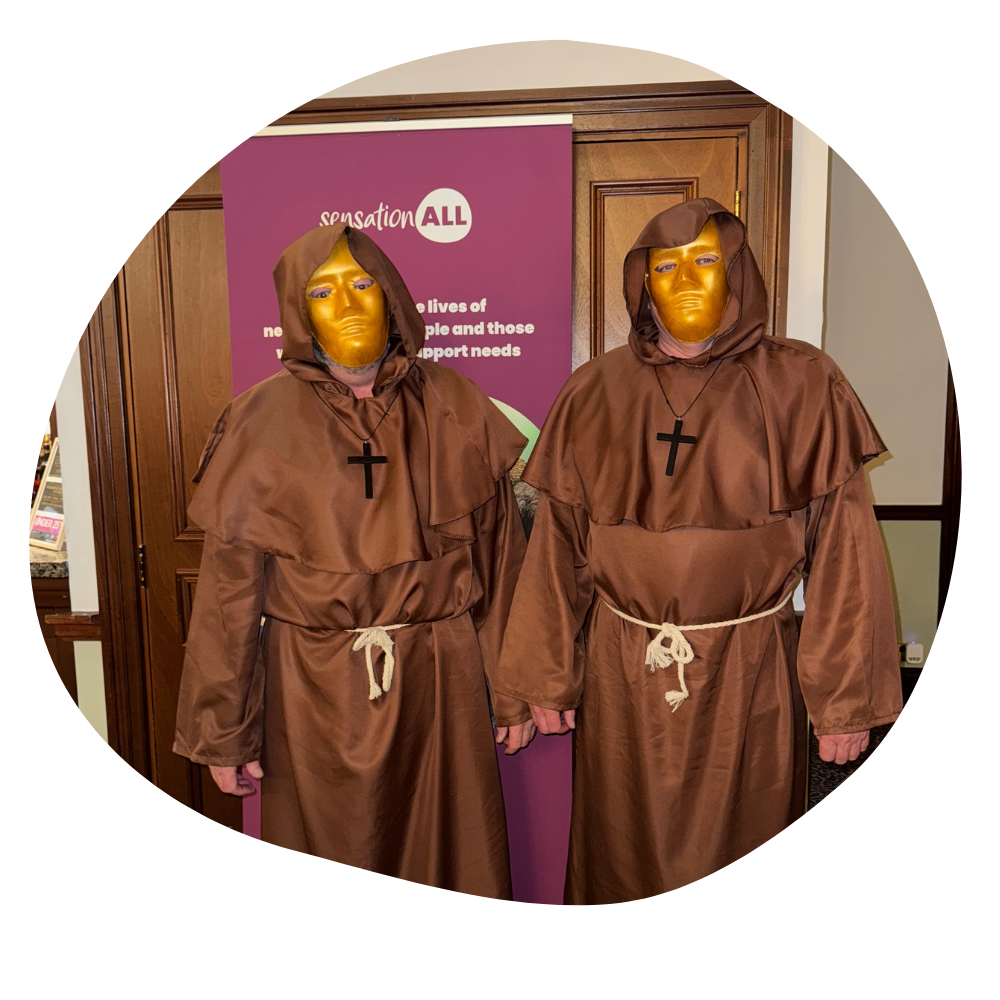
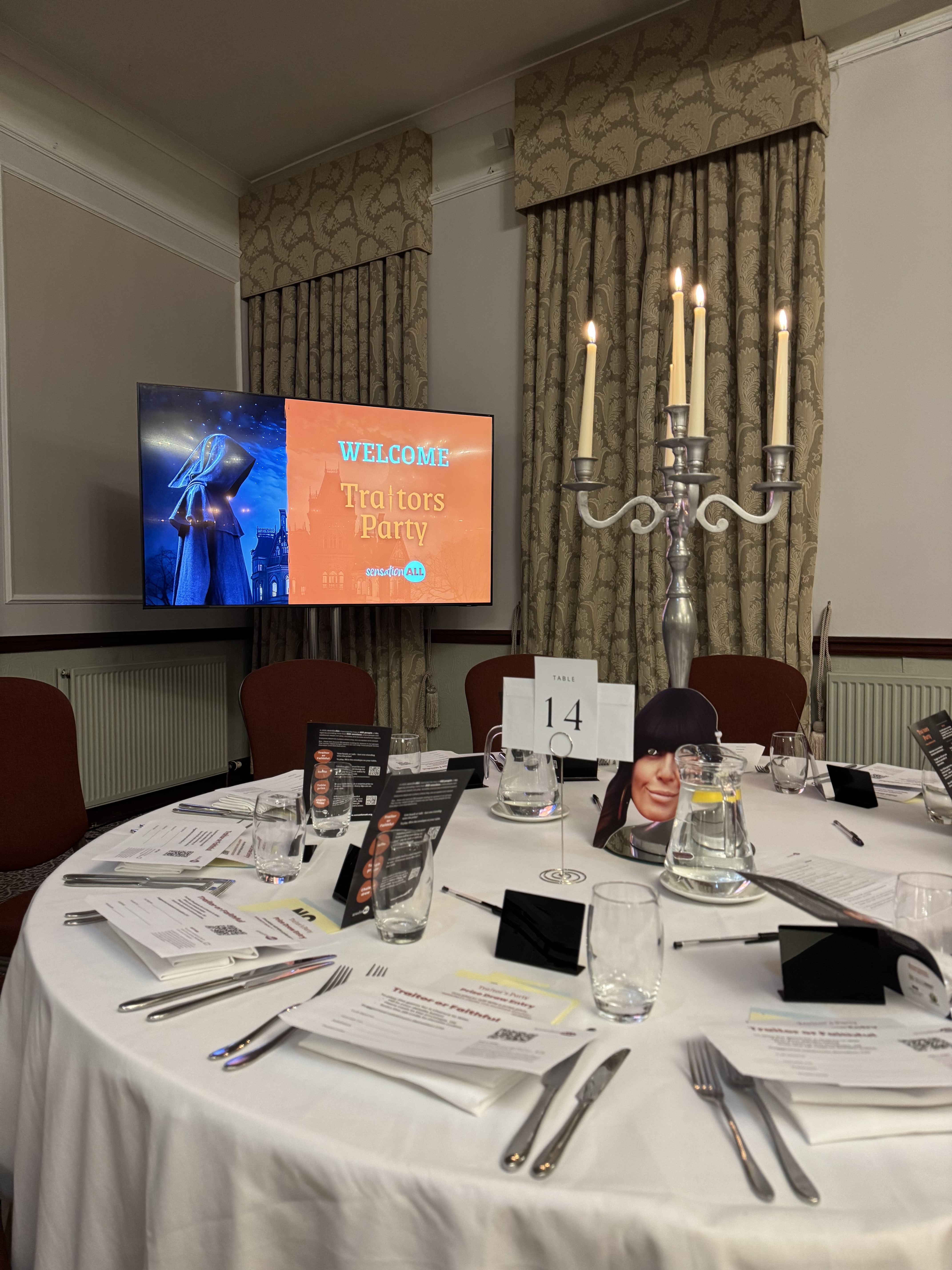
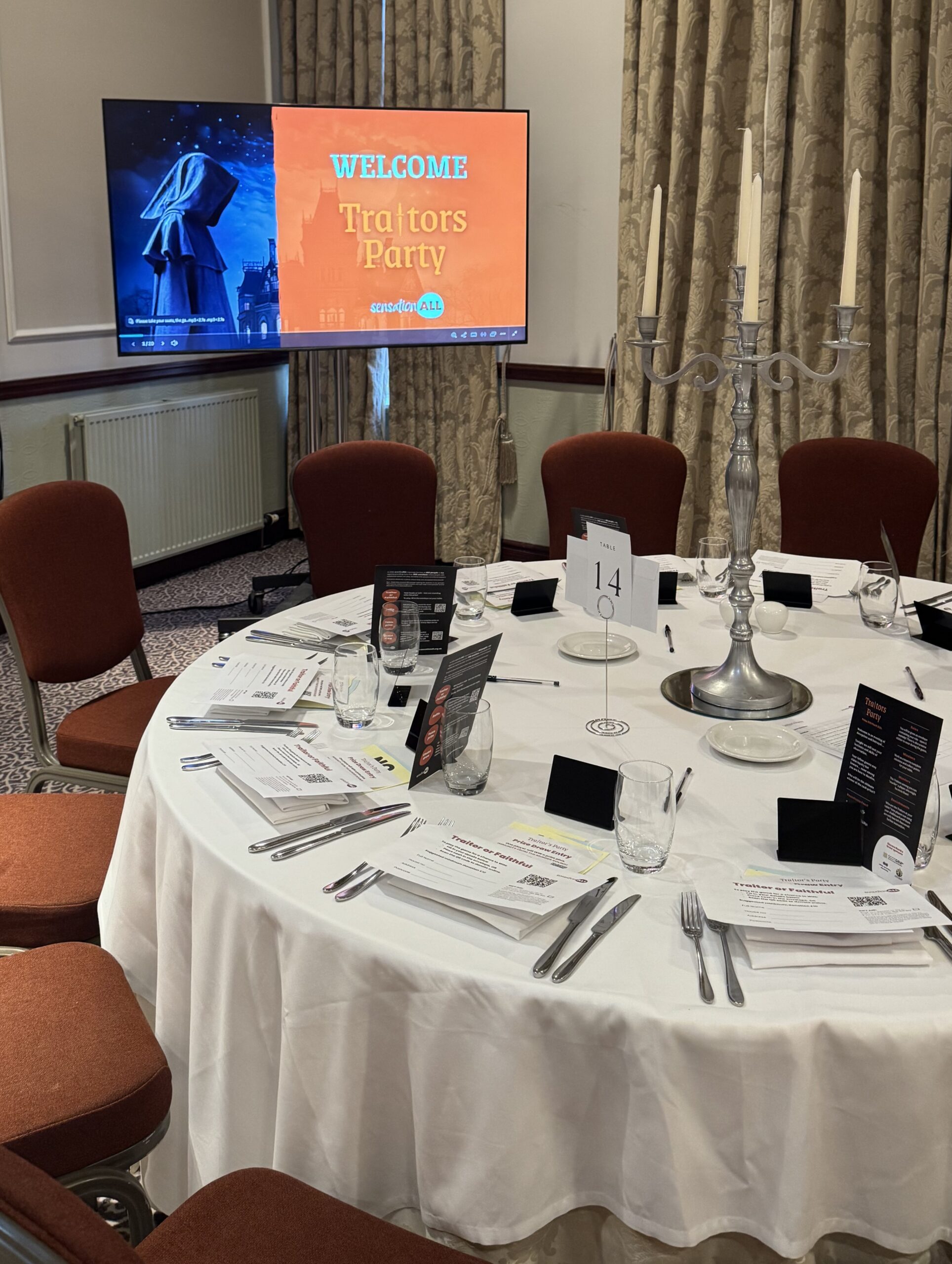
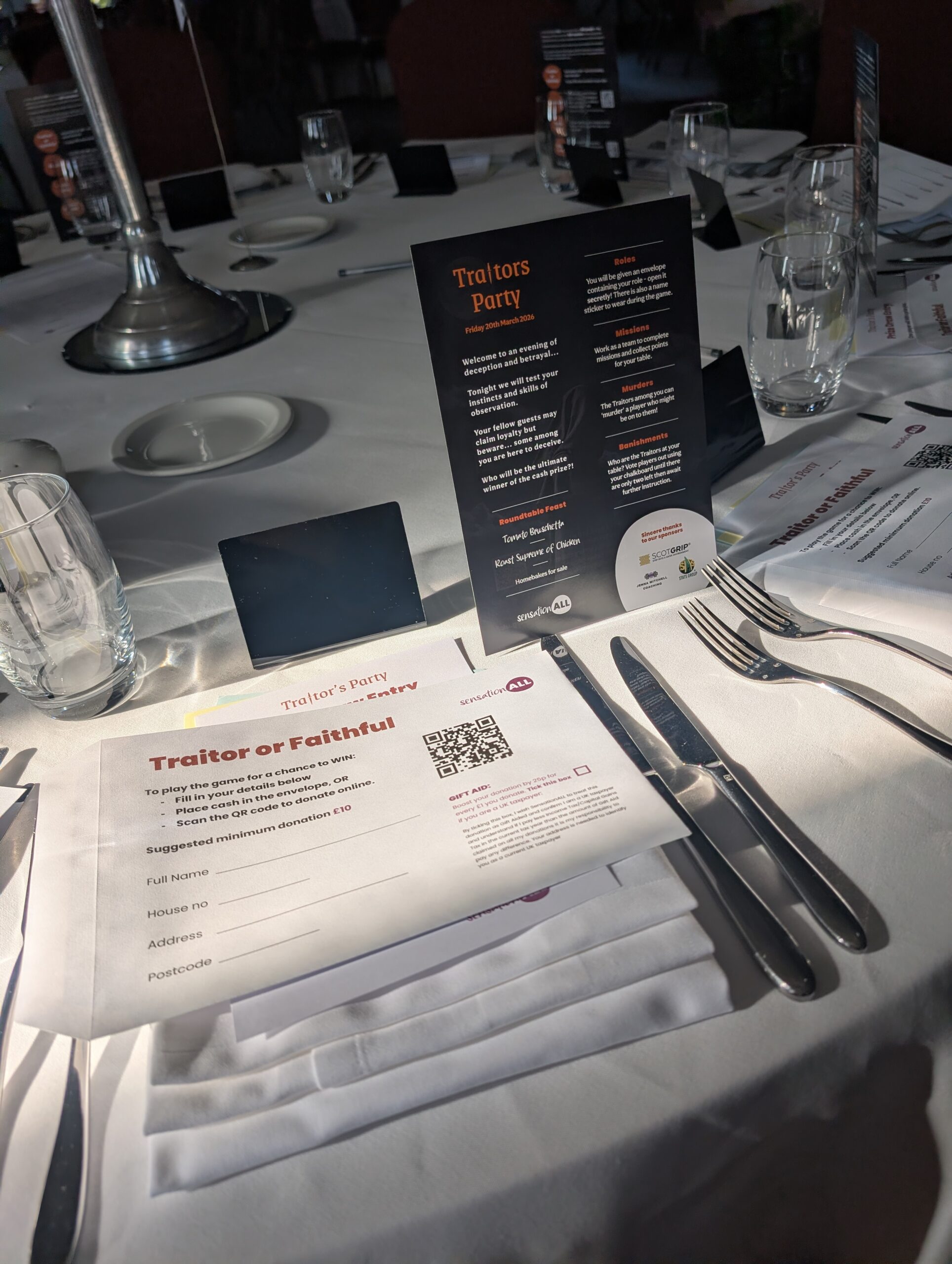
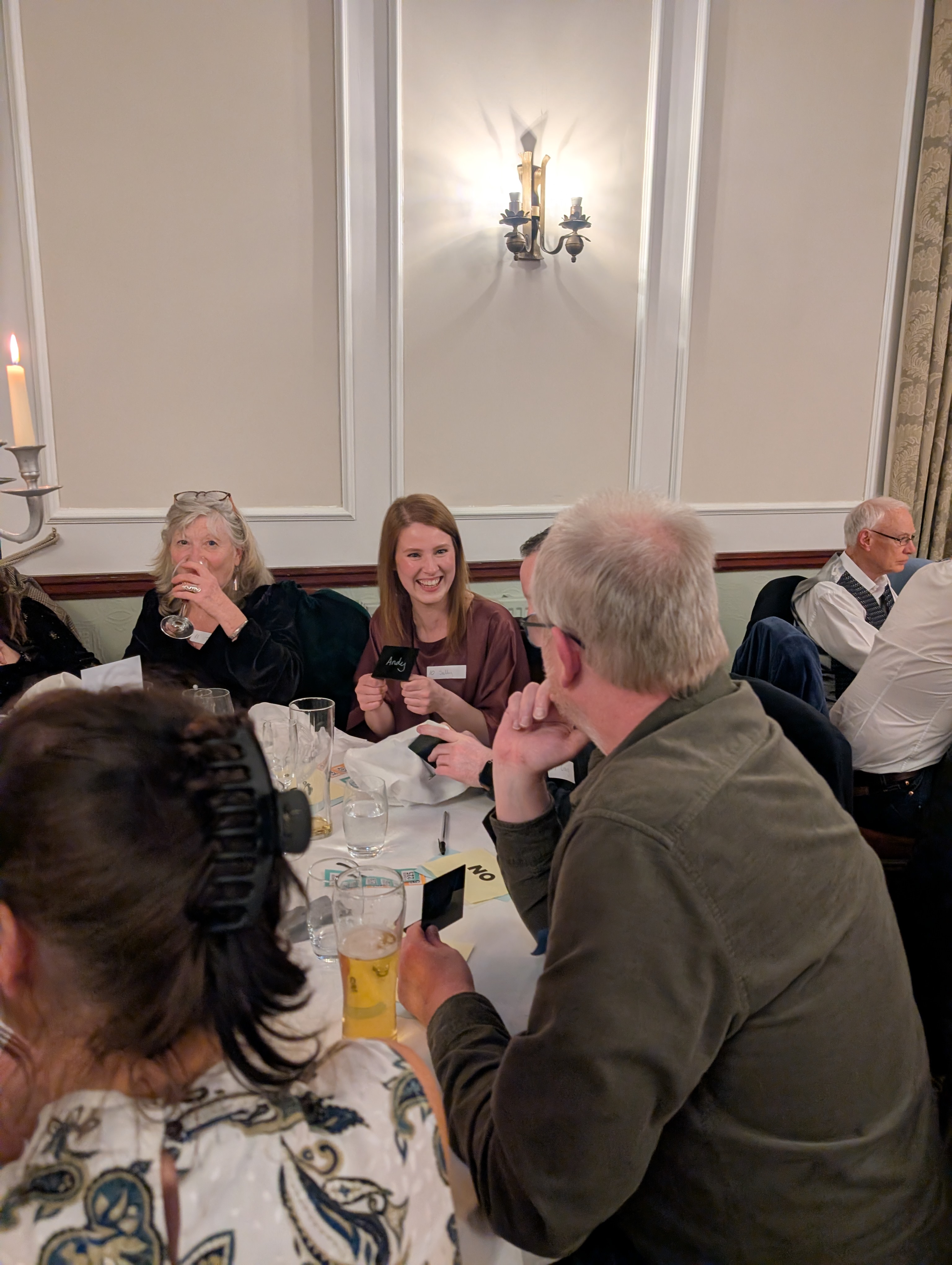
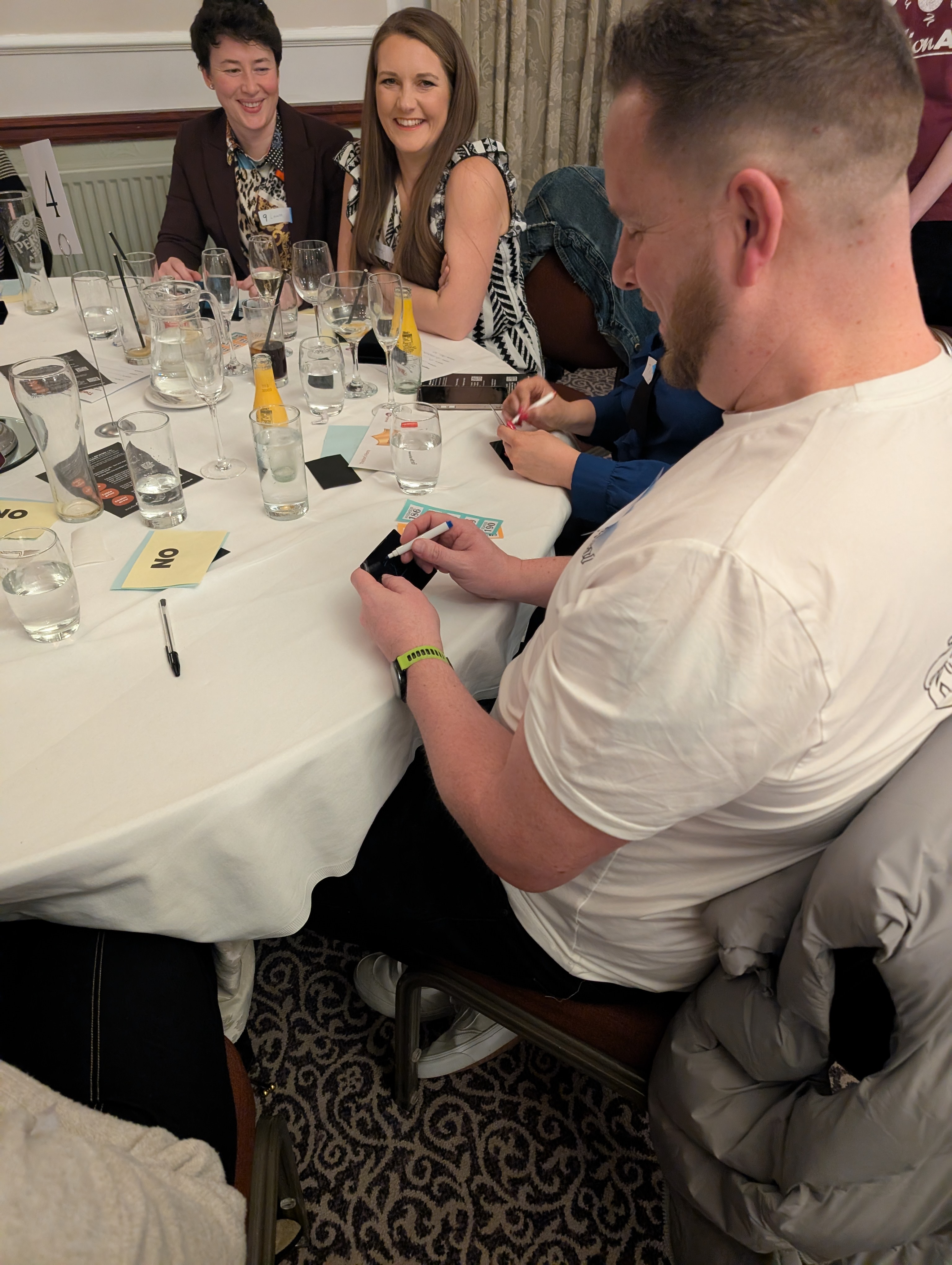
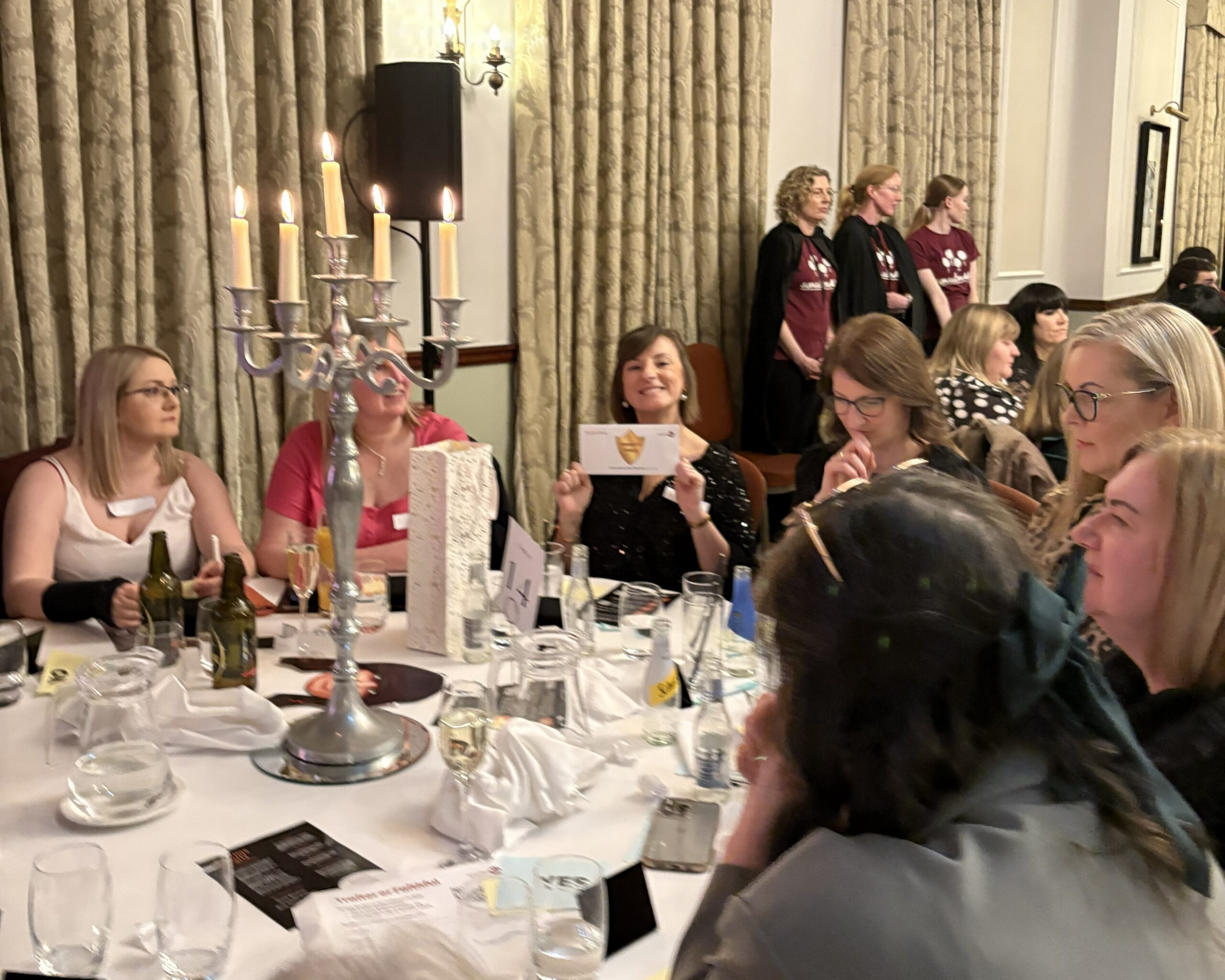
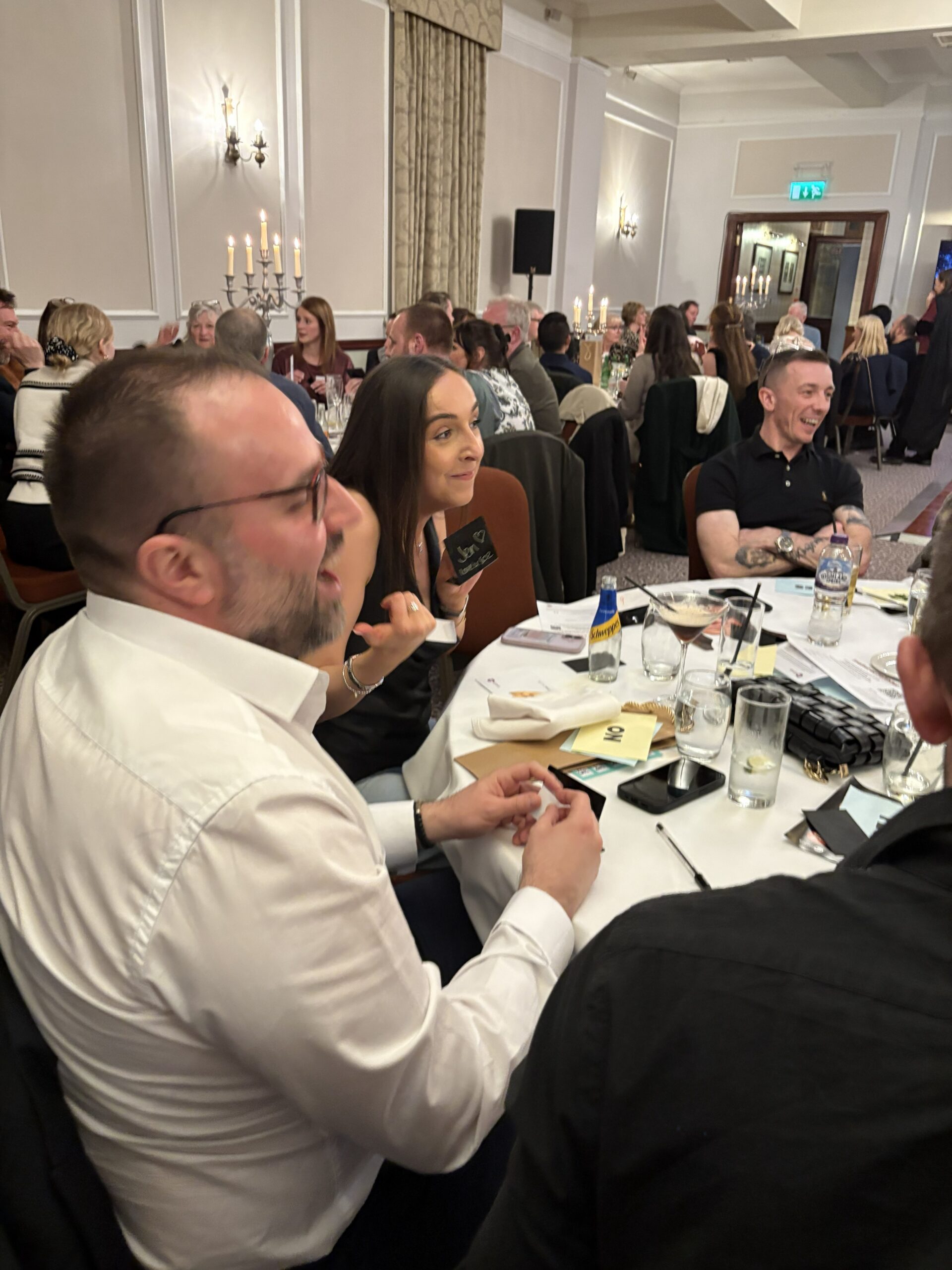
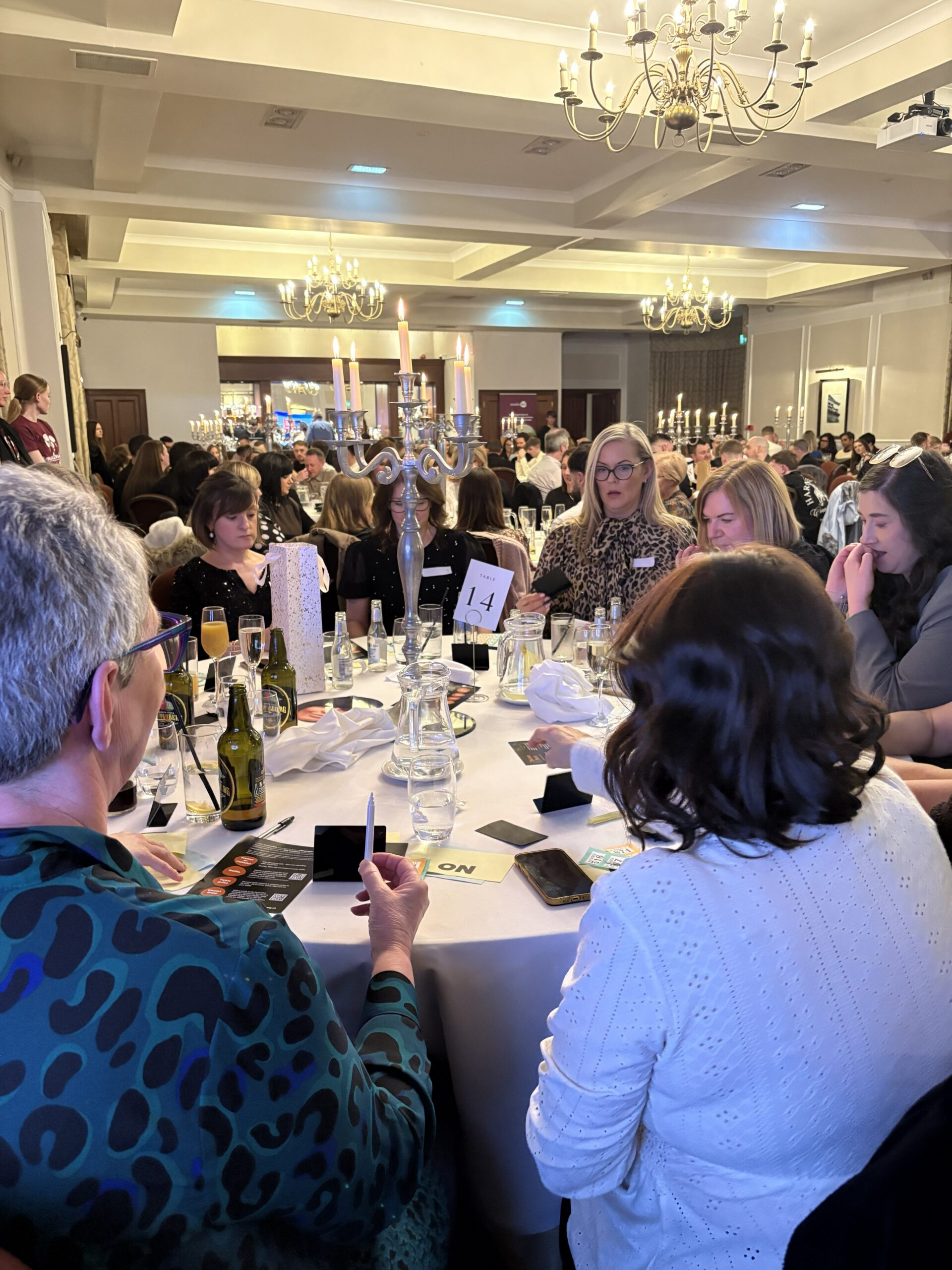
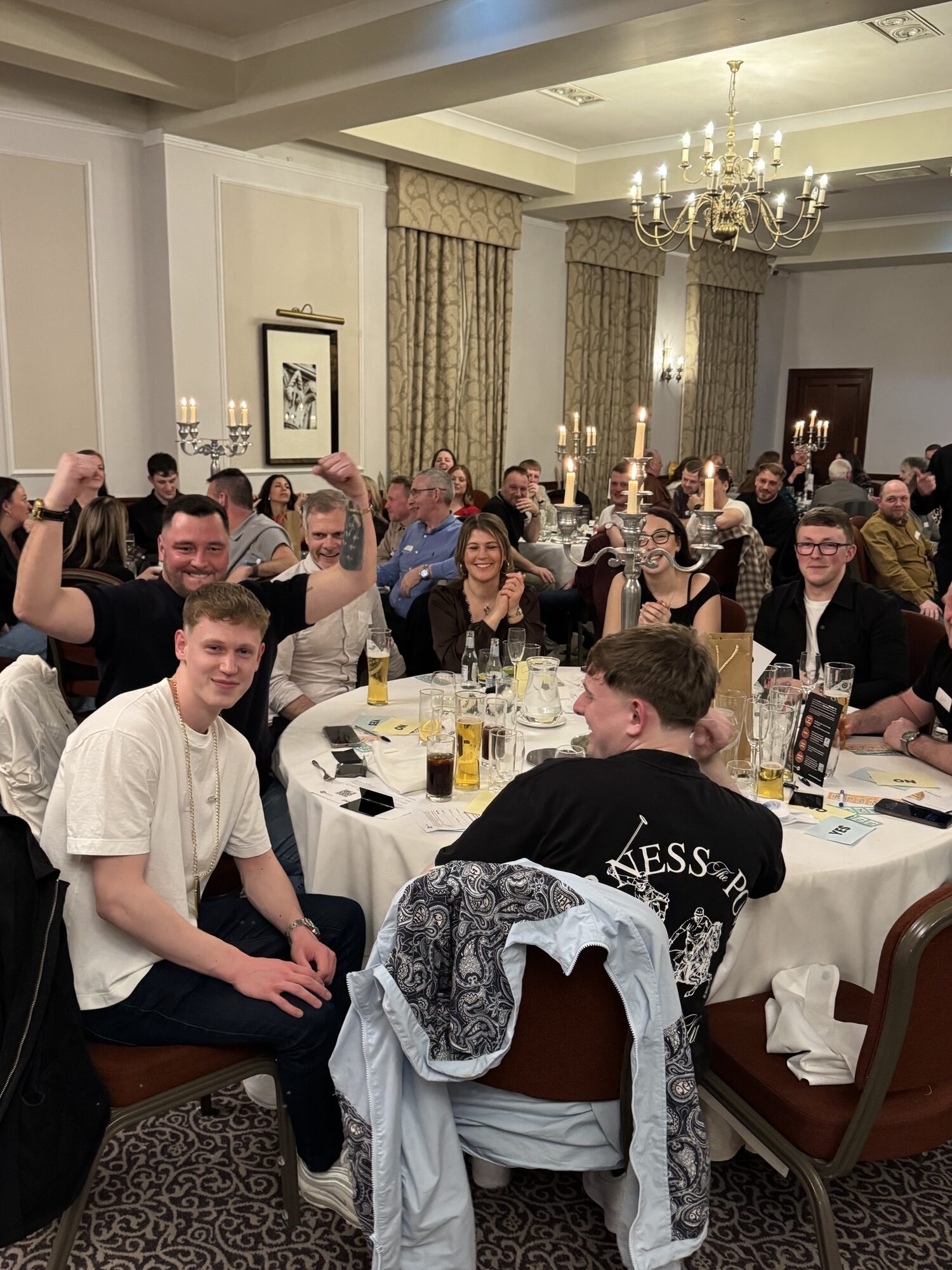
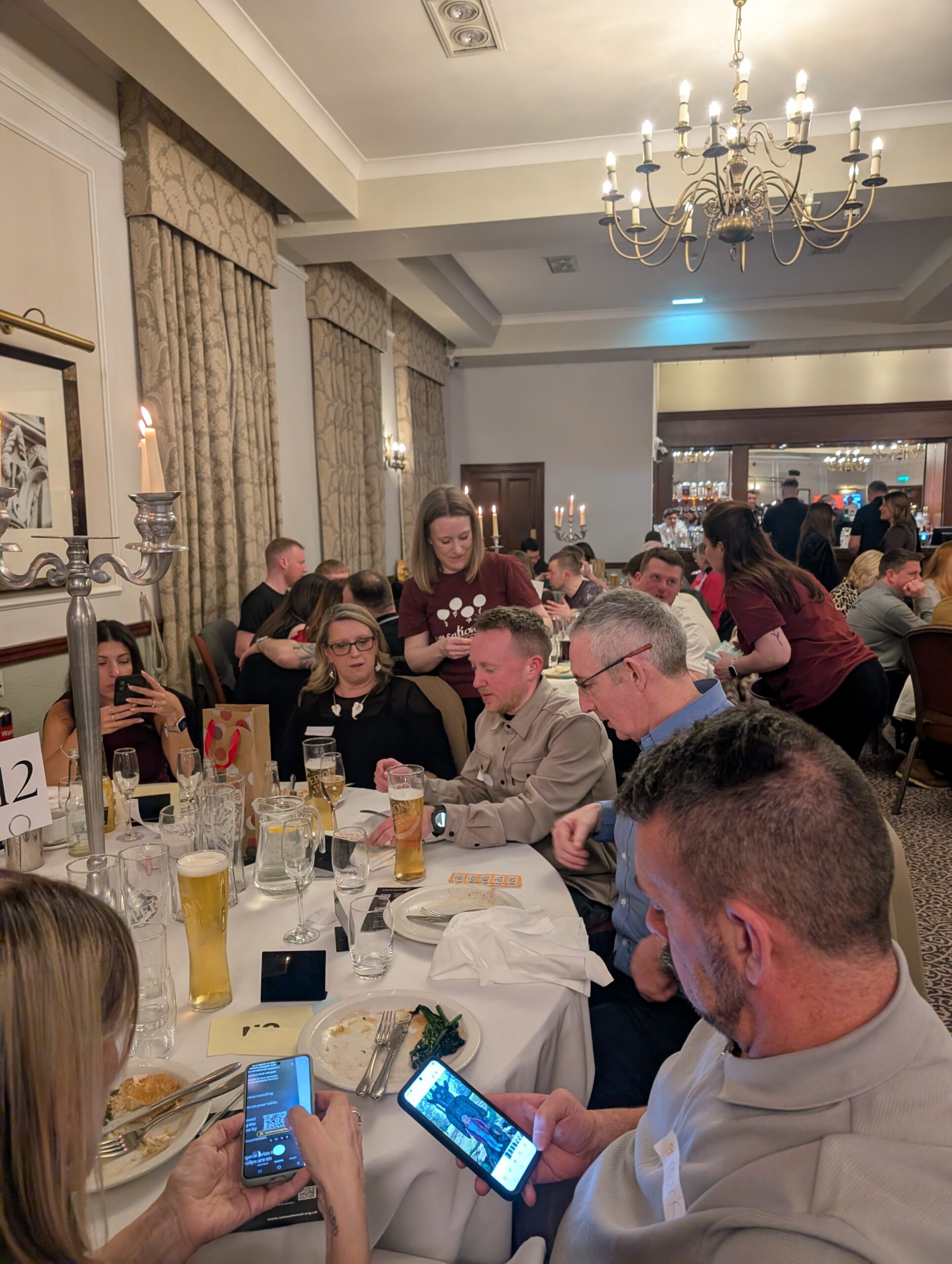
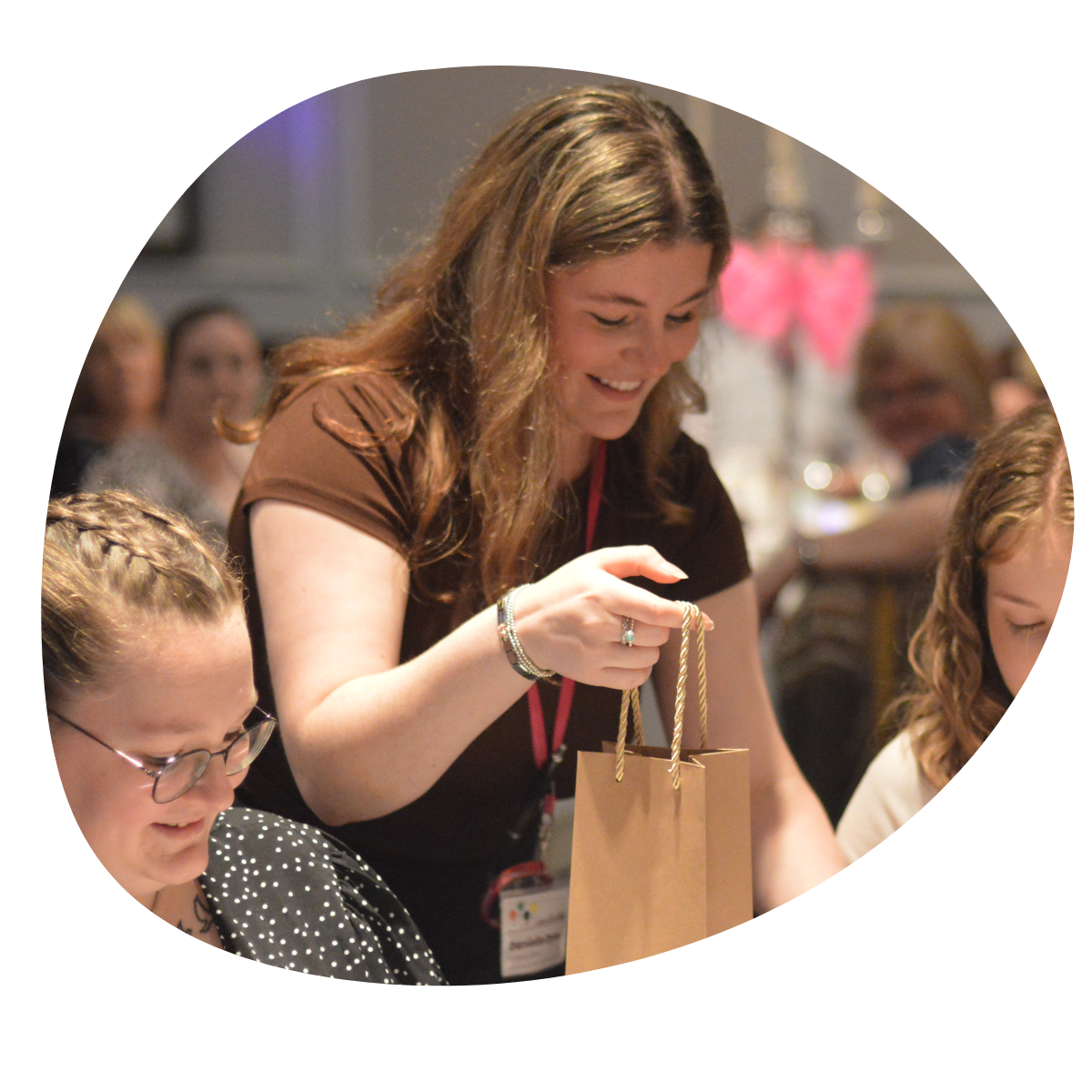
On Friday 20th March we welcomed 150 guests to Norwood Hall Hotel for an unforgettable evening inspired by the hit BBC show The Traitors. From the moment guests arrived and were greeted with a welcome drink, the atmosphere was buzzing. Despite not knowing what games of betrayal and deception lay ahead…

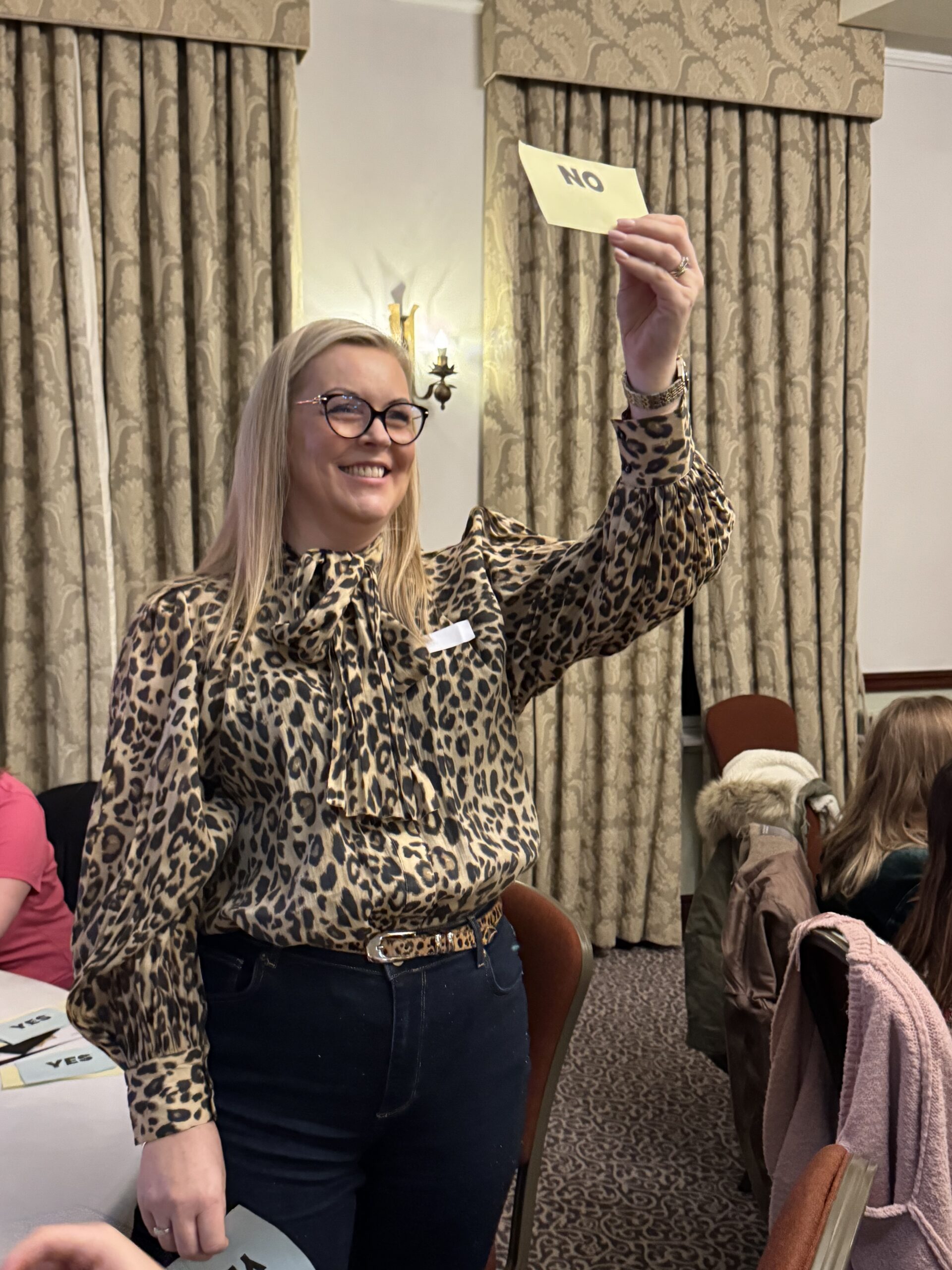
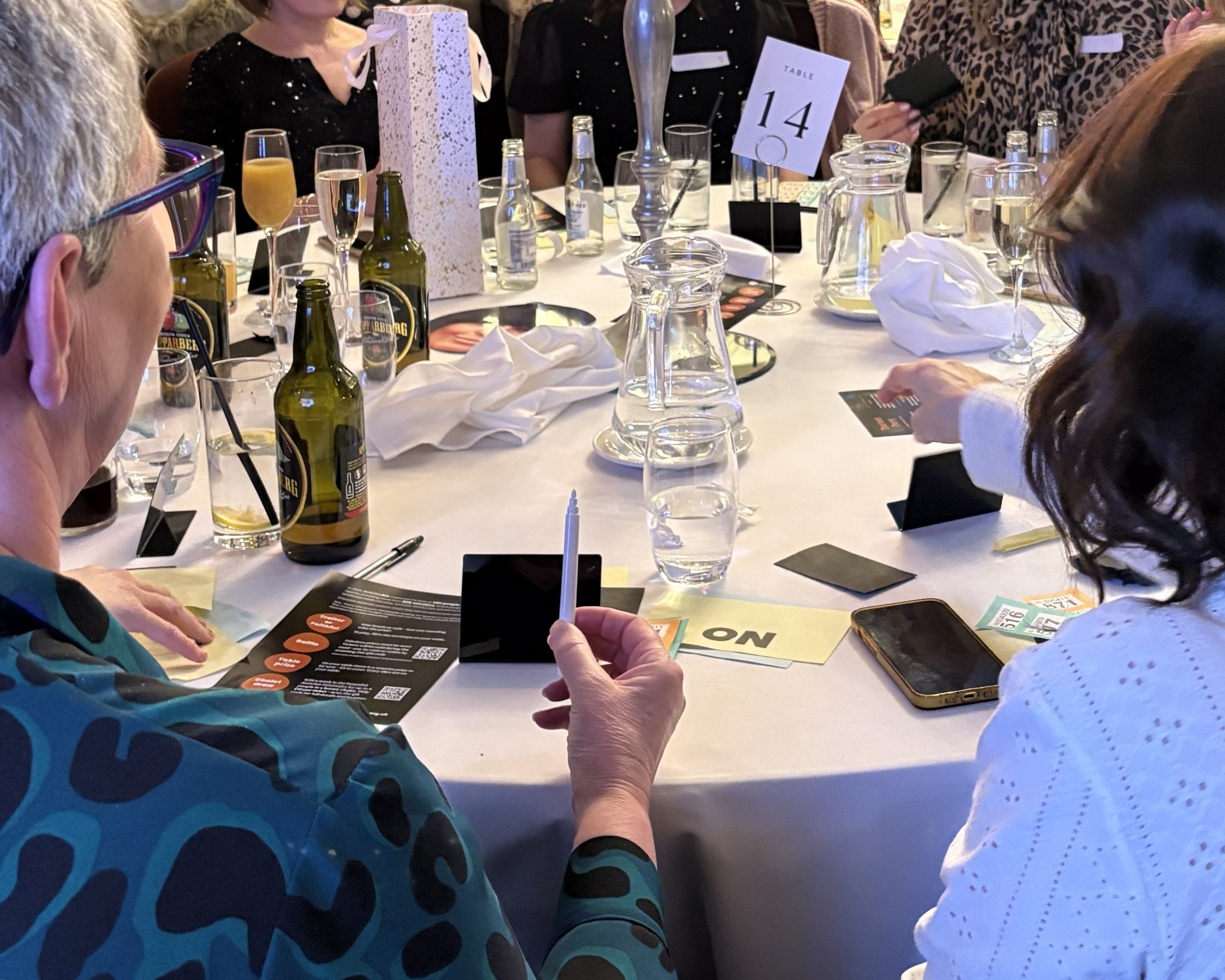
At the outset each player was presented with a black envelope containing their secret role for the evening. An unknown number of Traitors were embedded at each table – now the game was officially on. Could the Faithful uncloak the Traitors amongst them?!

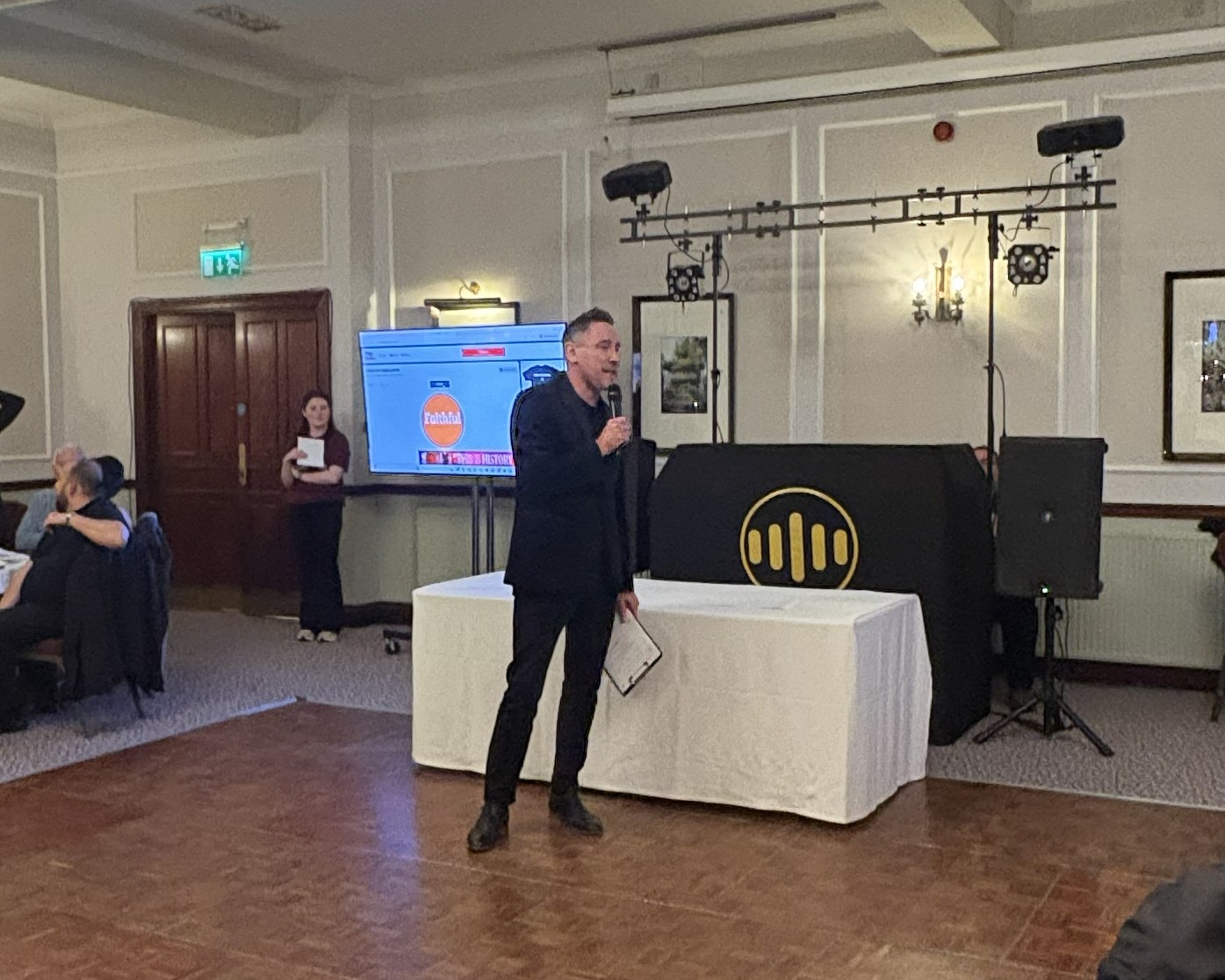
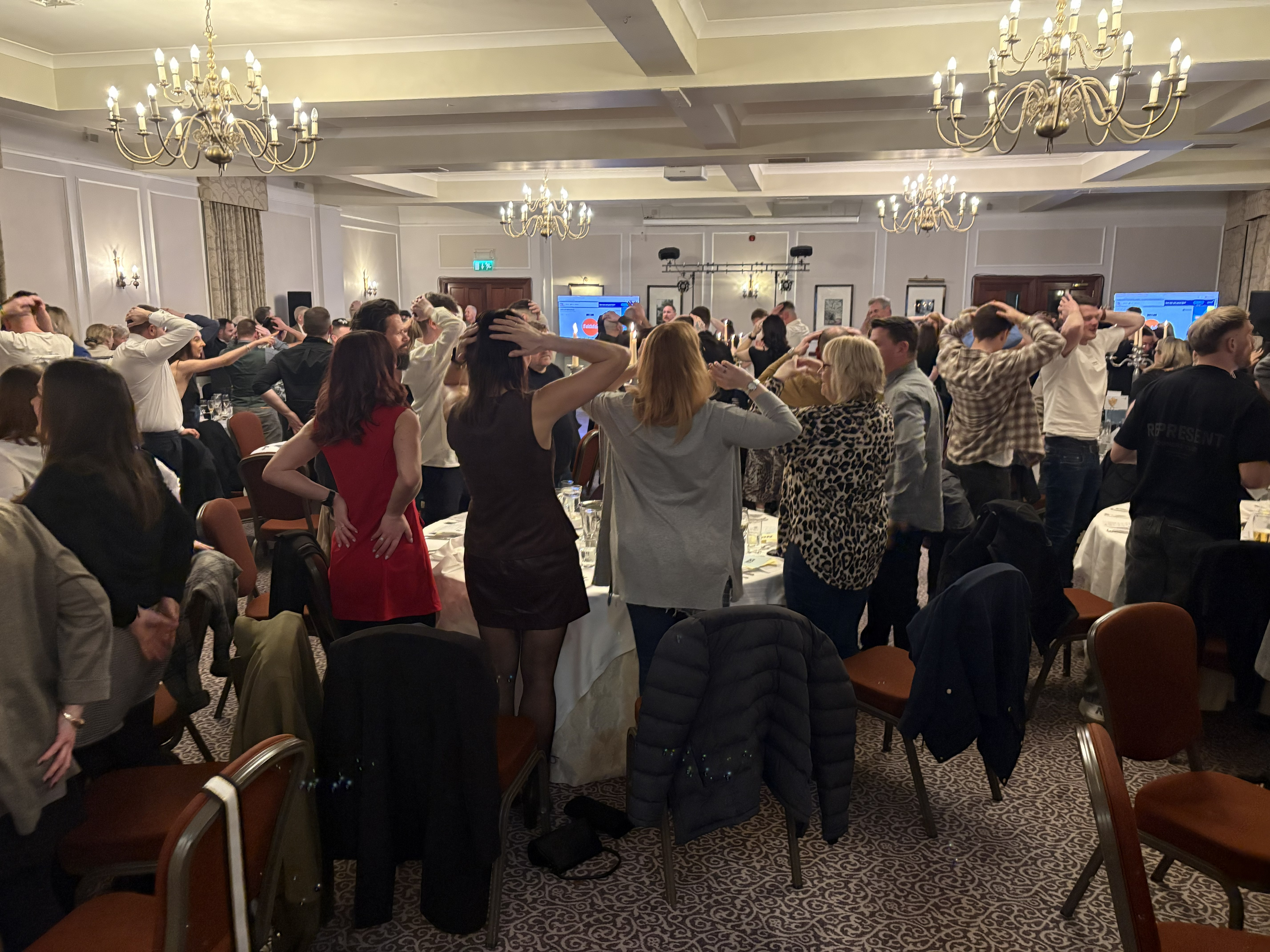
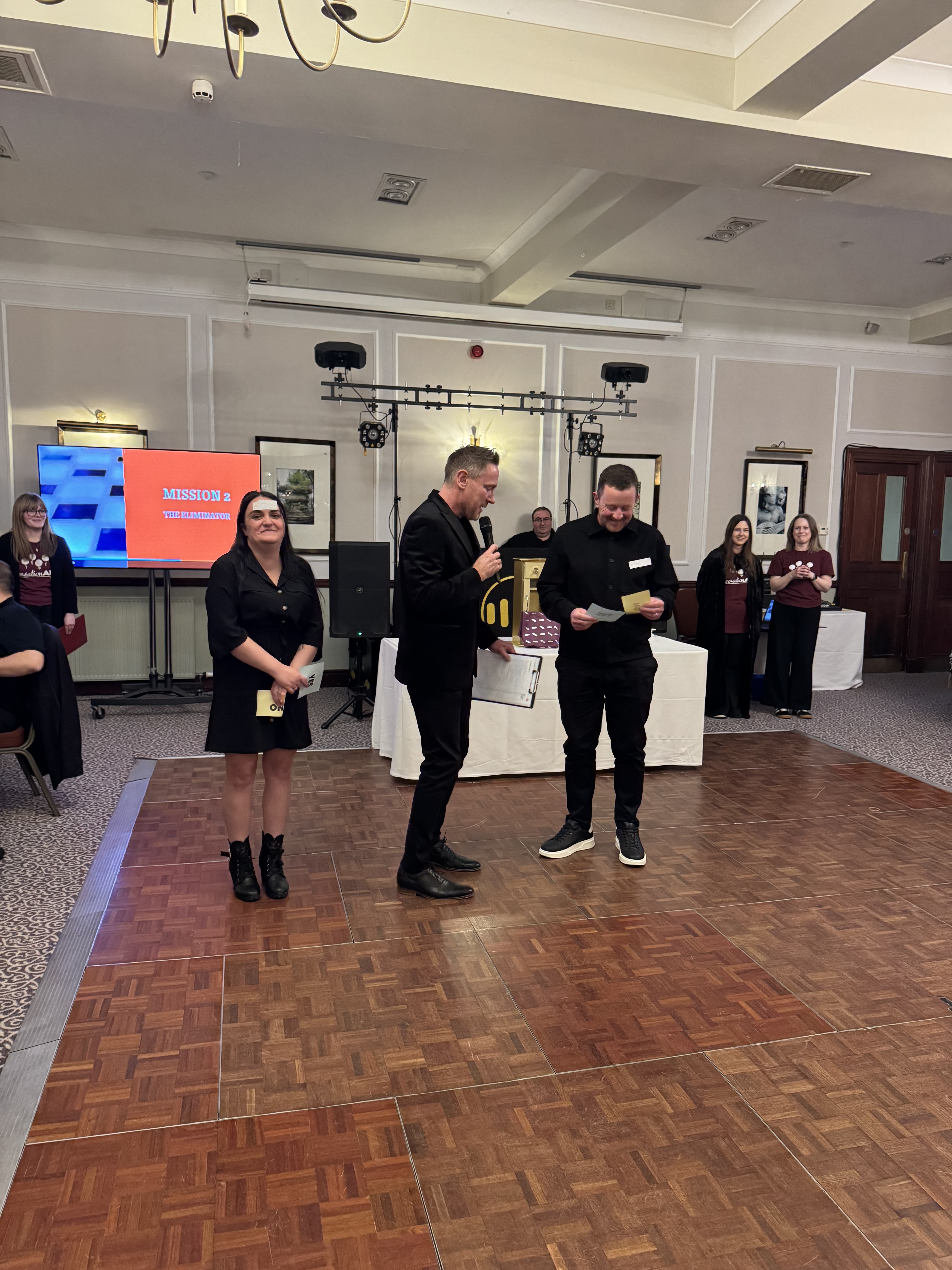
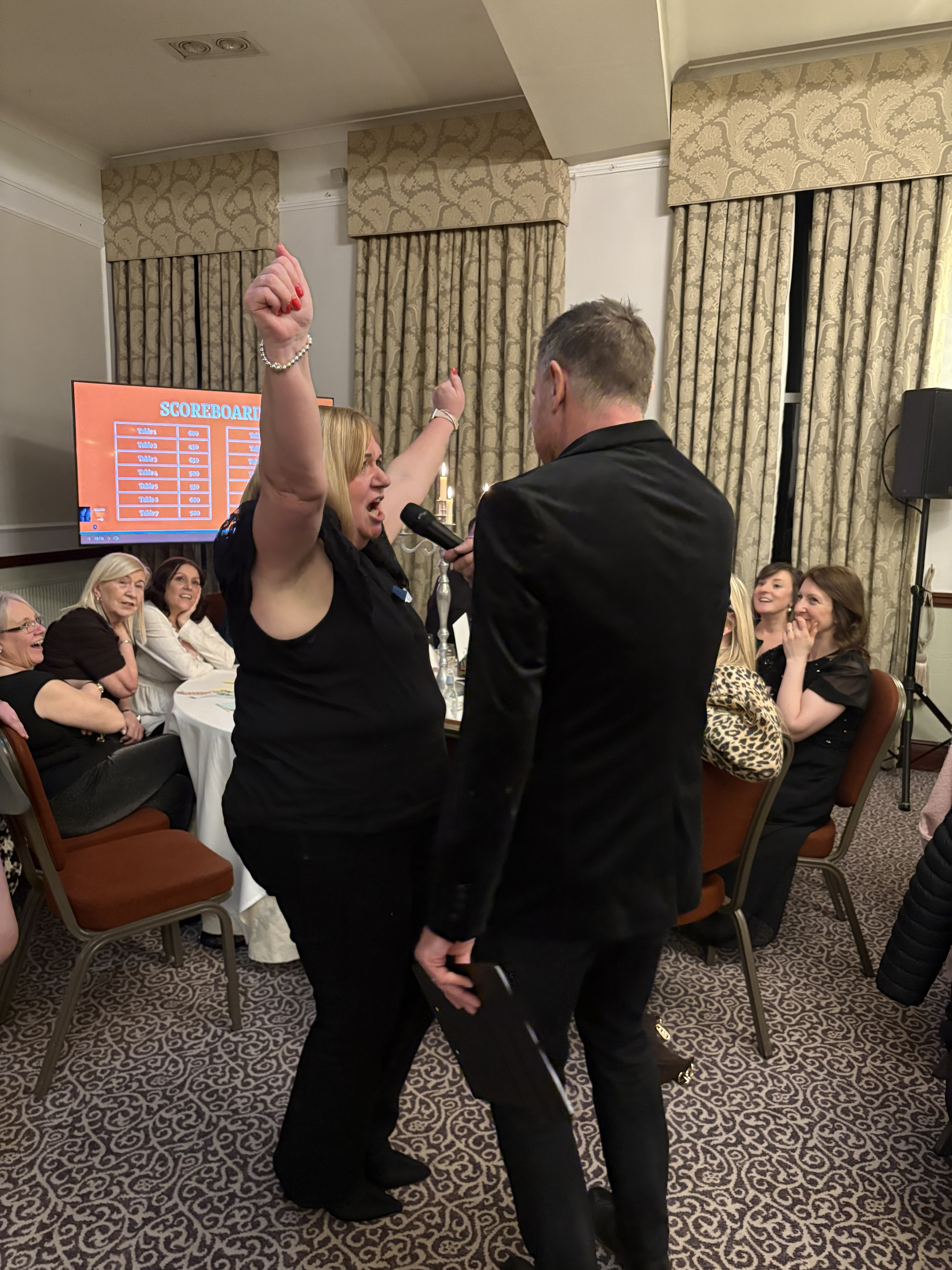
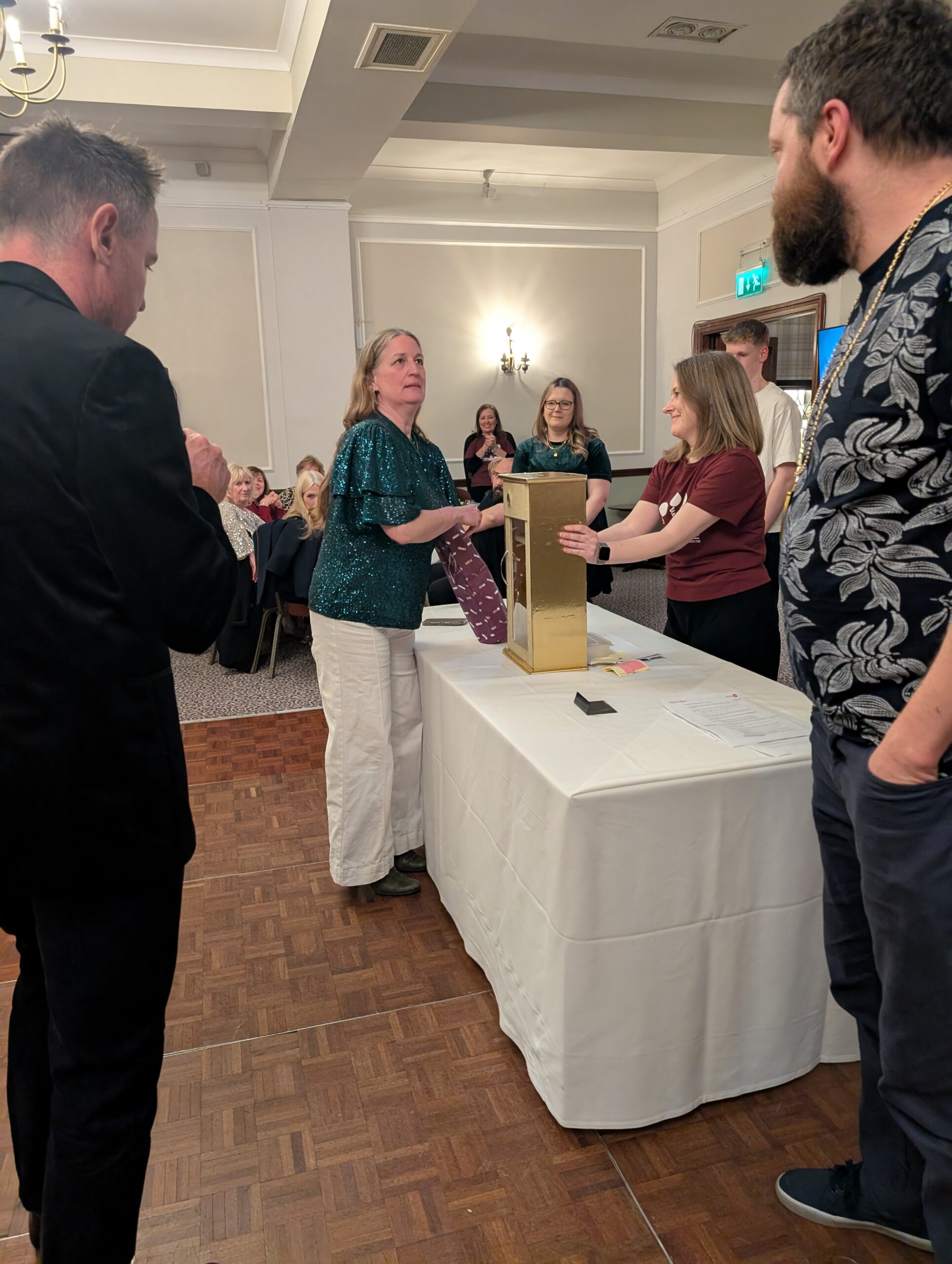
Thanks to outstanding hosting from Original 106’s Pete McIntosh, the players were guided through team missions to earn points for their table. Then it was time for the murders and banishments… friendships were tested; conspiracy theories were debated and accusations flew (which was every bit as entertaining as we hoped)!!

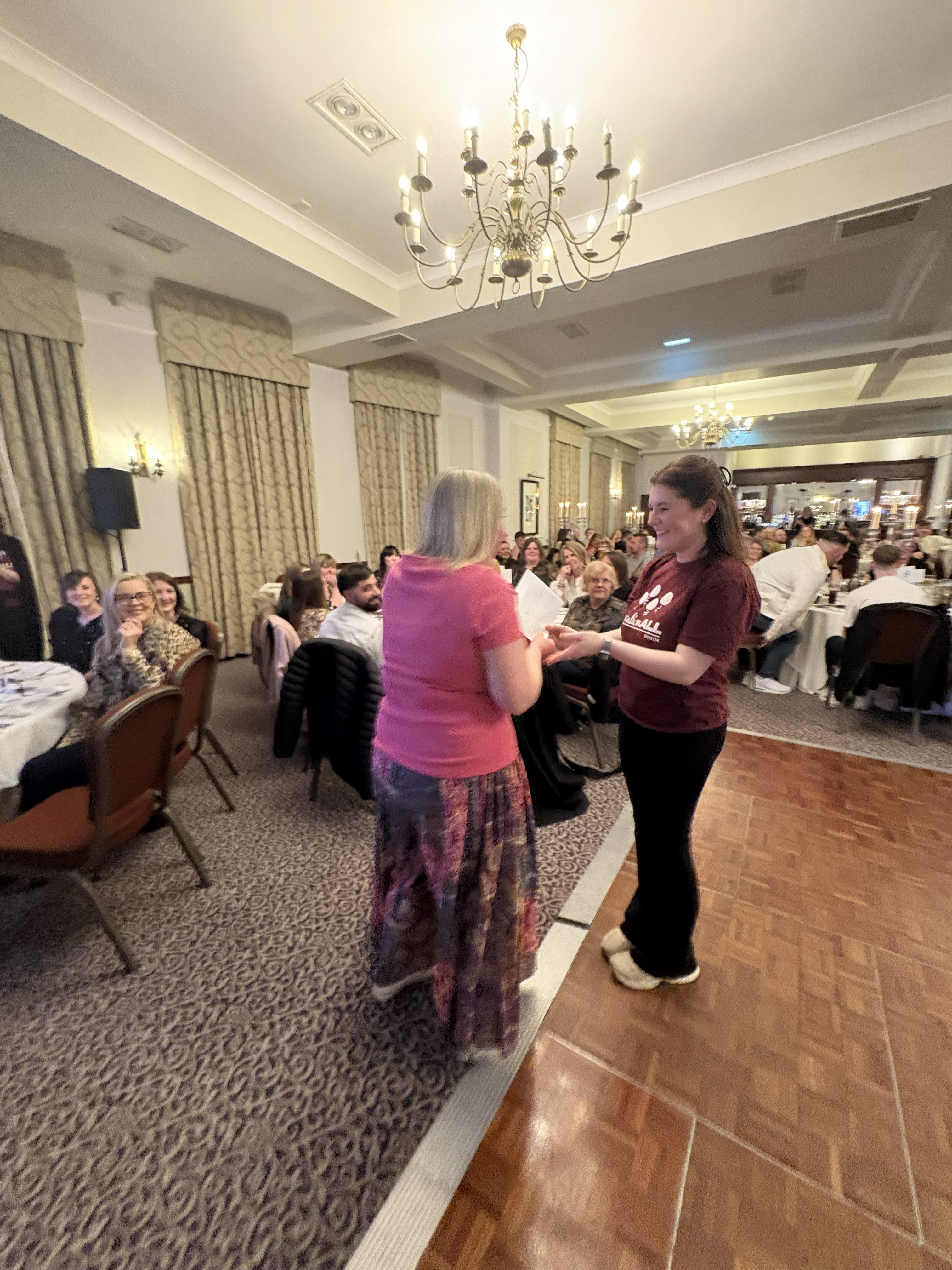
As the night unfolded and players were gradually eliminated, tension built right up until the final reveal and the room erupted when it turned out that the last remaining player was a… Traitor and walked away with the cash prize.

A charity that’s given so much to my family

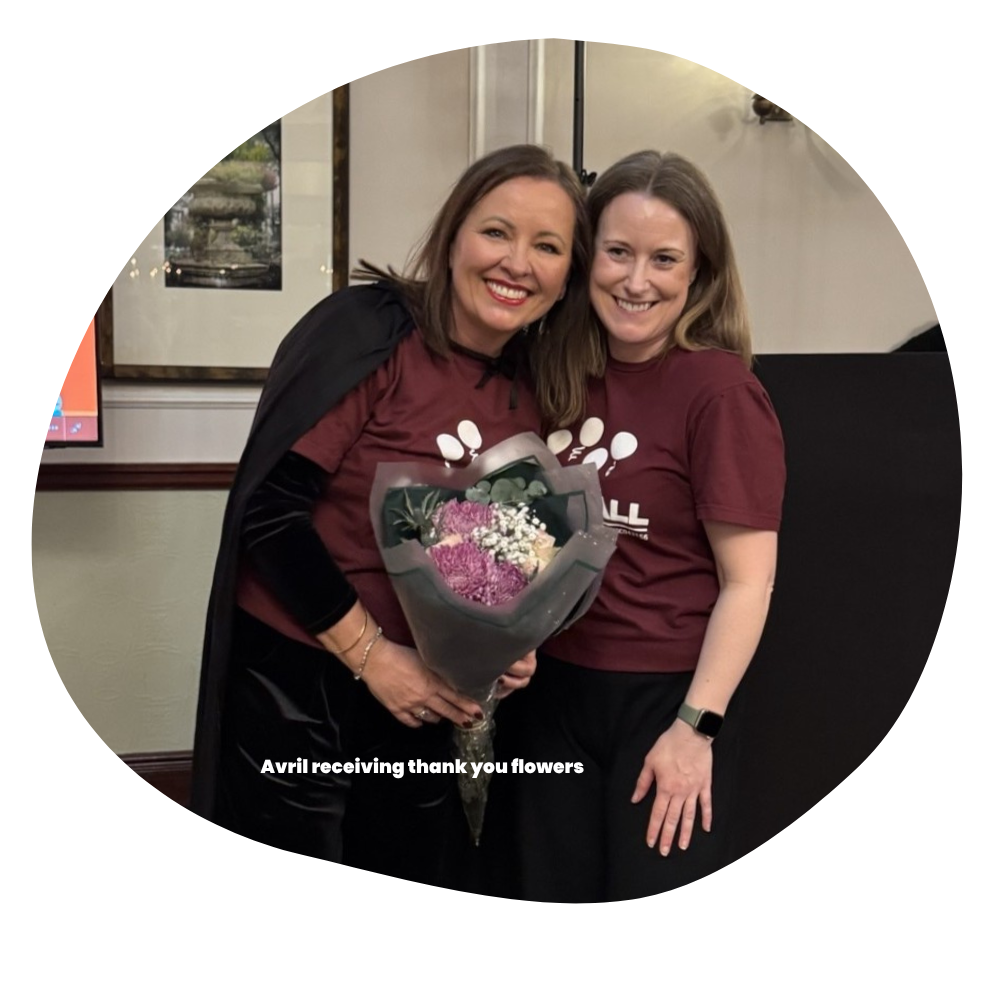
The brainwave idea for this unique fundraising event came from Avril Millington, who is a parent of a service user – she suggested using the popularity of The Traitors to create a different kind of event to raise money for the charity. As Avril explains:

An incredible £13,000 raised

While the evening was packed with laughter, intrigue and plenty of dramatic reveals, its real impact goes far beyond entertainment. Thanks to the generosity of everyone who attended, our wonderful sponsors and supporters, we raised an incredible £13,000 in one night.

This money will directly support neurodivergent children, young people and adults across the north east, helping SensationALL continue to deliver vital play sessions, social groups and ongoing support for individuals with additional needs. Knowing that one evening can help make such a tangible difference is incredibly moving.

We couldn’t have put on this event without the support of our sponsors – Jenna Mitchell Coaching, STATS Group and Scotgrip International – as well as everyone who donated raffle prizes and every single person who bought a ticket. And not forgetting our amazing volunteers who helped on the night, keeping everything running smoothly through the game.

Events like this truly showcase the power of community, and we are so grateful for everyone’s input in making this event a massive success.

What’s next for SensationALL?

Fundraising events are essential for SensationALL to continue growing and supporting even more families. We are now looking for sponsors for the Masked Ball this September, which is the highlight of our fundraising calendar.

This year’s masked theme shines a light on the experience of “masking” for neurodivergent individuals – and the impact it can have on mental health, identity and self‑expression. The event will take place at The Chester Hotel, with a drinks reception, three‑course meal and live entertainment included.

If you or your business are interested in sponsoring the event, you’ll be helping cover essential costs such as catering and entertainment, ensuring that every pound raised can go directly towards supporting SensationALL’s services in 2026 and beyond.

Please get in touch if you’d like to know more events@SensationALL.org.uk.

Thank you for helping SensationALL continue to make a difference.

Meet our fundraising team!

Behind every fundraising event, appeal and social post at SensationALL is a passionate team working hard to ensure our services can continue to make a real difference.

As a registered charity, we are wholly reliant on donations and grants to cover the cost of running our activities and support groups.

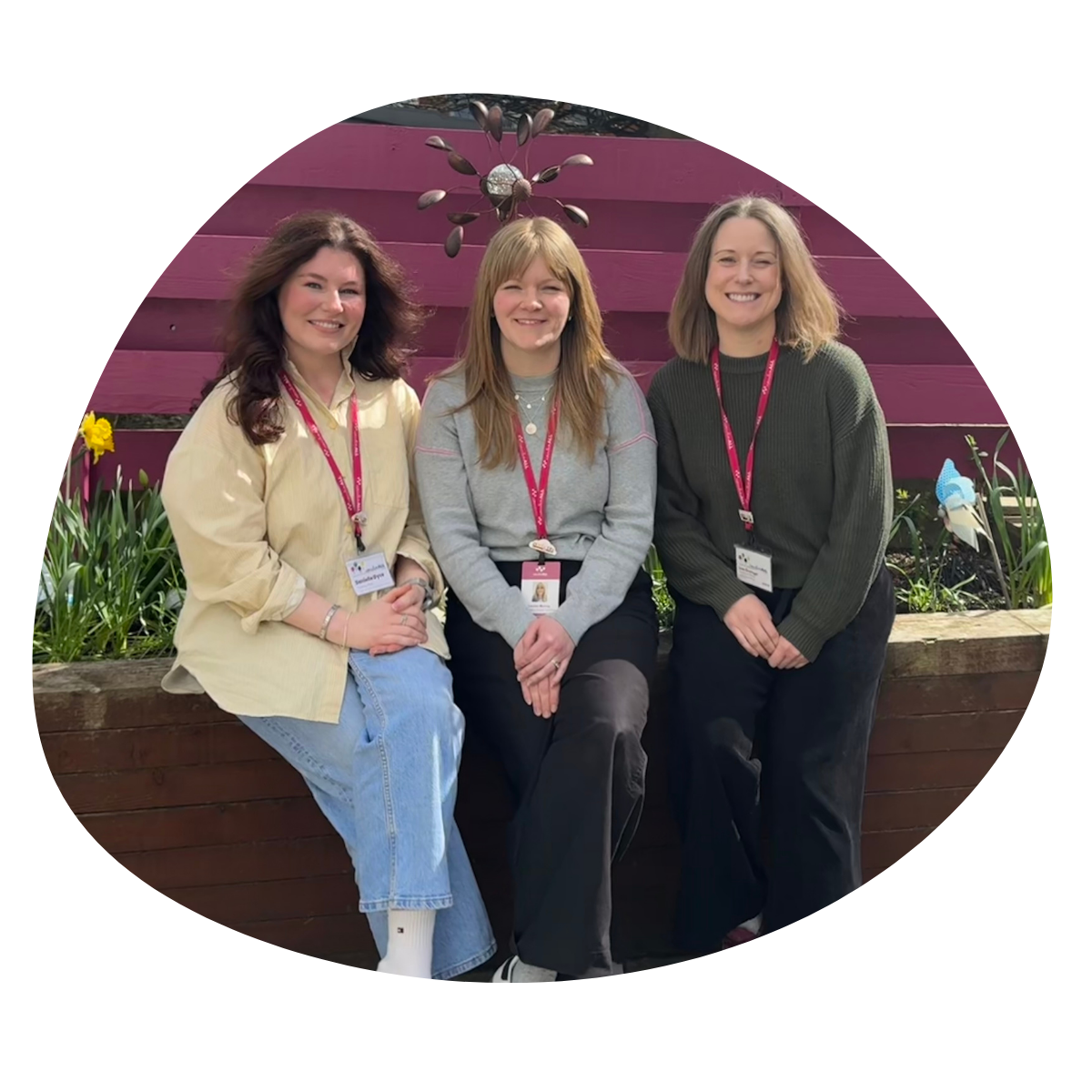
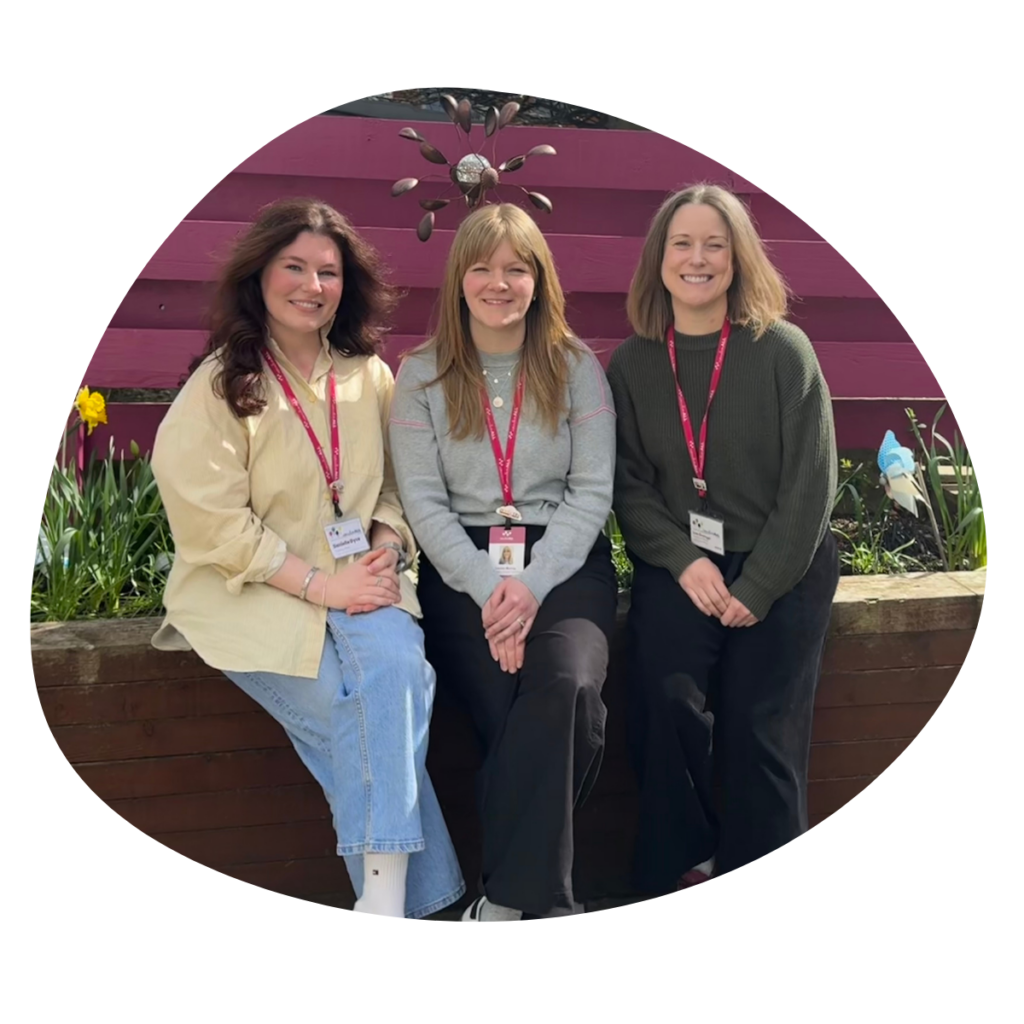
Read more about the trio responsible for fundraising, volunteering and marketing – they are a busy bunch!


What does your role at SensationALL involve?
I lead our fundraising team and work closely with Louise and Danielle to generate much‑needed funds from grant giving organisations, individual and corporate donors and through our own events. As well as this, I oversee all our marketing activity, including branding, our website and social media platforms.

What do you like most about SensationALL?
I love how adaptive SensationALL is to the needs of the people who use our services. The team are always reviewing whether services are right for each individual and ensuring everyone has a positive experience. The support offered to each person truly is personalised which I think is incredible.

How long have you been at SensationALL?
8 years this June (not sure where the time has gone!!) and during that time my role has grown alongside the charity.

Favourite fundraising event?
I really enjoy the Kiltwalk. I’ve done both the Wee Wander and the Mighty Stride with my family over the years, and it’s always such a fantastic day. The route is beautiful and the whole event has a real party atmosphere.

A fun fact about you!
I’ve become a bit obsessed with gardening (although I don’t really know what I’m doing!) and even went to the Chelsea Flower Show a couple of years ago. I love being in the garden, even if things don’t always grow as I planned!


What does your role at SensationALL involve?
In my role no two days are ever the same! It includes organising fundraising events and supporting people with their own fundraising, as well as looking after our amazing volunteers who support us across a wide range of roles.

What do you like most about SensationALL?
I love that SensationALL prides itself on creating opportunities for everyone. Hearing about the difference we make to so many families reminds me daily that I’m part of something really special.

How long have you been at SensationALL?
I’ve been with SensationALL for 3 years.

Favourite fundraising event?
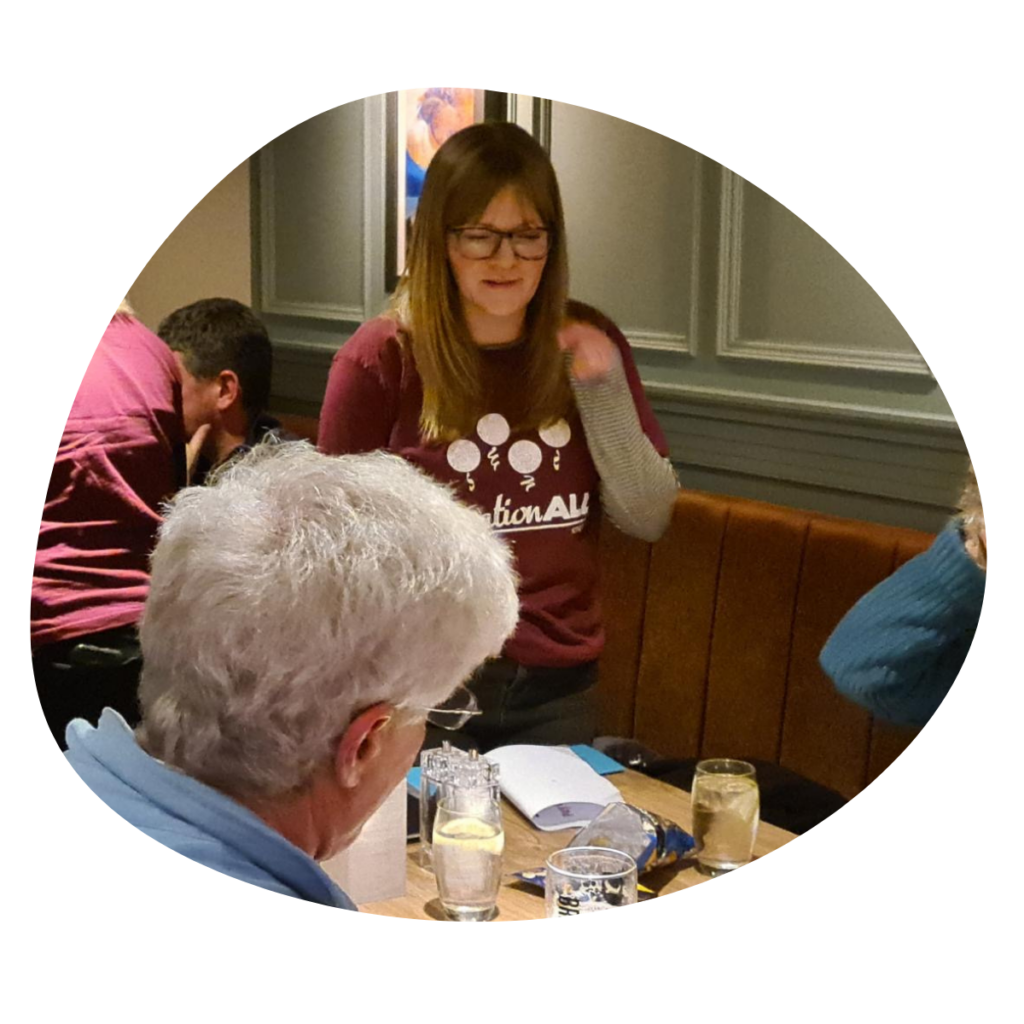
I love our quiz nights. It’s always great seeing familiar faces from our regular teams, and I really enjoy the friendly competition between rounds. Our quizmaster is an incredible volunteer who puts so much effort into making the evenings special for everyone.

A fun fact about you!
I spent a year teaching English in primary schools in central France before moving into marketing roles. My French is definitely a bit rusty now, though! 


If you want to help the team raise money for SensationALL they’d love to hear from you – events@sensationall.org.uk
Meet the admin team

Elaine and Ellie are our fabulous Service Coordinators who keep all the administrative functions of the charity running smoothly! They are the people who answer your email enquiries, book you onto sessions and take care of lots of other things including IT, health & safety and everything else to keep our buildings running smoothly!

What’s your role at SensationALL and what does it involve?
I am one of the Service Coordinators, concentrating on training (parents/professionals/employers), Learning Pathways Plus (LPP) sessions for individual neurodivergent schoolchildren, and organising the ‘Tea & Tips’ sessions (1-2-1 chats with a practitioner for parents). I also carry out some of the H&S tasks such as weekly fire alarm testing, fire extinguisher checks, the stocking of First Aid kits, plus building, garden, car park and play park inspections.

What do you like most about SensationALL / what does SensationALL mean to you?
I am in awe of our Service Team – their knowledge and compassion is amazing and when you see them working with our attendees, I just think they are awesome. I work in the Administration office and everyone in there is so kind and helpful, with a great sense of humour.  It’s a pleasure to go into work each day and I am immensely proud of the work that we all do.

How long have you been at SensationALL?
I’ve been here for just over 3 years now.

What’s your favourite sensory activity?
I love the vibration plate!  If I have a couple of minutes whilst boiling the kettle, you’ll probably find me on the machine getting a good shake down!  I also love standing on a Bosu balance ball – it feels like I’m doing some exercise.

A fun fact about yourself!
I am also a Wedding Ceremony Officer, as well as a Match Day First Aider at Pittodrie.  In my spare time, I volunteer with the Scottish Charity Air Ambulance and as a Community Cardiac Responder in Westhill.

What’s your role at SensationALL and what does it involve?
My role consists of being the primary point of contact for our families and finding support and sessions that are beneficial for them. (and a whole bunch of background IT stuff!)

What do you like most about SensationALL / what does SensationALL mean to you?
My favourite thing about SensationALL is seeing how much it helps our service users and their families. It’s the only place I’ve ever worked where it feels like I really make a difference.

How long have you been at SensationALL?
Almost three years! I started back in May 2023 with way less grey hair!

What’s your favourite sensory activity?
Baking! Especially anything involving chocolate but it has to be vegan.

A fun fact about yourself
I recently got into running and my first ever competitive race was Edinburgh marathon last year! I then did Tough Mudder two weeks after and 4 other races before the end of 2025. 

Regulate with floor time

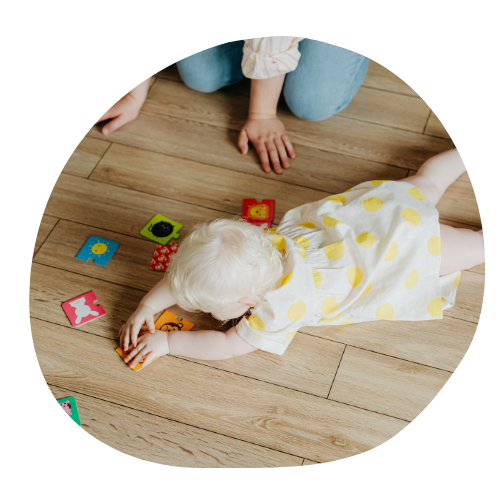
For many neurodivergent people, the floor is a powerful regulation tool. Floor time isn’t about getting in the way, making a mess or being lazy… it is about the nervous system feeling safe, grounded and supported.

Before you can focus, listen, learn, or communicate your nervous system needs to feel settled.

Neurodivergent nervous systems often process sensory information differently.

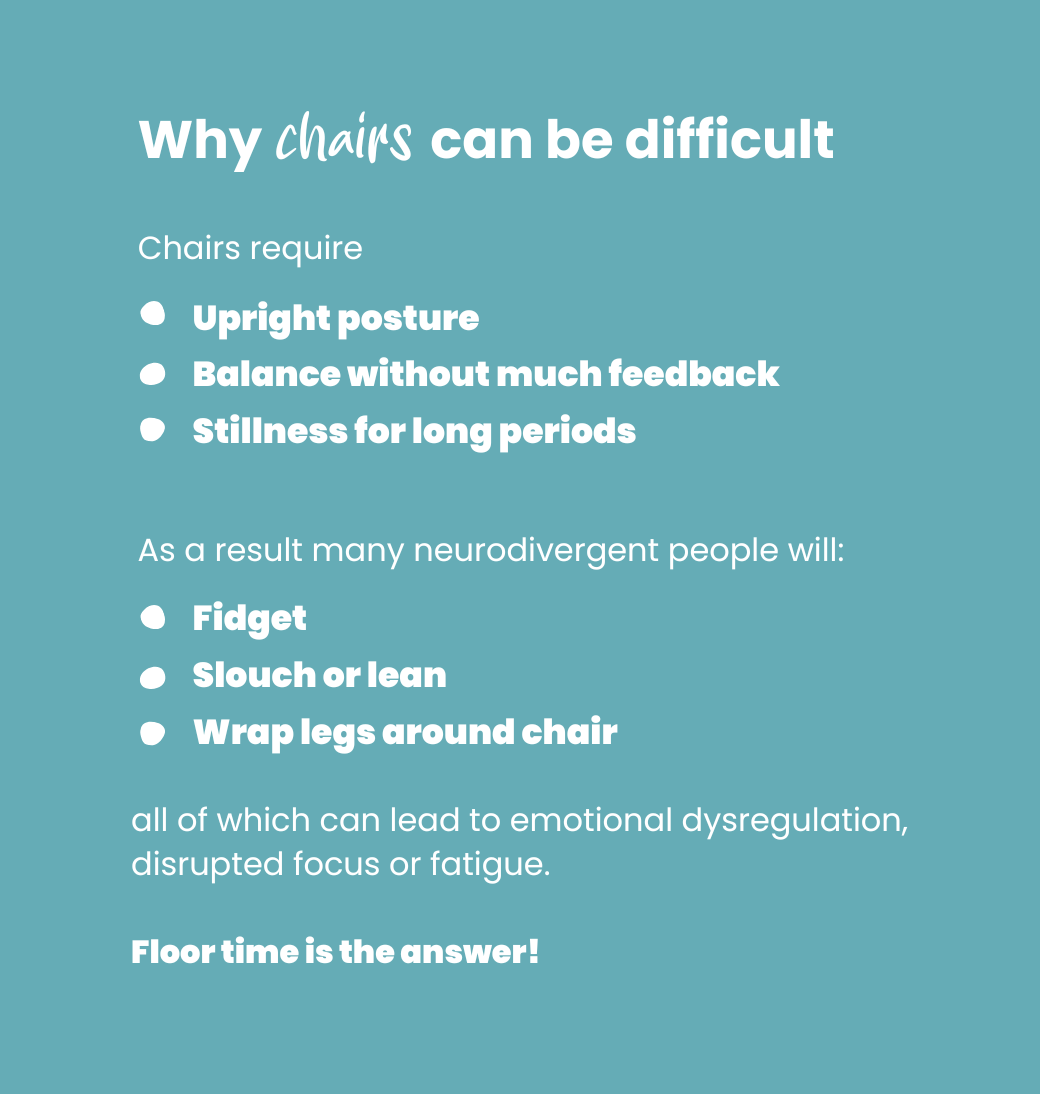
Sitting upright on a chair, staying still, or holding a particular posture can take a huge amount of effort, leaving less energy for learning or emotional regulation.

There is a scientific basis to support the use of floor time:

1. Proprioception: Feeling grounded and secure

Proprioception is the sense that tells us where our body is in space. When you sit or lie on the floor, you receive:

  • Firm contact through the legs, hips, and spine
  • Gentle pressure through muscles and joints
  • Clear feedback about where your body is
  • Input that helps the brain feel safe and organised.

The floor gives the body more information, more sensory feedback, and more support, which helps the brain relax.

So ultimately, being on the floor can reduce anxiety, support emotional regulation, and make it easier to concentrate.

2. Vestibular input: Balance without overwhelm

The vestibular system helps with balance, movement, and alertness. Floor positions naturally allow:

  • Shifting weight
  • Rocking gently
  • Changing positions easily
  • Crossing the midline

The movement helps you stay regulated without becoming over-stimulated, supporting focus without tipping into restlessness.

3. Tactile input: Predictable, calming touch

Putting it simply, the floor is solid. It provides steady and predicable touch.

So unlike light or unexpected touch, which can feel overwhelming for some people, contact with the floor is consistently reliable which can be calming.

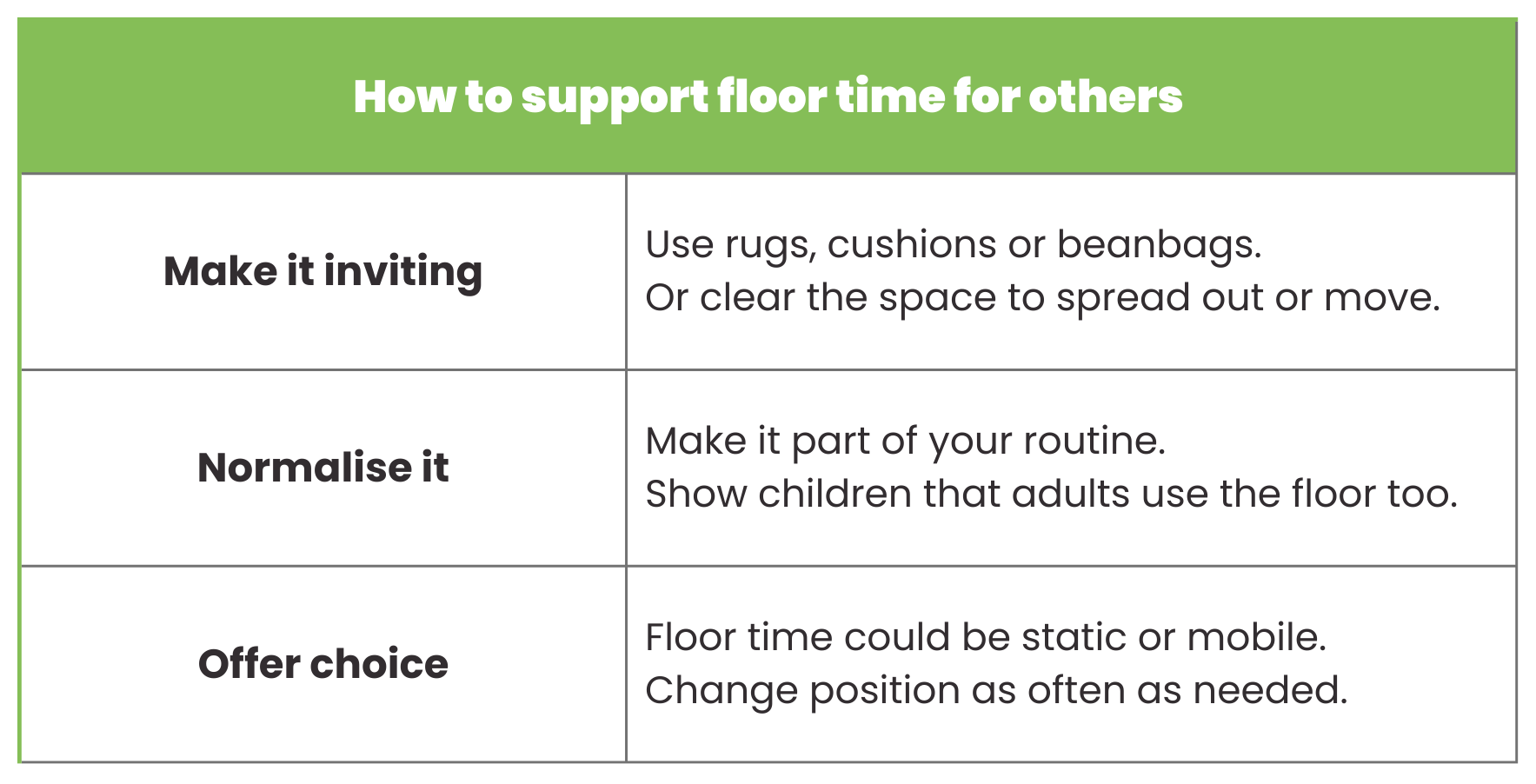
You can change your body position to respond to the needs of your nervous system by alternating between the floor and seats in line with your mood.

For many, the floor acts like an anchor, helping you stay connected to your body and the moment.

Being close to the ground can:

  • Slow down breathing
  • Reduce emotional overwhelm
  • Improve body awareness
  • Support people who dissociate or shut down
  • Help people feel present and calm

Plus, anything can be done on the floor! For both adults and children the floor can be multi-functional – learning doesn’t have to stop because you are on the floor.

  • Read or write lying on your tummy
  • Build, sort, and play sitting on a rug
  • Talk through feelings leaning on cushions
  • Do homework while sprawled out comfortably
  • Do some stretches or yoga on a mat

Avoid using negative language when someone is using the floor. Comments like “Sit properly” or “Get up off the floor” can be upsetting and lead to increased dysregulation.

Instead try supportive phrases like:

  • “Would the floor feel better?”
  • “Let’s take this down to the ground.”
  • “What does your body need right now?”

Keep up to date with the latest SensationALL Self-Regulation Strategies on our socials!

Visual timetables

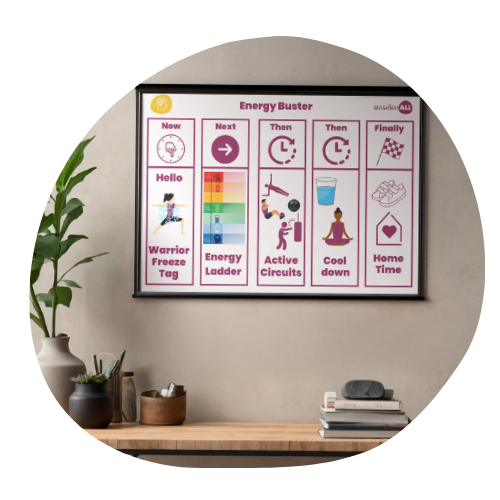
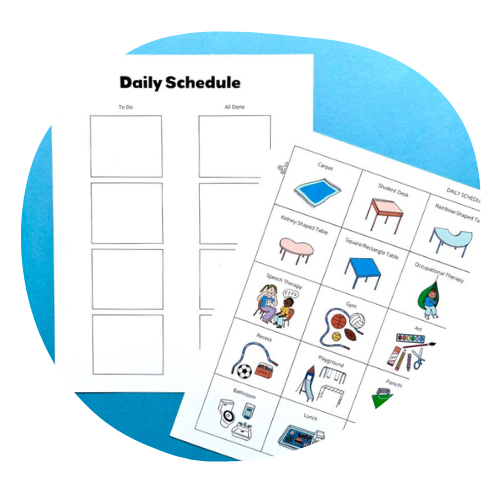
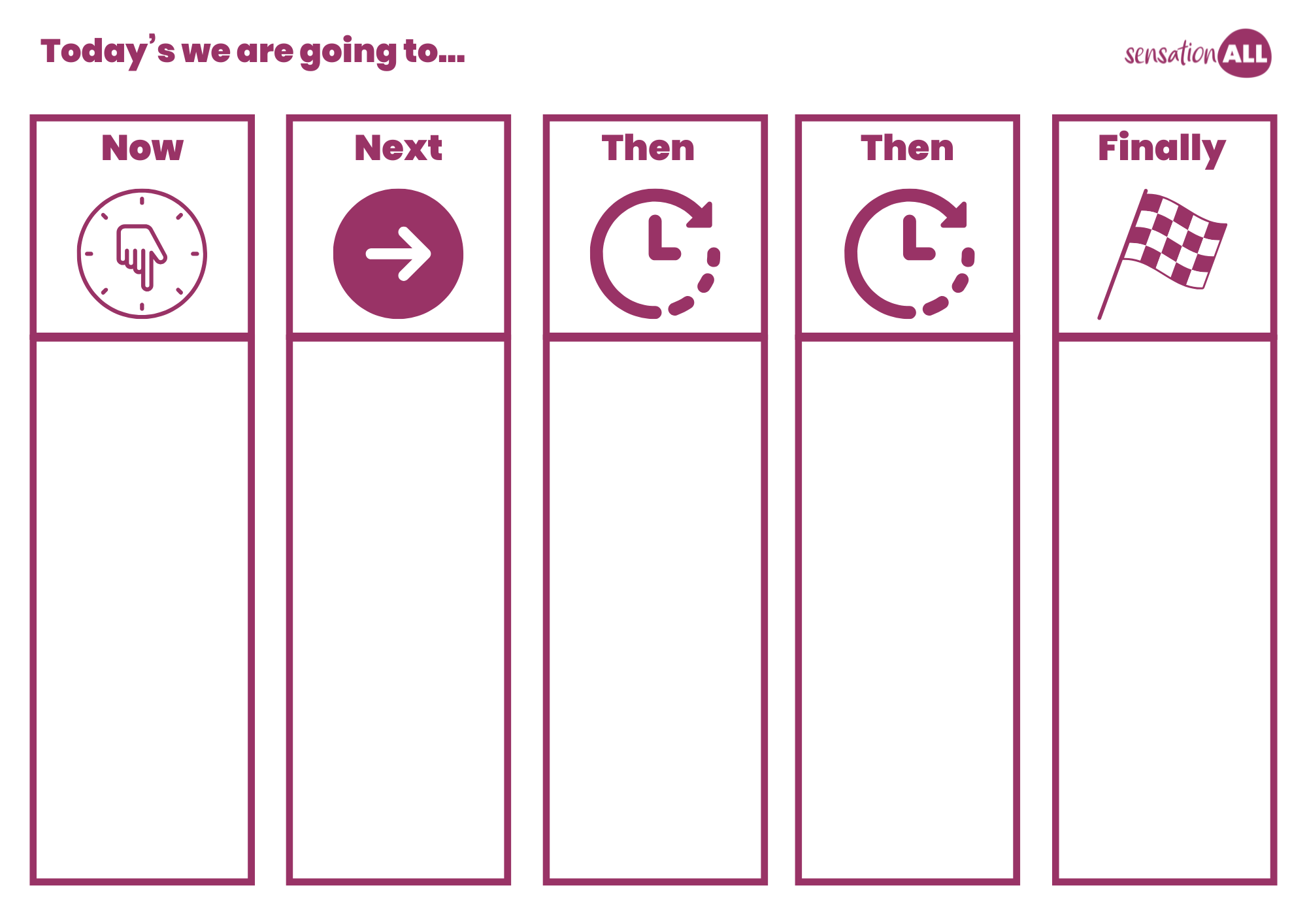
Many neurodivergent people need structure and routine to feel calm and comfortable. In our sessions, we use visual timetables and ‘now, next’ boards to help our attendees understand the plan for the day. This can also help prepare for transitions and changes in activities or tasks.

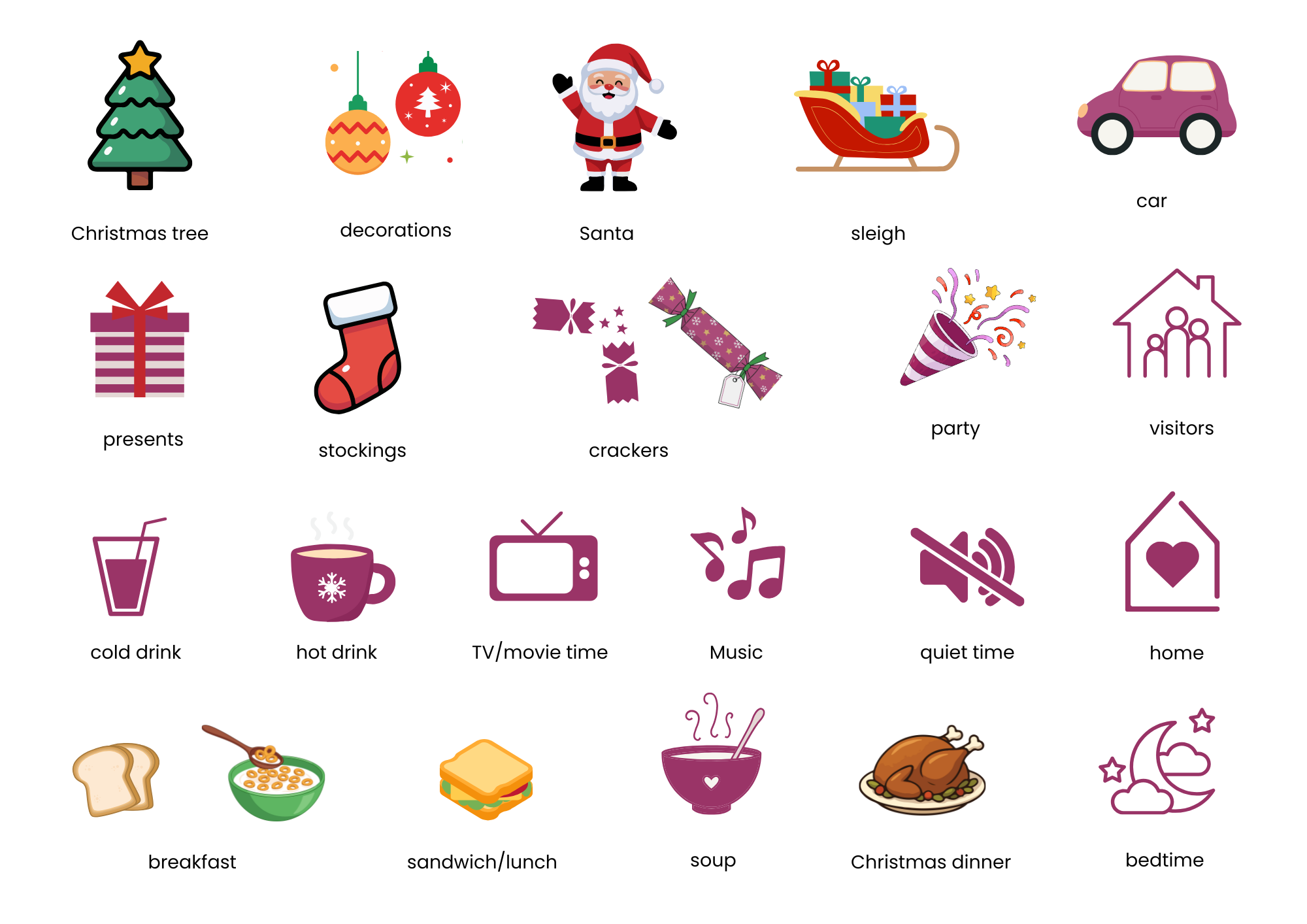
A visual timetable can be in various different formats but it is always a clear, visual sequence using pictures, symbols, words, or even objects to show what is happening and in what order.

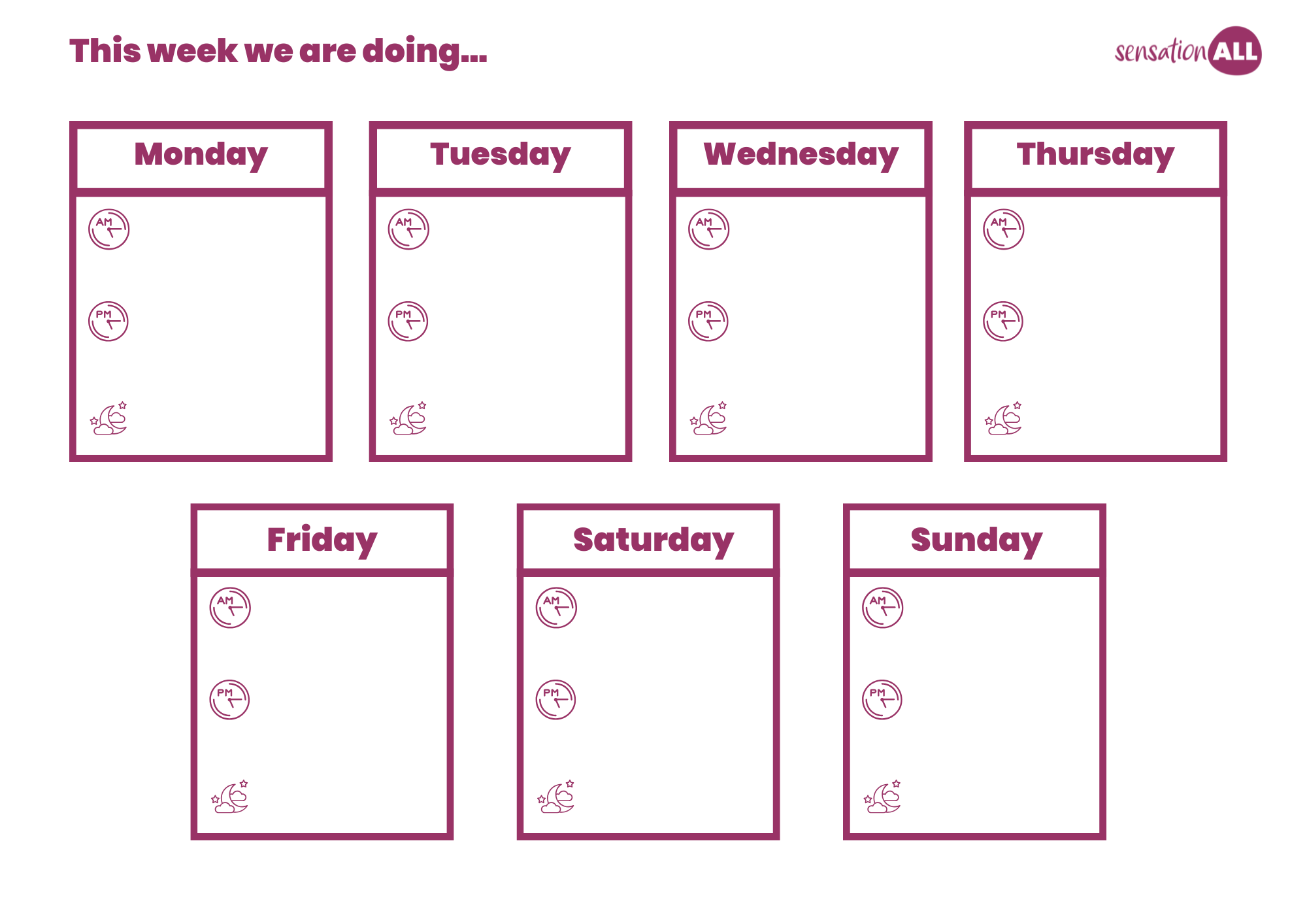
At home you can use a visual timetable for a daily plan, an activity schedule, or even a whole week. This is particularly useful at times when routine changes like during holidays or special events.

Transitions and unpredictability can feel overwhelming, especially for neurodivergent people. A visual timetable will:

  • reduce anxiety
  • increase predictability
  • aids communication
  • encourages independence
  • creates consistency

By making time visible, we help people feel safer, more in control, and better able to participate in meaningful activities.

  • Helps executive function by reducing cognitive load. By presenting clear sequencing you can improve focus.
  • Supports attention & memory because visual cues free-up brain space.
  • Helps people feel in control – as you can check what’s happening next instead of relying on other people to tell you.
  • Improves family communications – everyone can see what’s on the schedule if it is on display.
  • Eases transitions – fewer meltdowns and quicker adjustments between tasks.

You can incorporate visual timetables into every day life or just for specific situations like holidays and events.

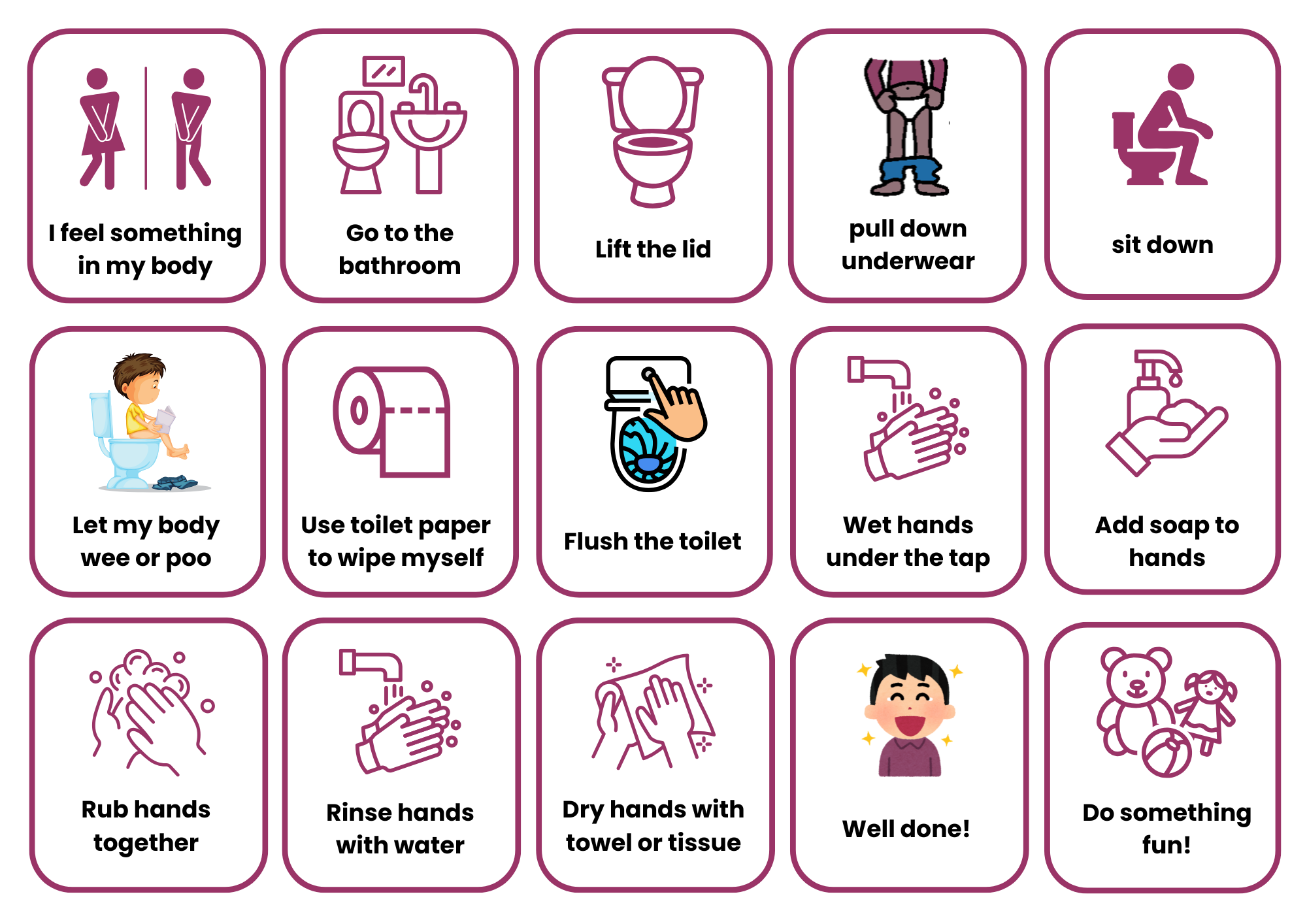
Here are some downloadable visuals you can use to create your own timetables:

Keep up to date with the latest SensationALL Self-Regulation Strategies on our socials!

Test your trivia knowledge! Our fun quizzes include a wide variety of topics and maybe even a few cryptic questions or a picture round to keep you on your toes!

The next date will be announced soon!

The Broadstraik Inn, Westhill.

Gather your team (max 4 people per team):

  • £10 entry per person
  • 7pm quiz starts
  • Prize for highest scoring team

Plus, raffles and fundraising games for SensationALL.

Reserve your team by emailing events@sensationall.org.uk
Understanding your senses – touch

Some people love certain types of touch, while others find it overwhelming or uncomfortable. Understanding how touch works in the brain can help us support regulation, comfort, and confidence for children and adults alike.

The tactile system is our sense of touch. It tells us:

  • What things feel like (rough, smooth, soft, sticky)
  • Whether something is hot or cold
  • How much pressure or force we’re feeling

Touch helps us feel safe, aware, and connected, to our bodies, to objects, and to other people. It also affects our emotions, focus, and energy levels.

When touch feels too strong, too light, or unpredictable, we might see behaviours like avoiding hugs, seeking extra pressure, or fidgeting constantly.

Touch can be a very personal sense and, like many of our other senses, people’s responses to varying types of touch can be very different.

So it is good to be able to identify different responses and have some strategies on how to support them.

These people may not notice touch, or may need a stronger input to feel it. You might notice:

  • Constantly touching objects, surfaces, or people
  • Not noticing pain, temperature or light touch
  • Chewing on clothing, toys or pencils
  • Enjoying textures or movement combined with touch
  • Offer strong, structured touch: pushing, pulling, carrying or squeezing objects
  • Include different textures in play or daily routines
  • Pair touch with movement; crawling, climbing or rolling
  • Try fidget tools, textured toys or crunchy snacks

These people feel touch too strongly. Even normal touch can feel uncomfortable or alarming. You might notice:

  • Avoiding hugs, handshakes or party games
  • Disliking certain fabrics, tags or tight clothing
  • Flinching, withdrawing or becoming upset with unexpected touch
  • Offer slow, firm, predictable touch rather than light or tickly contact
  • Give choice and control: “Do you want me to help or do it yourself?”
  • Introduce messy play and new textures gradually
  • Try weighted blankets, firm hugs or deep pressure if welcomed

The right kind of touch helps the nervous system feel safe and balanced.

  • It calms anxiety and supports emotion regulation
  • It increases attention and focus
  • It helps build confidence and comfort in social situations

It’s a good idea to incorporate strategies and methods into your daily routine to proactively regulate your body which will make you feel secure and in control. Plus, it will massively improve mood and happiness!

Here are some of our suggestions but remember… everyone is unique:

Keep up to date with the latest SensationALL Self-Regulation Strategies on our socials!

Understanding your senses – body & movement

These are often signs that the body’s awareness system, is craving input or trying to find balance.

The body’s internal Vestibular system (located in the inner ear) can cause trouble when it is out of balance as you will experience changes in behaviour, mood and energy. But, when it is working well you feel safe, strong, and organised from the inside out. In this blog, we give you an insight into why you like certain types of movement and how to counteract behaviour with physical strategies.

Proprioception is the automatic sense that tells us where our body is in space and how to move freely without conscious thought. It’s what enables us close our eyes and still touch our nose, grip items with the right amount of pressure, or control the strength of a hug.

We have proprioceptive receptors in our muscles, joints, and tendons which send messages to the brain every time we push, pull, squeeze, stretch, or move our body.

These signals help the nervous system:

  • Know where the body is in relation to space and things around us
  • Control our movement and posture
  • Feel calm, grounded, and secure
  • Regulate our energy levels and emotions

When this system is working well, you will feel grounded, stable, and ready to learn. You’ll be able to move confidently, judge force accurately, and stay more regulated during challenges.

BUT… when it’s not fully balanced, (so is under or over-responsive) you might feel the need for constant movement, often bump into things, or experience clumsiness. In children, you might witness boisterous behaviour or they might completely avoid touch and physical play altogether.

The way you move and interact with others will change depending on lots of different factors, your environment, stress levels, emotions, the people you are with etc.

So it is good to understand the different behaviours and how to counteract them to stay balanced.

You are craving more input to “wake up” the body and you might:

  • Constantly be on the go! Jumping, spinning, running etc.
  • Often bump or crash into people and objects
  • Struggle to sit still or concentrate
  • Use too much force in play, writing or grip
  • Enjoy tight hugs, wrapping up in blankets, or carrying heavy things
  • Seek rough or high energy activities.
Movement helps you wake up and feel alive but it needs to be structured to be controlled and healthy:

  • Schedule ‘movement breaks’ in the day
  • Push/pull or lift/carry heavy items/toys
  • Build dens, move furniture, or dig in the garden
  • Do exercise to activate big muscles (for children that could be a game of moving like animals, bear crawls, frog jumps etc.)
  • Include rhythm by dancing, skipping or marching to satisfy your need for high tempo movement

You are oversensitive to input and easily overwhelmed by sensations or touch. For example:

  • Movement feels too much, or unsafe
  • Feel dizzy or unsettled by sudden movements.
  • Prefer light movement and controlled activities
  • Being hyper aware of tags, seams or zippers on clothes. Tight or ill-fitting clothes can be stressful.
  • Children actively avoid messy play and rough-and-tumble games.

Keep physical movement slow and at the level you are comfortable with so it isn’t overwhelming. You/they must feel in control:

  • Deep pressure – weighted blankets, firm hugs (if welcomed), or rolling a ball over the body
  • Rocking, swaying or gentle walking.
  • Try yoga or relaxation exercises
  • Develop calming routines that include safe, consistent physical touch (maybe bedtime massage or cuddles).

The goal isn’t to stop the movement seeking/avoiding behaviours but to find balance and feel safe in your body.

Take some time for reflection on what movement does to you and how you feel with different types of motions. What kind of movement makes you feel calm, happy or safe? Are there any things you like to do when you feel restless or anxious or tired?

Here are some signs and behaviours to look out for:

It’s a good idea to incorporate strategies and methods into your daily routine to proactively regulate your body which will make you feel secure and in control. Plus, it will massively improve mood and happiness!

Here are some of our suggestions but remember… everyone is unique:

Keep up to date with the latest SensationALL Self-Regulation Strategies on our socials!

Helping Children Stay Calm

Think of it like weather planning…

  • Proactive is checking the forecast, packing a raincoat, and planning a route to stay dry.
  • Reactive is opening the umbrella when the rain starts.

We need to have both types of strategies because life is calmer when we’re prepared but we can’t plan for every eventuality…

Proactive strategies help reduce stress on the nervous system. They give your child predictability, safety, and skills to manage their emotions before they feel overwhelmed.

Reactive strategies are essential when emotions are already high. They help calm the body and bring your child back to a state where they can think, learn, and connect again.

Using both together builds emotional intelligence, confidence, and self-regulation — key ingredients for thriving in daily life.

  • Proactive strategies engage the “thinking brain” (the prefrontal cortex), teaching planning, reflection, and choice-making.
  • Reactive strategies soothe the “feeling brain” (the amygdala and limbic system) when your child’s nervous system is in fight, flight, or freeze.

When we focus on proactive support, we reduce the frequency of fight or flight moments happening but when they do, they will be less severe or easier to recover from.

These daily habits and routines can help children feel safe, calm, and in control.

1. Sensory-Friendly Environments

  • Reduce noise and visual clutter
  • Dim lights or use warm lamps
  • Offer a calm corner or quiet space
  • Keep routines predictable

Example: A “cosy corner” with soft lighting, fidgets, and weighted blankets gives a child somewhere to retreat before they feel overwhelmed.

2. Self-Regulation Skills

Teach your child what helps them feel calm. This can include:

  • Wall pushes or animal walks (heavy work)
  • Breathing games or blowing bubbles
  • Stretching or yoga poses
  • Crunchy snacks or chewing (oral regulation)
  • Visualization or story-based relaxation

Example: Practice “starfish breathing” together when you’re calm — trace your fingers and breathe in and out with each point.

3. Emotional Education

Help your child name what they feel:

  • Use feelings charts or visuals
  • Talk about emotions in stories or daily life
  • Model naming your own feelings calmly

Example: “I’m feeling a bit frustrated, so I’m going to take a deep breath.” This teaches emotional language and coping by example.

4. Adult Modelling

Children learn regulation from our calm presence.

  • Narrate what you’re doing to calm yourself
  • Use a steady tone
  • Keep routines consistent

Example: “Let’s pause together and take a breath. We can figure this out once we feel calm.”

When your child is already upset or overwhelmed, the goal is calm and connection, not correction.

Try some or all of these:

  • Moving to a quieter, low-stimulation space
  • Using deep pressure (like a firm hug or weighted blanket)
  • Offering a familiar comfort item or soothing activity
  • Keeping language minimal — too many words can add stress
  • Waiting patiently — give their nervous system time to settle

Example: If your child is melting down after school, dim the lights, sit nearby quietly, and let them rock or squeeze a fidget.

Once they’re calm, you can talk or problem-solve.

Keep up to date with the latest SensationALL Self-Regulation Strategies on our socials!